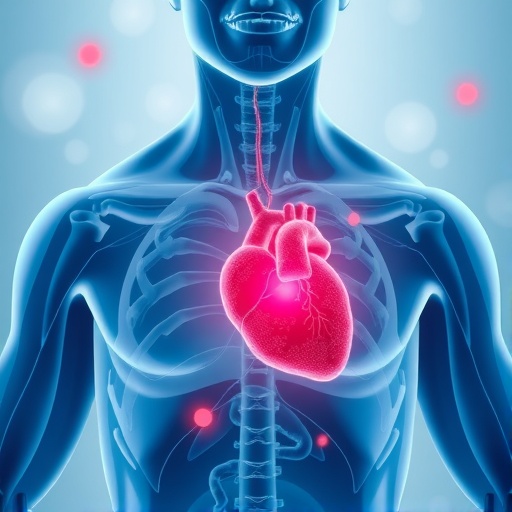
In a groundbreaking study recently published in the British Journal of Cancer, a team of researchers led by Chen, L., Sun, X., and Zhang, H. has illuminated a crucial biochemical pathway underpinning the cardiotoxic effects of doxorubicin, a widely used chemotherapeutic agent. Their work exposes the Arachidonate Lipoxygenase 5 (ALOX5) metabolism axis as a pivotal mediator of ferroptosis—a regulated form of cell death characterized by iron-dependent lipid peroxidation—offering a novel therapeutic target to mitigate doxorubicin-induced cardiomyopathy.
Doxorubicin remains a cornerstone in the treatment of numerous malignancies due to its potent cytotoxic effects on cancer cells. However, a major limitation to its clinical application is the cumulative cardiotoxicity, which can manifest as irreversible cardiomyopathy and heart failure. Previous research has identified oxidative stress and mitochondrial dysfunction as contributing factors, but the precise molecular and metabolic cascades triggering cardiomyocyte death have remained elusive. This new study bridges this critical knowledge gap by focusing on ferroptosis, a process distinct from apoptosis and necrosis yet intimately tied to lipid metabolism and oxidative damage.
The investigators employed a combination of cutting-edge molecular biology tools, including lipidomics, gene editing techniques targeting ALOX5, and in vivo murine models of doxorubicin treatment. Their data convincingly reveal that doxorubicin upregulates ALOX5 expression specifically in cardiac tissue, leading to enhanced production of lipid peroxides derived from arachidonic acid metabolism. This enzymatic activity exacerbates iron-dependent oxidative stress, culminating in the ferroptotic death of cardiomyocytes.
Importantly, inhibition of ALOX5, either pharmacologically or via CRISPR-mediated gene silencing, dramatically attenuated the markers of ferroptosis and preserved cardiac function in treated animal models. These compelling results suggest that ALOX5 is not merely a downstream effector but a crucial metabolic nexus orchestrating the deleterious cascade initiated by doxorubicin. Furthermore, the study delineates the biochemical intermediates generated by ALOX5 metabolism, shedding light on the specific lipid peroxidation products responsible for triggering ferroptosis.
One of the most intriguing aspects of this research is the temporal pattern of ALOX5 activation and ferroptosis induction. Doxorubicin-induced ALOX5 upregulation occurs early during treatment, providing a potentially exploitable therapeutic window for intervention. The researchers propose that co-administration of ALOX5 inhibitors could shield the myocardium without compromising the anticancer efficacy of doxorubicin, which primarily acts through DNA intercalation and topoisomerase II inhibition.
Elaborating on the mechanistic insights, the study discusses how ALOX5 catalyzes the oxygenation of arachidonic acid to produce 5-hydroperoxyeicosatetraenoic acids (5-HPETEs), which are then converted into highly reactive lipid radicals. These radicals perpetuate lipid peroxidation within cardiomyocyte membranes, destabilizing cellular integrity and promoting ferroptotic cell death. Additionally, the research highlights the role of intracellular iron accumulation and disrupted antioxidant defenses, such as glutathione peroxidase 4 (GPX4) activity, which synergistically amplify the ferroptotic signal.
The implications of these findings extend beyond doxorubicin cardiotoxicity, potentially influencing the understanding of other oxidative stress-related cardiovascular diseases. The elucidation of an ALOX5-ferroptosis axis not only advances the molecular paradigm of chemotherapy-induced heart damage but also opens new avenues for cardio-protective drug development. As ferroptosis has recently emerged as a critical pathogenic process in diverse tissues, targeting metabolic enzymes like ALOX5 could become a universal strategy for mitigating tissue injury.
Clinically, the prospect of incorporating ALOX5 inhibitors into chemotherapy regimens is compelling. Current cardioprotective approaches, such as dexrazoxane, come with their own side effect profiles and limitations. ALOX5 inhibitors, some of which are already under investigation in asthma and inflammatory disorders, could be repurposed as adjuvant therapies to selectively prevent cardiac injury without diminishing oncologic outcomes. These findings urge further clinical trials to evaluate safety, dosage, and efficacy in cancer patients receiving anthracyclines.
From a translational perspective, this research underscores the importance of personalized medicine in oncology. Monitoring ALOX5 activity or ferroptosis biomarkers could facilitate early detection of cardiotoxicity risk, enabling timely intervention. Future studies focusing on patient stratification based on genetic polymorphisms in lipid metabolism enzymes or iron handling proteins might optimize cardioprotective strategies tailored to individual metabolic profiles.
Besides therapeutic potential, the study’s technical innovations set a new standard in ferroptosis research. The integration of high-resolution lipidomic profiling with functional genomics allowed for precise mapping of the metabolic pathways driving cell death. The use of state-of-the-art in vivo imaging to visualize ferroptotic lesions in cardiac tissue further substantiates the pathological relevance of ALOX5 enzymatic flux during chemotherapy.
This work also prompts a reevaluation of how anthracycline-induced cardiomyopathy is conceptualized. Traditional emphasis on generalized oxidative stress is refined here into a targeted metabolic dysfunction mediated by a specific lipoxygenase pathway. Such a shift in understanding encourages the scientific community to search for other metabolic enzymes that might play analogous roles in chemotherapy adverse effects, potentially revolutionizing cardiotoxicity management.
Moreover, the study’s results raise pertinent questions about the interplay between cancer metabolism and host organ susceptibility. While doxorubicin exerts its antineoplastic effects through DNA damage, its influence on lipid metabolism within distant tissues like the heart highlights the complexity of systemic drug actions. Disentangling these interconnected pathways will be essential to design safer chemotherapeutic protocols.
In conclusion, Chen and colleagues have delivered a seminal contribution to oncology and cardiology through their identification of the ALOX5-mediated ferroptosis mechanism as a key driver of doxorubicin-induced cardiomyocyte death. Their findings herald a new chapter in cardio-oncology research, where metabolic enzymology and regulated cell death pathways converge to inform innovative therapeutic interventions. As the quest for safer cancer treatments continues, targeting the ALOX5-ferroptosis axis stands out as a beacon of hope for patients vulnerable to chemotherapy-induced heart disease.
The ongoing challenge lies in translating these mechanistic insights into clinical reality. Nevertheless, with the promising preclinical results presented, the path forward is illuminated for creating adjunct therapies that not only elevate the efficacy of cancer treatment but also preserve the integrity and function of the heart. This study exemplifies the power of integrative molecular research to address some of the most pressing side effects in modern oncology.
As future research unravels additional layers of the ferroptosis network and its modulators, the prospects for personalized, metabolism-based interventions in chemotherapy cardiotoxicity become increasingly tangible. The identification of the ALOX5 metabolism axis as a druggable target is a pivotal milestone that bridges fundamental science and clinical application, signaling a transformative approach in managing doxorubicin-induced cardiomyopathy.
Subject of Research: Doxorubicin-induced cardiomyopathy; ferroptosis; Arachidonate Lipoxygenase 5 (ALOX5) metabolism pathway
Article Title: Arachidonate lipoxygenase 5 metabolism axis promoting ferroptosis: a potential druggable target for doxorubicin-induced cardiomyopathy
Article References:
Chen, L., Sun, X., Zhang, H. et al. Arachidonate lipoxygenase 5 metabolism axis promoting ferroptosis: a potential druggable target for doxorubicin-induced cardiomyopathy. Br J Cancer (2026). https://doi.org/10.1038/s41416-026-03376-3
Image Credits: AI Generated
DOI: 10.1038/s41416-026-03376-3 (published 06 April 2026)
Tags: ALOX5 metabolic pathway in heart diseasearachidonate lipoxygenase 5 inhibitionchemotherapeutic cardiomyopathy mechanismsdoxorubicin-induced cardiotoxicityferroptosis in cardiomyopathygene-editing in cardiac researchin vivo murine models of cardiotoxicitylipid peroxidation in heart cellslipidomics in cardiotoxicity studiesmolecular targets for cardioprotectionoxidative stress and lipid metabolismtherapeutic strategies for heart failure