In the relentless quest to unravel the complexities of colorectal cancer, a recent breakthrough study offers new insights into the tumor microenvironment and its intricate interplay with the immune system. Published in the British Journal of Cancer in April 2026, this cutting-edge research explores the significant role played by tumor-infiltrating granulocytes and the enigmatic neutrophil extracellular traps (NETs) in colorectal malignancies, shedding light on their potential impact on disease progression and therapeutic strategies.
Colorectal cancer remains one of the most prevalent and deadly cancers globally, with metastatic disease posing considerable challenges for effective treatment. Central to the tumor microenvironment’s complexity is the infiltration of various immune cells, which can exert both pro-tumorigenic and anti-tumorigenic effects. Among these immune cells, granulocytes—predominantly neutrophils—have emerged as pivotal players influencing cancer behavior. The new study meticulously characterizes these granulocytes within colorectal tumors, highlighting their nuanced roles.
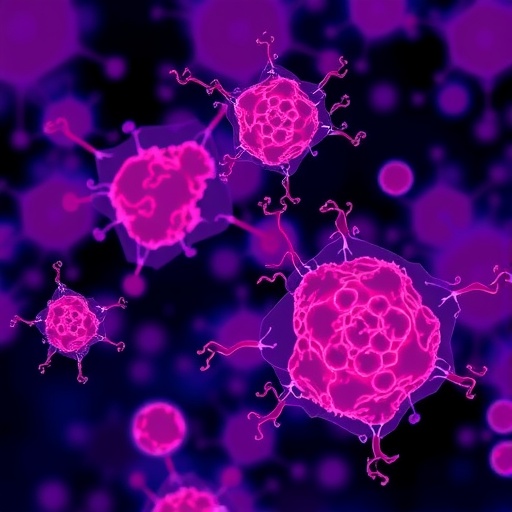
Neutrophils, traditionally known as first responders in acute inflammation and infection, have recently been recognized for their dual roles within tumors. Their infiltration often correlates with worse prognosis in many cancers, yet the mechanisms underlying this association are not fully understood. The presence of NETs—web-like structures composed of chromatin and antimicrobial proteins expelled by activated neutrophils—adds another layer of complexity. These extracellular traps, while crucial in pathogen defense, have been implicated in promoting cancer progression through multiple pathways.
The study employed advanced histopathological and molecular techniques to quantify tumor-infiltrating granulocytes and detect NET formation within colorectal cancer samples. By correlating their abundance with clinical parameters, the researchers revealed that higher densities of these immune elements are associated with more aggressive tumor phenotypes and poorer patient survival rates. This discovery emphasizes the need to reconsider neutrophils not merely as bystanders but as active modulators of the tumor milieu.
One of the remarkable findings pertains to the mechanisms by which NETs may facilitate tumor growth and metastasis. The researchers propose that NETs can capture circulating tumor cells, aiding their seeding in distant organs, thereby enhancing metastatic dissemination. Additionally, NET-associated enzymes and proteins may remodel the extracellular matrix, creating a conducive environment for tumor invasion. This paradigm challenges previous notions and proposes novel targets for therapeutic intervention.
The immune landscape of colorectal cancer appears to be profoundly shaped by the interplay of granulocytes and NETs, suggesting a complex dynamic where these immune components may paradoxically foster tumor survival. The study highlights potential signaling pathways activated within the tumor microenvironment that promote granulocyte recruitment and NETosis, the process of NET formation. Understanding these signals provides opportunities to disrupt detrimental immune-tumor interactions.
Importantly, the findings underscore the prognostic potential of assessing granulocyte infiltration and NET presence as biomarkers. The ability to stratify patients based on these parameters could enhance personalized treatment approaches, enabling clinicians to identify individuals who may benefit from therapies targeting neutrophil-mediated pathways. This aligns with the broader movement toward precision oncology and immune modulation.
The study opens avenues for exploring pharmacological agents capable of inhibiting NET formation or function. Such agents could mitigate the pro-tumor effects of NETs without compromising their antimicrobial roles, a balance that presents a compelling therapeutic challenge. The authors advocate for further preclinical and clinical studies to evaluate these strategies within colorectal cancer treatment frameworks.
Moreover, the research draws attention to the heterogeneity of immune cell infiltration across different tumor regions and stages. It emphasizes that the spatial and temporal dynamics of granulocytes and NETs influence tumor biology, necessitating sophisticated imaging and longitudinal analyses to capture these patterns accurately. This spatial dimension of tumor immunology offers profound implications for understanding treatment resistance and disease evolution.
The study’s methodological rigor, including multiplex immunofluorescence and quantitative image analysis, sets a new standard for investigating the tumor microenvironment. By precisely delineating cellular identities and their functional states, the research provides a template for similar investigations in other cancer types. It also serves as a foundation for integrating immunological data with genomic and proteomic profiles.
Beyond therapeutic applications, the insights into granulocytes and NETs in colorectal cancer enrich the fundamental understanding of cancer immunology. The dualistic nature of these immune components—capable of both protecting against and promoting tumorigenesis—exemplifies the complexity of immune regulation in cancer. Such knowledge challenges simplistic models and encourages holistic approaches to studying tumor-immune interactions.
As the field advances, the integration of this research with emerging technologies such as single-cell sequencing and artificial intelligence-driven image analysis promises to accelerate discoveries. These tools will enable finer dissection of the immune microenvironment and identification of key molecular players that govern granulocyte behavior and NET dynamics within tumors.
In conclusion, this seminal work by Rahkola, Tuomisto, Elomaa, and colleagues heralds a new era in colorectal cancer research. By illuminating the critical and previously underappreciated roles of tumor-infiltrating granulocytes and neutrophil extracellular traps, the study charts a promising path toward novel diagnostic and therapeutic frontiers. As researchers and clinicians grapple with colorectal cancer’s challenges, these findings provide a beacon of hope for improved patient outcomes through immune-informed strategies.
Subject of Research: Tumor-infiltrating granulocytes and neutrophil extracellular traps in colorectal cancer.
Article Title: Significance of tumor infiltrating granulocytes and neutrophil extracellular traps in colorectal cancer.
Article References:
Rahkola, O., Tuomisto, A., Elomaa, H. et al. Significance of tumor infiltrating granulocytes and neutrophil extracellular traps in colorectal cancer. Br J Cancer (2026). https://doi.org/10.1038/s41416-026-03409-x
Image Credits: AI Generated
DOI: 07 April 2026
Tags: chromatin structures in cancer immunitycolorectal cancer metastatic disease challengesgranulocyte-mediated tumor growth mechanismsgranulocytes influence on tumor progressionimmune microenvironment of colorectal tumorsinflammation and colorectal cancer linkNETs impact on colorectal cancer prognosisneutrophil extracellular traps NETs role in cancerneutrophils dual role in cancerTherapeutic strategies targeting NETstumor microenvironment immune cell interactionstumor-infiltrating granulocytes in colorectal cancer