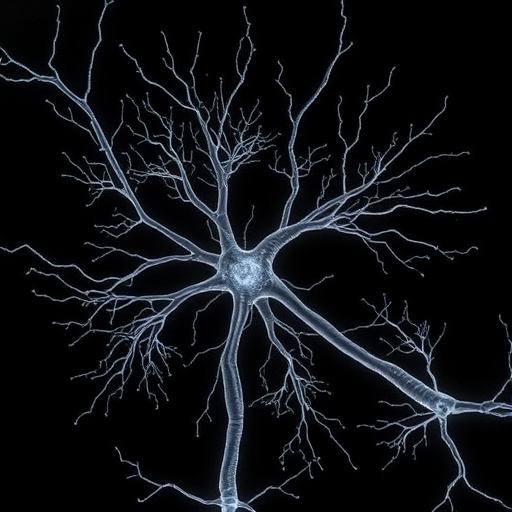
In a remarkable leap forward in neuroscience, a recent study has unveiled groundbreaking insights into the ultrastructural characteristics of dendrites in the cerebellar dentate nucleus, employing an innovative approach known as ultrastructural texture analysis. This exploration was conducted using an experimental rat model designed to elucidate the effects of hyperthermia-induced seizures on neural architecture. The findings, soon to be published in Scientific Reports, offer a transformative understanding of how temperature-driven seizures intricately alter the microscopic landscape of brain tissue, advancing both theoretical neuroscience and potential clinical interventions.
The cerebellar dentate nucleus is a pivotal brain structure extensively involved in motor control, coordination, and cognitive processing. Yet, despite its significance, the detailed microstructural composition of its dendrites—and how they respond to pathological stress such as seizures—remained obscured. By harnessing ultrastructural texture analysis, the researchers succeeded in probing the nanometer-scale neuronal components with unprecedented precision. This technique, integrating advanced imaging methods and sophisticated computational texture recognition, allowed the team to characterize dendritic changes far beyond conventional microscopy’s reach.
At the heart of this study lies hyperthermia-induced seizures, a model replicating fever-related epileptic events common in both pediatric and adult populations. Elevated body temperature profoundly affects neuronal function and connectivity, but the precise structural alterations ensuing from such seizures have been challenging to define. The rat model provided a controlled platform to induce hyperthermia and seizures, creating an experimental framework where the downstream impacts on cerebellar dendrites could be meticulously quantified and analyzed.
This ultrastructural analysis revealed that dendrites in the cerebellar dentate nucleus undergo distinctive morphological transformations under hyperthermic stress. The dendritic walls displayed microfractures and subtle distortions at the nanoscale, which were imperceptible in earlier conventional studies. Additionally, the texture patterns identified across dendritic membranes indicated alterations in their lipid bilayer organization and organelle composition, which potentially disrupt synaptic transmission and intracellular signaling pathways critical for normal brain function.
The implications of these findings are far-reaching. Traditionally, studies focusing on seizure pathology have centered on neuronal cell bodies and synaptic junctions, often overlooking dendritic ultrastructure. By spotlighting dendritic texture, the researchers illuminated a novel dimension of seizure-induced damage. This could explain some of the cognitive and motor deficits observed following febrile seizures, as disruptions in dendritic architecture may impair synaptic plasticity and neural circuit integrity.
Moreover, the methodological advancements in this study deserve special mention. Ultrastructural texture analysis uniquely combines electron microscopy with cutting-edge algorithms capable of discriminating between subtle patterns in electron-dense images. These algorithms evaluate textural features such as granularity, homogeneity, and anisotropy, enabling an objective quantification of dendritic changes rather than relying on subjective morphological descriptions. This analytical rigor offers a powerful tool for future neuropathological investigations.
The researchers also noted remarkable resilience in certain dendritic subregions, suggesting heterogeneity in vulnerability within the cerebellar dentate nucleus. Some dendrites retained normal texture features despite hyperthermic insults, hinting at intrinsic protective mechanisms or differential susceptibility driven by microenvironmental factors. Uncovering these protective factors could open new therapeutic avenues aimed at bolstering dendritic integrity during epileptic and hyperthermic episodes.
The choice of the cerebellar dentate nucleus as the focal point of this research is particularly intriguing given the emerging recognition of the cerebellum’s role in non-motor functions such as emotion regulation and cognition. Hyperthermia-induced seizures may thus have broad neuropsychological consequences extending beyond motor impairment. The detailed ultrastructural insights from this study could hold keys to understanding how febrile seizures might contribute to long-term cognitive deficits observed in clinical populations.
This pioneering research also underscores the importance of integrating multidisciplinary approaches for a holistic view of neurological disorders. Combining in vivo experimental models, ultrastructural imaging, and computational texture analysis exemplifies a forward-thinking strategy that leverages the strengths of neurobiology, imaging technology, and data science. Such integrated methodologies could transform the study of other neuropathologies characterized by subtle cellular alterations.
From a translational standpoint, the study’s findings pave the way for the development of diagnostic biomarkers based on dendritic texture changes. Non-invasive imaging techniques such as advanced MRI protocols might be refined to detect analogous changes in living brains, eventually enabling early diagnosis or monitoring of seizure-related brain damage. Therapeutic strategies could also be tailored toward preserving dendritic ultrastructure or promoting its repair, potentially mitigating disability from seizure disorders.
As epilepsy and febrile seizures affect millions globally, this research offers hope for novel interventions grounded in fundamental neurobiological mechanisms. Understanding the ultrastructural targets of hyperthermia-induced seizures enriches the conceptual framework of seizure pathology while highlighting the cerebellar dentate nucleus as a critical locus of injury and therapeutic action.
The road ahead involves expanding these pioneering findings into longitudinal studies to track the temporal progression of dendritic changes and assess recovery or compensatory mechanisms over time. Additionally, exploring how other seizure models or varying hyperthermia conditions influence dendritic texture will be vital to generalize and deepen these insights.
Ultimately, the combination of ultrastructural texture analysis with experimental neuropathology establishes a new paradigm for investigating brain disorders at the finest organizational levels. As technical capabilities evolve, such approaches promise to unravel complexities of neural tissue alterations that traditional histology cannot resolve, catalyzing breakthroughs that could revolutionize neuroscience, neurology, and neurosurgery.
In summary, this landmark study represents a bold step into the nanoscale realm of brain structure-function relationships under pathological stress. By decoding the ultrastructural signatures of dendrites affected by hyperthermia-induced seizures, the research team has opened fresh avenues for science and medicine alike, with profound implications for understanding and treating seizure-related brain injuries.
Subject of Research: The ultrastructural analysis of dendrites in the cerebellar dentate nucleus under hyperthermia-induced seizure conditions using an experimental rat model.
Article Title: Pioneering ultrastructural texture analysis of dendrites in the cerebellar dentate nucleus: an experimental rat model of hyperthermia-induced seizures.
Article References:
Łotowska, J.M., Borowska, M., Żochowska-Sobaniec, M. et al. Pioneering ultrastructural texture analysis of dendrites in the cerebellar dentate nucleus: an experimental rat model of hyperthermia-induced seizures. Sci Rep (2026). https://doi.org/10.1038/s41598-026-46385-1
Image Credits: AI Generated
Tags: advanced imaging in seizure researchcerebellum microstructure in motor controlcomputational texture recognition in neural imagingdendritic changes in cerebellar dentate nucleusepilepsy-related dendritic remodelinghyperthermia-induced seizure effects on brainmicrostructural brain changes from hyperthermiananoscale neuronal architecture in epilepsyrat model of febrile seizurestemperature-driven neural tissue alterationsultrastructural study of seizure pathologyultrastructural texture analysis in neuroscience