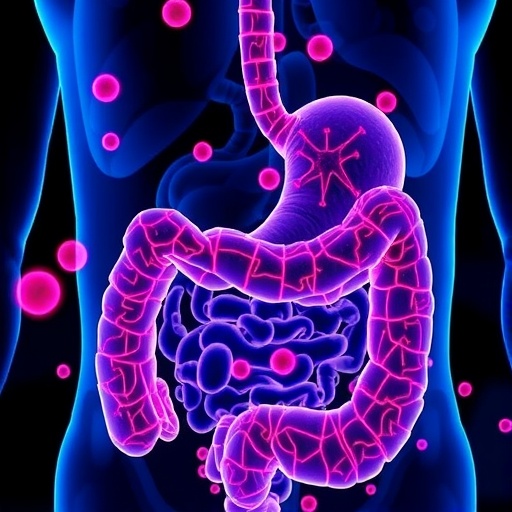
In an unexpected turn of events shaking the landscape of cancer research, a pivotal study exploring the role of the gut microbiome in enhancing immunotherapy for gastric cancer has been officially retracted. The investigation, originally published in 2026 in Genes & Immunity, had initially sparked excitement across scientific and medical communities due to its purported insights into predictable mechanisms by which the gut microbiota could influence the efficacy of immunotherapeutic strategies against one of the deadliest cancers globally. The retraction not only raises critical questions about the reproducibility and reliability of microbiome-related cancer therapeutics but also underscores the importance of rigorous scientific validation in the rapidly evolving arena of cancer immunotherapy.
The now-retracted article by Gao, W., Wang, X., Shi, Y., and colleagues had posited that the human gut microbiome could be manipulated predictably to enhance the effectiveness of checkpoint inhibitor therapies, which have revolutionized treatment for some cancers but remain variably effective in gastric carcinoma. This hypothesis had been grounded in accumulating evidence linking microbial diversity and specific microbial taxa with immune modulation and tumor microenvironment alterations. The authors claimed to have identified key bacterial communities whose abundance correlated strongly with improved patient responses to immunotherapy, purportedly unlocking a microbiome-driven stratification approach to gastric cancer treatment.
However, the integrity of these findings came under scrutiny when subsequent independent replication attempts failed to reproduce the claimed correlations and mechanistic insights. The crux of the issue lay in the data’s robustness and the analytical methods employed. Bioinformatics reanalysis revealed irregularities in the microbial sequencing datasets and inconsistencies in immune response markers, which prompted the journal and authors to issue a formal retraction. This action reflects a necessary course correction within scientific publishing, aimed at safeguarding trust in cancer biology research and therapeutic innovation.
The gut microbiome’s complex and dynamic interaction with the host immune system has emerged as a frontier of cancer immunology. Microbial metabolites, immune modulation pathways, and barrier function collectively participate in shaping the tumor microenvironment and systemic anticancer immune responses. Early clinical trials had offered promising glimpses that altering gut flora through probiotics, antibiotics, or fecal microbiota transplantation might improve checkpoint inhibitor outcomes. Yet, the mechanisms remain incompletely understood, and the Gao et al. paper’s retraction highlights the myriad challenges facing researchers in distinguishing causation from correlation in such a complex ecosystem.
Advances in next-generation sequencing and computational microbiology have significantly powered this line of inquiry, permitting unprecedented resolution and scale in analyzing microbial communities. Nevertheless, technical pitfalls such as contamination, batch effects, and data overfitting are pervasive pitfalls that can erode confidence in findings lacking rigorous validation. The retracted work’s failure to adequately control for confounding variables and the absence of comprehensive longitudinal clinical follow-up contributed to its vulnerability and ultimate retraction, illustrating the critical need for methodological rigor and transparency in this domain.
Beyond microbiome profiling, immunotherapy efficacy is contingent on multifactorial influences including genetic mutations, tumor heterogeneity, immune checkpoint expression, and patient-specific immune status. Integrative models leveraging multi-omics data—genomics, proteomics, metabolomics—alongside clinical variables are essential to untangle these interdependent factors influencing therapeutic responses. As such, the promise of microbiome modulation as a standalone predictive or therapeutic tool remains tentative and must be contextualized within this broader biological complexity.
The retraction also carries implications for clinical translation and ongoing trials exploring microbiome-targeted strategies to potentiate immunotherapy in gastrointestinal cancers. It urges caution among clinicians and researchers to critically assess early-stage evidence before adopting microbiome-based biomarkers or interventions in patient care. Regulatory bodies and funding agencies are likely to intensify scrutiny and demand reproducibility benchmarks for microbiome-driven therapeutic claims to prevent premature clinical application and patient risk.
Despite the setback, the scientific community remains optimistic about the microbiome’s role in cancer immunotherapy. The deep biological rationale and corroborating evidence from other cancer types warrant continued research, albeit with enhanced methodological standards. This incident serves as a clarion call for more collaborative efforts incorporating robust validation cohorts, blinded analyses, and standardized protocols across laboratories to ensure reproducibility and reliability in this promising field.
The broader implications of this retraction extend to the public perception of cancer research. It underscores the iterative nature of scientific discovery—where hypotheses are continually tested, challenged, and refined—and highlights the importance of transparent communication when errors or limitations arise. Maintaining public trust requires openness about both scientific advances and setbacks, reinforcing that progress in understanding and treating complex diseases like gastric cancer is seldom linear.
In summary, the retraction of Gao et al.’s 2026 study on the predictable regulation of the gut microbiome in immunotherapeutic efficacy for gastric cancer marks a pivotal moment reflecting the challenges inherent in microbiome research applied to cancer immunotherapy. It calls for heightened scrutiny, more rigorous methodologies, and collaborative validation efforts to fulfill the promise of harnessing the human microbiome to improve cancer outcomes. While the road ahead may be more arduous, the potential rewards of unlocking microbiome-mediated immune modulation remain a compelling frontier for transformative cancer therapies.
The scientific discourse now pivots toward addressing the gaps illuminated by this retraction, emphasizing replicability and mechanistic clarity. Future research will likely focus on longitudinally tracking microbial and immune dynamics in well-characterized patient cohorts, employing advanced single-cell and spatial multi-omics technologies to unravel the intricacies of host-microbiome-tumor interplay. Such efforts could pave the way to genuinely personalized immunotherapies that leverage an individual’s microbiome profile as a therapeutic modulator.
Moreover, cross-disciplinary collaboration integrating microbiology, immunology, oncology, and computational biology will be crucial to navigate the complexity and heterogeneity seen within gastric cancer and its microbiome landscape. Emerging artificial intelligence and machine learning frameworks offer promising tools to analyze large-scale datasets, identify actionable microbial signatures, and predict patient responses with higher accuracy, potentially overcoming some challenges revealed by the retracted study.
In closing, while Gao et al.’s paper no longer stands in the scientific literature, the fundamental question it sought to address remains vital and unresolved: how can we effectively and predictably harness the gut microbiome to improve the outcomes of immunotherapy in gastric cancer? The quest continues, driven by a collective commitment to rigorous science and the hope of ultimately translating microbiome insights into life-saving cancer treatments.
Subject of Research:
The role of the gut microbiome in modulating immunotherapy efficacy for gastric cancer patients.
Article Title:
Retraction Note: Predictable regulation of gut microbiome in immunotherapeutic efficacy of gastric cancer.
Article References:
Gao, W., Wang, X., Shi, Y. et al. Retraction Note: Predictable regulation of gut microbiome in immunotherapeutic efficacy of gastric cancer. Genes Immun (2026). https://doi.org/10.1038/s41435-026-00397-z
Image Credits:
AI Generated
Tags: checkpoint inhibitor therapy in cancergastric cancer immunotherapy challengesgut bacteria and immune modulationgut microbiome and gastric cancermicrobial diversity and cancer treatmentmicrobiome and tumor response mechanismsmicrobiome influence on immunotherapymicrobiome-driven cancer therapeuticsreproducibility in cancer researchretracted cancer research studiesscientific validation in immunotherapytumor microenvironment and microbiota