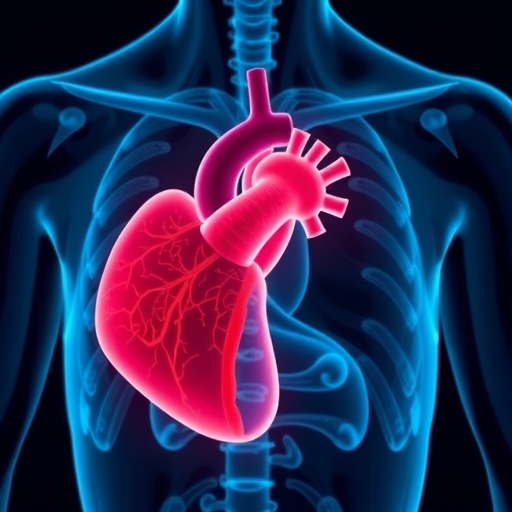
In a groundbreaking advancement poised to redefine cardiovascular health diagnostics, researchers Hasan and Dhrubo have unveiled an innovative artificial intelligence (AI) framework that not only improves the accuracy of cardiovascular disease (CVD) diagnosis but also ensures the interpretability and ethical responsibility of AI applications in healthcare. Published in Scientific Reports in 2026, their work addresses one of the most pressing challenges in medical AI: how to harness complex machine learning models while maintaining transparency and trustworthiness for both clinicians and patients.
Cardiovascular diseases remain the leading cause of death globally, with millions succumbing each year to heart attacks, strokes, and other related conditions. Early and precise diagnosis is critical, yet traditional diagnostic methods often rely on a mix of manually interpreted imaging, laboratory tests, and clinical judgment, which can be inconsistent and prone to human error. While AI has shown promise in enhancing diagnostic speed and accuracy, many existing models function as black boxes, leaving clinicians puzzled about how a diagnosis was reached. Hasan and Dhrubo’s AI framework ingeniously bridges this gap by embedding interpretability deeply into its architecture without sacrificing performance.
At the core of this breakthrough is a hybrid model that integrates deep learning with advanced, rule-based reasoning systems. Unlike conventional deep neural networks that produce outputs devoid of explanation, this framework generates diagnostic decisions alongside intelligible visual and textual explanations. These interpretations highlight medically relevant features in cardiological imaging and electrophysiological data and provide rationale grounded in established clinical guidelines. Such transparency is vital: it enables physicians to critically evaluate AI outputs, enhancing clinical decisions and patient safety.
Technically, the researchers utilized a multilayered convolutional neural network (CNN) trained on a vast dataset comprising cardiac MRI images, electrocardiograms (ECGs), and patient history records. However, instead of ending with mere predictive probabilities, Hasan and Dhrubo incorporated an attention mechanism that visualizes salient regions of the images that influenced the model’s diagnosis. Complementing this, a decision tree module synthesizes output rules that can be traced back to medical criteria well-recognized by cardiologists. This fusion of deep learning’s pattern recognition and rule-based clarity represents a paradigm shift in AI diagnostics.
The training process was enriched with data augmentation techniques and rigorous cross-validation to ensure robustness and generalizability across diverse populations. Impressively, the AI framework outperformed existing diagnostic tools, achieving higher sensitivity and specificity in detecting various cardiovascular conditions, including coronary artery disease and cardiomyopathies. Importantly, its interpretability features were found to increase clinician confidence substantially during evaluator studies, potentially accelerating clinical adoption.
Beyond clinical accuracy and transparency, ethical considerations underpin this research. The AI model explicitly addresses biases common in medical datasets that might lead to unequal care across different demographics. Hasan and Dhrubo incorporated fairness constraints that detect and mitigate bias during model training, thereby promoting equitable treatment recommendations. Moreover, the authors advocate for continuous monitoring of AI systems in real-world deployment to ensure adherence to these fairness principles.
Security and patient privacy were not overlooked. The framework employs federated learning—a decentralized training approach that allows learning from data distributed across multiple hospitals without requiring raw data sharing. This method preserves patient confidentiality while expanding the AI’s exposure to a broader spectrum of clinical data, enhancing its diagnostic competency.
Another notable feature is the system’s ability to provide uncertainty quantification. By conveying confidence intervals associated with each diagnosis, the AI helps clinicians assess the reliability of its recommendations. This uncertainty awareness supports better risk stratification and decision-making, particularly in ambiguous or borderline cases, which are often the most challenging in cardiology.
Hasan and Dhrubo’s framework also integrates seamlessly into existing hospital workflows, being compatible with standard electronic health records (EHR) systems and diagnostic imaging platforms. This interoperability reduces barriers to implementation, allowing cardiologists and care teams to access AI-assisted insights within their familiar clinical environments.
The research team conducted extensive clinical validation across multiple centers worldwide, encompassing diverse patient groups. Their findings confirm that the AI system maintains consistent performance irrespective of geographic or ethnic variations, bolstering its potential for global impact in combating cardiovascular diseases.
Looking forward, the authors envision expanding this AI framework to support personalized treatment planning, leveraging predictive analytics to tailor interventions based on individual patient profiles. Such an evolution could revolutionize not only diagnosis but also preventive cardiology by enabling proactive management aligned with personalized risk factors.
This work arrives at a moment when the healthcare industry increasingly recognizes the necessity of responsible AI innovation. By combining state-of-the-art machine learning techniques with ethical and practical considerations, Hasan and Dhrubo illuminate a path toward trustworthy, efficient, and patient-centered cardiovascular care.
Their research underscores the critical role of explainable AI in medicine, advocating that advanced algorithms must serve as transparent assistants rather than inscrutable authorities. This mindset shift is essential for fostering physician acceptance and ultimately improving patient outcomes on a global scale.
In summary, the interpretable and responsible AI framework introduced by Hasan and Dhrubo exemplifies the future of diagnostic technology. It enhances accuracy, facilitates clinician understanding, mitigates bias, protects privacy, and integrates within current medical infrastructures. These attributes collectively promise a new era of cardiovascular diagnostics, where AI empowers rather than replaces human expertise, leading to better healthcare delivery worldwide.
As cardiovascular disease continues to pose enormous health and economic burdens, advancements like these offer hope for significantly reducing mortality and morbidity. This study not only contributes a potent technological advancement but also sets a benchmark for ethical AI development, ensuring that progress in artificial intelligence aligns with humanity’s highest standards.
The fusion of deep learning interpretability, fairness, privacy preservation, and clinical validation makes this AI framework a landmark achievement. It exemplifies how cutting-edge research can translate into tangible, trustworthy tools that enrich physicians’ capabilities and enhance patient care. The cardiac health community—and indeed the entire medical field—will be watching closely as this framework moves from research to routine clinical use.
Subject of Research: Cardiovascular disease diagnosis using interpretable and responsible artificial intelligence.
Article Title: Advancing cardiovascular disease diagnosis with an interpretable and responsible AI framework.
Article References: Hasan, K.S., Dhrubo, I.S. Advancing cardiovascular disease diagnosis with an interpretable and responsible AI framework. Sci Rep (2026). https://doi.org/10.1038/s41598-026-35451-3
Image Credits: AI Generated
Tags: advanced AI frameworks for cardiologyAI-driven cardiovascular health toolscardiovascular disease diagnosis AIearly detection of cardiovascular conditionsethical AI in medical applicationsexplainable AI for clinicianshybrid deep learning and rule-based AIimproving diagnostic accuracy for heart diseaseinterpretable artificial intelligence in healthcarereducing human error in medical diagnosistransparency in machine learning modelstrustworthiness of AI in healthcare