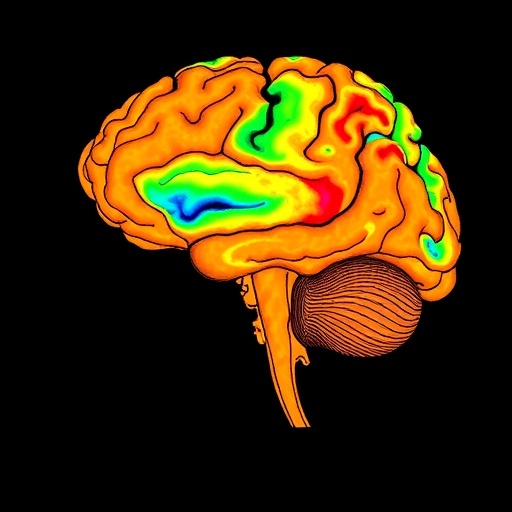
In a groundbreaking advancement in neuroscience, recent research has illuminated the intricate role of the entorhinal cortex in spatial memory and navigation, shedding new light on how task-relevant remote locations are represented in the brain. Traditionally, the hippocampal area CA1 has been considered pivotal in encoding spatial information, but this new study challenges that perspective, revealing that the entorhinal cortex operates independently in representing vital remote spatial cues. This discovery promises to reshape our understanding of the neural circuits underpinning cognitive maps and may have profound implications for navigation-related neural disorders.
The entorhinal cortex, positioned at the interface between the hippocampus and neocortex, has long been implicated in spatial processing and memory formation. It acts as a hub for integrating multimodal sensory information before transmitting it to the hippocampus. However, deciphering its autonomous functions apart from the hippocampus has been challenging due to their close anatomical and functional connectivity. The recent investigation used cutting-edge in vivo recording techniques combined with sophisticated behavioral paradigms to isolate entorhinal activity patterns when subjects engaged with tasks requiring navigation to specific, remote locations.
Crucially, the study employed a novel experimental design where subjects were trained to locate spatially distinct landmarks that were behaviorally relevant but physically separated from their immediate environment. By scrutinizing neural firing patterns within both the entorhinal cortex and CA1 during task performance, the researchers identified that the entorhinal cortex maintained distinct and robust representations of these remote sites regardless of CA1 activity fluctuations. This independence underscores the entorhinal cortex’s unique contribution to spatial cognition that transcends the conventional hippocampal circuitry model.
Central to these findings is the refined characterization of neuronal firing modes within the entorhinal cortex. Prior studies have identified grid cells, place cells, and head direction cells in this region, each contributing to spatial orientation and map construction. This new work elaborates on how different subsets of entorhinal neurons dynamically encode task-specific, remote spatial information that may be critical for guiding behavior towards goals not directly perceptible in the immediate sensory field. Notably, these entorhinal representations remained stable even when corresponding hippocampal signals were suppressed or altered.
Advanced calcium imaging and electrophysiological recordings allowed unprecedented temporal and spatial resolution in monitoring neuron populations during active navigation. The analysis revealed that the entorhinal cortex not only encodes static information about distant targets but also updates this information in real-time as subjects adjust their trajectories and strategies. This dynamic encoding likely facilitates flexible navigation in complex environments where direct sensory cues may be sparse or absent and emphasizes the entorhinal cortex’s capacity for integrating past experiences with current goals.
Moreover, the separability of entorhinal spatial codes from CA1 activity hints at parallel processing streams within the medial temporal lobe. Such a mechanism may enable the brain to simultaneously maintain multiple spatial representations or to switch between navigation strategies based on task demands. This dissociation also provides a new framework for understanding how spatial memory impairments manifest in neurological conditions such as Alzheimer’s disease, where entorhinal cortex degeneration occurs early and prominently.
The implications for translational research are profound. By targeting the entorhinal cortex specifically, future interventions could enhance spatial memory or compensate for hippocampal dysfunction. For example, neuroprosthetic devices or pharmacological treatments designed to modulate entorhinal activity might improve outcomes for patients with memory deficits or disorientation. Additionally, these findings open avenues for artificial intelligence algorithms inspired by the brain’s spatial coding strategies to improve robotic navigation systems and autonomous vehicles.
From a theoretical perspective, this study challenges existing models of hippocampal-dependent spatial memory by emphasizing the entorhinal cortex’s autonomous role. It encourages a re-examination of how cognitive maps are constructed and maintained, advocating for models that incorporate parallel and complementary spatial representations distributed across multiple brain regions. The complex interplay between medial temporal lobe structures appears more nuanced than previously appreciated, calling for integrative approaches in future research.
Experimental rigor was ensured by leveraging optogenetic manipulation to selectively inhibit CA1 activity while monitoring entorhinal responses. Such causal testing provides robust evidence for independence in spatial encoding and rules out confounding factors such as indirect feedback or compensatory mechanisms. The use of task-relevant remote locations, rather than proximal or landmark cues, also enhances ecological validity, mirroring real-world navigation challenges where distal goals must be tracked and remembered.
Additionally, the paper highlights the potential heterogeneity of entorhinal neuron subtypes involved in remote location coding, suggesting that discrete neuronal ensembles may specialize in encoding different spatial parameters or aspects of the task. Future research focusing on molecular and connectivity profiles of these ensembles could uncover new cell types or circuits involved in spatial cognition and memory. Understanding such cellular diversity will be crucial for designing targeted therapies or biomimetic technologies.
Beyond spatial navigation, this work may have broader implications for understanding how the brain integrates information over extended spatial and temporal scales. The entorhinal cortex is implicated in episodic memory and contextual associations, and its ability to represent remote task-relevant locations may reflect a generalized mechanism for linking disparate pieces of information across space and time. Such mechanisms are fundamental not only for navigation but also for planning, decision making, and imagination.
In conclusion, the pioneering findings by Aery Jones et al. mark a significant advance in cognitive neuroscience, revealing the entorhinal cortex as an independent and critical node for representing remote, task-relevant locations. As research progresses, these insights will likely catalyze a paradigm shift in how we conceptualize spatial memory networks and their contributions to cognition and behavior. This study not only deepens our grasp of brain function but also inspires innovative approaches to tackling disorders involving spatial and memory deficits.
Subject of Research: Neural representation of task-relevant remote locations in the entorhinal cortex independent of CA1 hippocampal activity.
Article Title: Entorhinal cortex represents task-relevant remote locations independently of CA1.
Article References:
Aery Jones, E.A., Low, I.I.C., Cho, F.S. et al. Entorhinal cortex represents task-relevant remote locations independently of CA1. Nat Neurosci (2026). https://doi.org/10.1038/s41593-026-02232-0
Image Credits: AI Generated
DOI: https://doi.org/10.1038/s41593-026-02232-0
Tags: autonomous entorhinal cortex functioncognitive neuroscience spatial processingentorhinal cortex in vivo recordingentorhinal cortex spatial memoryhippocampal CA1 independencehippocampus neocortex interfacemultimodal sensory integration brainnavigation-related neural disordersneural circuits cognitive mapsneural encoding remote locationsremote spatial task representationspatial navigation behavioral paradigms