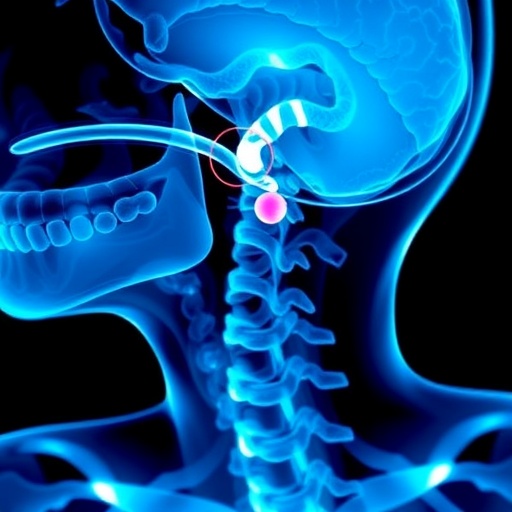
In the relentless pursuit of more effective cancer therapies, a pioneering clinical trial has emerged, casting new light on the treatment landscape for locoregionally advanced nasopharyngeal carcinoma (NPC). This rare but aggressive type of head and neck cancer has long posed significant therapeutic challenges, especially for patients who exhibit a suboptimal response to conventional induction chemotherapy. The recent phase 2 randomized trial spearheaded by Liu et al., published in Nature Communications, delves into the potential benefits of combining nimotuzumab with concurrent chemoradiotherapy (CRT), compared to the standard CRT regimen alone.
Nasopharyngeal carcinoma is distinct not only in its epidemiology but also in its biological behavior. Predominantly found in East and Southeast Asia, NPC often presents at an advanced locoregional stage due to its deep anatomical location and nonspecific early symptoms. Standard treatment protocols traditionally involve induction chemotherapy followed by concurrent chemoradiotherapy, aiming to maximize tumor control and survival outcomes. However, roughly a subset of patients fail to achieve optimal tumor regression following induction chemotherapy, necessitating alternative therapeutic strategies to improve prognosis.
Nimotuzumab, a humanized monoclonal antibody targeting the epidermal growth factor receptor (EGFR), has stirred considerable interest for its therapeutic potential in NPC. EGFR is frequently overexpressed in various epithelial cancers, including NPC, and plays a critical role in tumor proliferation, angiogenesis, and resistance to conventional therapies. Previous studies have suggested that nimotuzumab may enhance tumor radiosensitivity and chemo-responsiveness, potentially mitigating the aggressive biology and therapeutic resistance characteristic of advanced NPC.
The trial conducted by Liu and colleagues meticulously selected patients with locoregionally advanced NPC who demonstrated insufficient tumor shrinkage after induction chemotherapy—an identified cohort with a notably poor prognosis under existing treatment paradigms. Participants were randomly assigned to receive either the standard concurrent chemoradiotherapy alone or the same treatment regimen supplemented with nimotuzumab. This head-to-head comparison aimed to elucidate whether the addition of nimotuzumab could translate into meaningful clinical benefits regarding tumor control, survival outcomes, and safety profiles.
Key endpoints such as progression-free survival, overall survival, and toxicity rates were rigorously evaluated over an extended follow-up period. Significantly, the addition of nimotuzumab resulted in a marked improvement in progression-free survival, reflecting enhanced local and systemic disease control. Furthermore, overall survival analysis hinted at a favorable trend, underscoring nimotuzumab’s potential to alter the natural history of NPC among patients less responsive to induction chemotherapy.
A pivotal aspect of this study lies in its translational insight into the molecular mechanisms underpinning the observed clinical benefits. Nimotuzumab’s selective targeting of EGFR disrupts downstream signaling cascades essential for tumor cell proliferation and survival. This disruption sensitizes malignant cells to the cytotoxic effects of chemotherapy and ionizing radiation, thereby enhancing therapeutic efficacy. Unlike other EGFR inhibitors, nimotuzumab is characterized by an intermediate affinity that balances therapeutic effects with a reduced incidence of severe dermatologic and mucosal toxicities, contributing to its favorable safety profile.
The trial also provides compelling evidence that personalizing NPC treatment based on early chemotherapy response can refine therapeutic approaches. Stratifying patients by their initial tumor responsiveness enables clinicians to identify individuals who might derive significant advantages from targeted agents like nimotuzumab. This paradigm aligns with the broader oncology trend towards precision medicine, where tailored regimens optimize efficacy while minimizing unnecessary toxicity.
Moreover, concomitant administration of nimotuzumab did not exacerbate the already challenging toxicity associated with concurrent chemoradiotherapy. Patients tolerated the combined regimen well, with manageable adverse effects primarily comprising mild to moderate mucositis, skin reactions, and hematologic impairments. This tolerability is critical, as maintaining dose intensity and treatment adherence is paramount in achieving successful clinical outcomes in aggressive malignancies like NPC.
The implications of this study extend beyond NPC itself. It accentuates the value of integrating molecular targeted therapies with established treatment modalities, especially in cancers where resistance mechanisms to conventional chemotherapy and radiotherapy undermine therapeutic success. Nimotuzumab’s role exemplifies how antibody-based therapies can be adeptly woven into existing protocols to enhance tumor control without compromising patient quality of life.
Another notable dimension is the study’s rigorous design, which represents a methodological gold standard in oncology research. The randomized phase 2 structure, coupled with robust patient selection criteria and comprehensive outcome analyses, strengthens the validity and generalizability of the findings. This methodological rigor is essential for advancing promising therapies toward larger phase 3 trials and eventual clinical adoption.
Importantly, the study encourages further exploration into combinational strategies that may include immunotherapeutic agents or novel small molecule inhibitors alongside nimotuzumab and CRT. Given the complex interplay of tumor biology, immune evasion, and microenvironmental factors in NPC progression, multipronged approaches are likely necessary to achieve durable remissions and improve long-term survival.
Furthermore, cost-effectiveness and accessibility considerations cannot be overlooked. Nimotuzumab’s addition, while clinically advantageous, mandates evaluations of economic impact, particularly in regions with high NPC prevalence but limited healthcare resources. Balancing clinical benefits with affordability will be a crucial factor in its widespread implementation.
In conclusion, Liu et al.’s study heralds a new chapter in the management of locoregionally advanced nasopharyngeal carcinoma. By combining nimotuzumab with concurrent chemoradiotherapy in patients exhibiting suboptimal responses to induction chemotherapy, the trial uncovers a promising therapeutic avenue that might significantly enhance patient outcomes. This approach not only addresses an unmet clinical need but also exemplifies the potential of precision oncology to refine and revolutionize cancer treatment paradigms.
As the oncology community digests these findings, the anticipation for subsequent phase 3 trials mounts. Should further research corroborate these results, the standard of care for nasopharyngeal carcinoma could be poised for transformative change, offering renewed hope to patients confronting this formidable disease.
The integration of targeted biologics into multimodal cancer therapy underscores an exciting frontier where molecular insights translate into tangible clinical advancements. Nimotuzumab’s capacity to sensitize tumors and augment existing treatment techniques in NPC embodies this translational success. Given the aggressive nature of locoregionally advanced nasopharyngeal carcinoma and the persistent challenges in improving survival, these findings signify a critical step forward in oncologic innovation.
For patients facing a dismal prognosis after induction chemotherapy, the prospect of enhanced efficacy through nimotuzumab addition offers a beacon of optimism. While further investigations are essential to validate and expand upon these results, the current data chart an encouraging course toward more effective and personalized NPC management.
Subject of Research: Locoregionally advanced nasopharyngeal carcinoma treatment strategies and efficacy of nimotuzumab combined with concurrent chemoradiotherapy for patients with suboptimal response to induction chemotherapy.
Article Title: Concurrent chemoradiotherapy plus nimotuzumab versus chemoradiotherapy alone for locoregionally advanced nasopharyngeal carcinoma with a suboptimal response to induction chemotherapy: a randomized phase 2 trial.
Article References:
Liu, LT., Sun, XS., Quan, TT. et al. Concurrent chemoradiotherapy plus nimotuzumab versus chemoradiotherapy alone for locoregionally advanced nasopharyngeal carcinoma with a suboptimal response to induction chemotherapy: a randomized phase 2 trial. Nat Commun (2026). https://doi.org/10.1038/s41467-026-71019-5
Image Credits: AI Generated
Tags: advanced nasopharyngeal cancer treatmentchemoradiotherapy for NPCcombination therapy in nasopharyngeal cancerconcurrentEGFR-targeted therapy in head and neck cancerimproving tumor regression in NPCinduction chemotherapy resistance in NPClocoregionally advanced nasopharyngeal carcinomamonoclonal antibodies in cancer treatmentnimotuzumab in nasopharyngeal carcinomaphase 2 clinical trial nasopharyngeal carcinomatargeted therapies for epithelial cancers