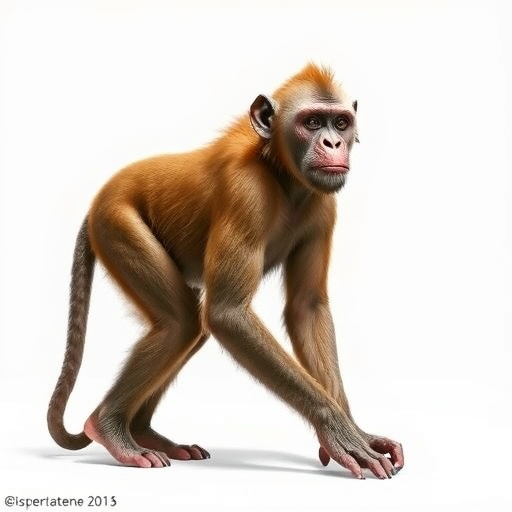
A groundbreaking discovery from northern Egypt is poised to redefine our understanding of early ape evolution and the biogeographic history of modern hominoids. An international team of paleontologists, spearheaded by the Mansoura University Vertebrate Paleontology Center and the University of Southern California, have uncovered a new fossil ape species, Masripithecus moghraensis, dating back approximately 17 to 18 million years to the Early Miocene epoch. This remarkable finding fills a significant void in the fossil record, as it represents the first unequivocal evidence of apes in North Africa during this period—a region previously thought to harbor only monkeys.
The discovery site, Wadi Moghra, located in northern Egypt, has historically yielded important vertebrate fossils, but the appearance of an ape in this region shifts the paleobiogeographic landscape decisively. Previously, Early Miocene ape fossils were predominantly recovered from East Africa, leaving a conspicuous gap in the North African fossil record and, by extension, clouding hypotheses about the geographic origin of crown Hominoidea—the clade encompassing all extant apes including gibbons, orangutans, gorillas, chimpanzees, and humans.
Masripithecus moghraensis is represented by a robust lower jaw fossil that showcases a suite of anatomical adaptations distinct from those seen in contemporaneous East African apes. Notably, its dentition exhibits exceptionally large canines and premolars, alongside molars with rounded occlusal surfaces densely packed with pronounced cusps and enamel ridges. This dental morphology suggests a durophagous dietary flexibility allowing the consumption of a variety of foods, from fruits to harder nuts and seeds. Such versatility would have been advantageous in the Early Miocene ecosystems of North Africa and Arabia, which experienced increasing seasonality and climatic fluctuations.
The anatomical distinctiveness of Masripithecus extends to its mandibular robustness, which indicates powerful masticatory muscles capable of processing a diverse range of foodstuff. This morpho-functional inference is critical, as it paints a picture of an adaptive strategy that likely enhanced survival amid environmental pressures, contrasting with the more specialized diets inferred from other Miocene ape specimens. The team’s detailed morphological comparisons also emphasize that Masripithecus does not cluster phylogenetically with the East African species, signaling a potentially unique evolutionary lineage within the early Hominoidea.
Beyond morphology, the research incorporates Bayesian phylogenetic analytical methods that synthesize morphological data from both extinct and extant species, molecular sequences from living apes, and stratigraphic ages of fossils. This integrative approach positions Masripithecus as the closest known Early Miocene relative to living apes when compared to East African taxa of the same period. Such a finding revises long-held paradigms that proposed East Africa as the cradle of modern hominoids, instead elevating northern Africa and the adjacent Middle East as crucial epicenters for early ape diversification.
Biogeographic reconstructions further underscore the strategic importance of the Afro-Arabian region during the Early Miocene. Tectonic movements associated with the convergence of the African and Arabian plates with Eurasia intermittently reduced seaways, generating biotic corridors that facilitated faunal exchanges between continents. The presence of Masripithecus in this nexus highlights a previously underappreciated dispersal and radiation zone for hominoids, bridging gaps between the African and Eurasian fossil records and thus illuminating migration routes and evolutionary connectivity across landmasses.
These insights compel a reevaluation of the geographic and ecological contexts in which crown Hominoidea arose. The North African and Middle Eastern regions emerge as pivotal landscapes that not only hosted active ape populations during a formative evolutionary phase but may have also served as staging grounds from which multiple dispersal events into Eurasia occurred. This scenario is consonant with the fossil record’s increasing complexity and genetic evidence pointing to a multifaceted origin of living apes.
The implications of this discovery extend into the broader evolutionary narrative, suggesting that the diversity and adaptability of early hominoids were greater than previously appreciated. The versatile dentition and jaw mechanics of Masripithecus reflect a lineage molded by dynamic environmental pressures, which likely contributed to its survival and evolutionary success. Understanding these adaptive strategies enriches models of primate evolution and aids in interpreting subsequent hominoid radiations and extinctions.
For paleontologists and evolutionary biologists, the unearthing of Masripithecus moghraensis serves as a clarion call to intensify exploration in underrepresented fossiliferous localities, especially within North Africa and the Middle East. Current findings suggest that critical chapters of ape—as well as human—evolutionary history remain buried in these regions, waiting to be uncovered. Such endeavors promise to reshape our comprehension of hominoid origins and the intricate interplay between environment, geography, and biological innovation.
The research team, including senior author Hesham Sallam and co-author Erik Seiffert, emphasizes that this discovery challenges longstanding assumptions and highlights the importance of integrating multidisciplinary methodologies. Their comprehensive analysis punctuates the emerging consensus that early ape evolution was not confined to previously spotlighted regions like East Africa but was instead a complex process spanning multiple biogeographic zones.
The fossil’s distinctive anatomical features, its strategic phylogenetic placement, and the robust geochronological framework woven through this study collectively establish Masripithecus as a keystone species. It bridges disparate narratives within the fossil record, thereby advancing our grasp on how the Hominoidea lineage came to be so widespread and diverse. As such, this discovery signifies a major leap forward in the quest to piece together the mosaic of primate evolution.
Future research propelled by the discovery of Masripithecus moghraensis is poised to unravel deeper evolutionary mysteries, potentially elucidating extinct ape lineages and clarifying how evolutionary processes like natural selection and migration sculpted the trajectory of apes. This breakthrough sets the stage for a new era of paleontological inquiry that promises to yield richer, more nuanced perspectives on our shared evolutionary heritage.
Subject of Research: Not applicable
Article Title: An Early Miocene ape from the biogeographic crossroads of African and Eurasian Hominoidea
News Publication Date: 26-Mar-2026
Web References: http://dx.doi.org/10.1126/science.adz4102
Image Credits: Copyrights belong to Professor Hesham Sallam
Keywords: Masripithecus moghraensis, Early Miocene, fossil ape, North Africa, hominoid evolution, Wadi Moghra, paleoanthropology, hominoid biogeography, Mansoura University, University of Southern California, crown Hominoidea, primate adaptation
Tags: ape dentition adaptationsearly ape evolution in AfricaEarly Miocene ape evolutionevolution of modern hominoidsMasripithecus moghraensis fossil discoveryMiocene epoch primate fossilsMiocene primates in EgyptNorth Africa fossil record gapNorth African hominoid fossilspaleobiogeography of apesvertebrate paleontology northern EgyptWadi Moghra fossil site