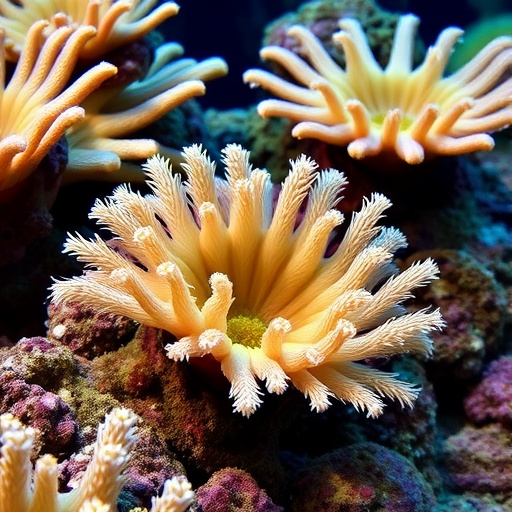
The intricate and delicate processes of coral reproduction are profoundly influenced by environmental variables, a topic that has garnered significant scientific interest as climate change and anthropogenic disturbances escalate. A recent study by Chang et al. (2026) comprehensively examines the interactive effects of temperature fluctuations, hyposalinity conditions, and sperm concentration gradients on the fertilisation success and embryonic development of two ecologically significant coral species, Acropora tumida and Platygyra carnosa. This research, published in Scientific Reports, provides critical insights into how multifaceted stressors may synergistically jeopardize coral reproductive outcomes, with wide-ranging implications for reef resilience and conservation strategies.
Coral ecosystems are the foundation of marine biodiversity hotspots, yet their reproductive capacity is vulnerable to environmental stressors that disrupt the finely tuned processes of gamete release, fertilisation, and subsequent embryogenesis. The study by Chang and colleagues delves deeply into these vulnerabilities by subjecting gametes and embryos of A. tumida and P. carnosa to controlled laboratory experiments that simulate temperature increases representative of ongoing ocean warming, alongside reducing salinity levels to mimic freshwater influx events. Furthermore, researchers manipulated sperm concentrations to understand fertilisation dynamics under suboptimal sperm availability, a condition frequently occurring in compromised or fragmented populations.
Temperature acts as a critical determinant in coral reproductive success by influencing gamete viability and embryonic development pathways. The research delineates how elevated temperatures beyond the species-specific optimal range exacerbate developmental abnormalities and reduce fertilisation rates. Particularly for Acropora tumida, temperatures exceeding 30°C resulted in a significant decline in fertilisation success, indicative of thermal stress impairing cellular mechanisms essential for sperm-egg recognition and fusion. Beyond fertilisation, thermal stress permeated embryogenesis stages, increasing mortality rates during blastulation and gastrulation phases, which are crucial for successful larval development.
Hyposalinity, an often overlooked factor in coral reproductive studies, emerges in this research as a potent disruptor of gamete function and early developmental events. The experimental exposure to salinity levels as low as 25 PSU (practical salinity units), substantially below the normal seawater salinity of approximately 35 PSU, resulted in pronounced decreases in fertilisation efficiency in both coral species. The osmotic stress imposed by hyposaline conditions likely interferes with sperm motility and egg membrane integrity, impeding the necessary biochemical interactions for successful fertilisation. Embryonic stages exhibited heightened susceptibility, with altered cellular morphology and disrupted cleavage patterns under reduced salinity, signaling impaired developmental programming.
The compounded effect of sperm concentration on fertilisation success was explored in nuanced experimental setups, revealing that low sperm densities significantly limit fertilisation outcomes, a phenomenon aggravated under conditions of elevated temperature and diminished salinity. This insight underscores a potential reproductive bottleneck in natural reef populations where sperm dilution is common due to hydrodynamic dispersal and population fragmentation. For Platygyra carnosa, the fertilisation rates dropped steeply at sperm concentrations below 10^4 sperm per milliliter, a threshold further exacerbated by temperature and salinity stressors. The study illustrates that sperm concentration is not an isolated factor but interacts dynamically with environmental variables to dictate reproductive viability.
In their methodological approach, Chang et al. meticulously quantified fertilisation success by assessing the percentage of eggs achieving first cleavage within 6 hours post-fertilisation under varied experimental conditions. Embryonic developmental stages were monitored up to the planula larval phase, capturing morphological and physiological markers indicative of developmental health. Advanced microscopy techniques, combined with rigorous statistical analyses, strengthened the reliability of their conclusions. This robust experimental framework sets a benchmark for future ecophysiological research on coral reproductive biology.
The biological mechanisms underlying the observed patterns are likely multifactorial. Elevated temperatures may alter the enzymatic activities regulating gamete recognition proteins and calcium signaling pathways integral to fertilisation. Similarly, hyposaline stress disturbs ionic gradients essential for maintaining membrane polarization and sperm flagellar motion. Reduced sperm concentrations limit gamete encounters, a challenge amplified when gamete motility is compromised by environmental stressors. These insights reveal a complex network of physiological constraints that corals must navigate for successful reproduction in changing environments.
Importantly, this research raises alarms about the ongoing effects of climate change on coral life cycles beyond the well-documented thermal bleaching events. The sublethal impacts on reproductive processes imply that coral population replenishment rates will suffer, potentially triggering long-term declines in reef biodiversity and structural complexity. The findings emphasize that conservation efforts must consider the multifaceted nature of environmental stressors and their cumulative impacts on reproductive success, rather than focusing solely on adult coral health or bleaching thresholds.
The study also highlights interspecific differences in resilience and vulnerability. Acropora tumida, a fast-growing branching coral, exhibited more pronounced declines in fertilisation and embryonic development under thermal and hyposaline stress compared to the massive Platygyra carnosa. This disparity suggests that reef community composition may shift as more sensitive species experience reproductive collapse, favoring corals with broader environmental tolerances or more robust reproductive mechanisms, thereby altering ecosystem dynamics.
In addressing potential mitigation strategies, the authors propose that reef restoration initiatives might need to integrate assisted reproductive technologies that compensate for natural fertilisation challenges under stressful conditions. Techniques such as concentrated sperm collection and controlled fertilisation in hatcheries could bolster larval production, enhancing restoration success. Additionally, identifying and protecting refugia with stable temperature and salinity regimes is pivotal for preserving genetic diversity and reproductive capacity.
The broader ecological implications extend to the potential feedback loops where declining coral populations reduce habitat complexity, negatively impacting reef-associated species that rely on corals for shelter and food. Disrupted coral reproduction compromises recruitment, which in turn diminishes reef recovery potential after disturbances, potentially leading to simplified ecosystems with reduced resilience to environmental change.
Chang et al.’s study exemplifies the urgent need for integrated research approaches combining physiology, ecology, and environmental science to decipher the multifaceted challenges facing coral reefs. The clear demonstration that subtle shifts in abiotic factors can drastically curtail reproductive success should galvanize policy makers, conservationists, and marine managers to enact strategies that address both local stressors and global climate mitigation.
Furthermore, this research underscores the importance of long-term monitoring of coral reproductive dynamics in situ, as laboratory conditions may not capture interactive effects present in natural reef settings, such as microbial interactions and nutrient availability. Nonetheless, the controlled experiments provide foundational knowledge critical for developing predictive models of coral population trajectories under various climate scenarios.
As ocean temperatures and freshwater inflows are projected to increase in many tropical marine regions, the findings signal that without concerted action to mitigate climate change and manage local stressors such as sedimentation and water quality degradation, coral reproductive capacity will remain compromised. This work serves as a clarion call for heightened awareness and expedited research into the reproductive ecology of corals, which ultimately dictates the persistence and recovery of reef ecosystems.
In conclusion, the interplay of elevated temperatures, hyposalinity, and declining sperm concentration constitutes a triad of stressors that pose significant threats to the reproductive success of Acropora tumida and Platygyra carnosa. This study offers a detailed mechanistic understanding, with implications extending to reef conservation and restoration in the Anthropocene. It highlights the pressing need for holistic strategies to safeguard the reproductive processes vital to coral survival and reef ecosystem integrity in a rapidly changing ocean.
Subject of Research:
The study investigates the effects of environmental stressors—specifically temperature increases, hyposalinity, and reduced sperm concentration—on fertilisation efficiency and embryonic development in the coral species Acropora tumida and Platygyra carnosa.
Article Title:
Effects of temperature, hyposalinity, and diminishing sperm concentration on fertilisation and embryonic development in Acropora tumida and Platygyra carnosa.
Article References:
Chang, T.K.T., Chan, J.T.C., Cheung, B.C.T. et al. Effects of temperature, hyposalinity, and diminishing sperm concentration on fertilisation and embryonic development in Acropora tumida and Platygyra carnosa. Sci Rep (2026). https://doi.org/10.1038/s41598-026-41257-0
Image Credits:
AI Generated
Tags: Acropora tumida reproductive biologyanthropogenic impacts on coral reproductive processescoral fertilisation success under hyposalinitycoral gamete release and embryogenesiscoral reef resilience and conservation strategiescoral reproduction and environmental stresseffects of temperature on coral fertilisationimpact of salinity changes on coral embryoslaboratory simulation of ocean warming on coralsPlatygyra carnosa reproduction under stresssperm concentration influence on coral fertilisationsynergistic effects of climate change on coral reefs