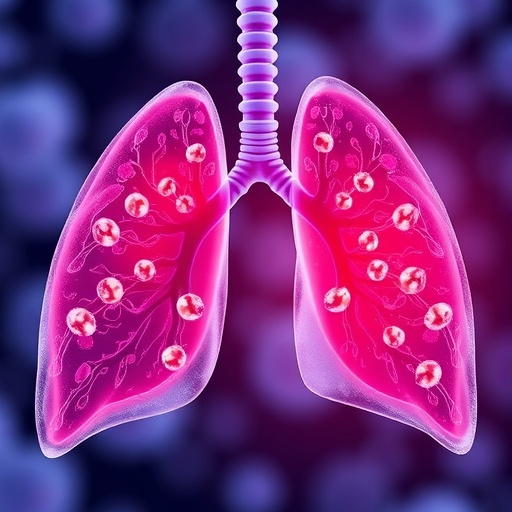
In a groundbreaking discovery that reshapes our understanding of metastatic lung cancer, researchers at the VIB-KU Leuven Center for Cancer Biology, in collaboration with the Francis Crick Institute, have uncovered a novel mechanism by which cancer cells co-opt healthy lung tissue to fuel tumor growth. This paradigm-shifting research, recently published in the prestigious journals Nature Cell Biology and Cancer Discovery, reveals that cancer cells do not operate in isolation; rather, they manipulate the lung’s resident alveolar type II (AT2) cells to increase lipid production, which in turn supports metastatic tumor progression.
Metastasis—the dissemination of cancer cells from their primary site to distant organs—is responsible for the majority of cancer-related deaths worldwide. Among common metastatic niches, the lungs are particularly vulnerable, often becoming the settlement ground for secondary breast cancer tumors. Once metastasis occurs, treatment options dwindle dramatically, and the prognosis is grim. The complexity of the tumor microenvironment and its interactions with host cells, however, has presented a challenging frontier for oncological research. This latest study sheds critical light on how resident lung cells, rather than being passive bystanders, actively facilitate metastatic colonization and expansion.
Alveolar type II cells, crucial for maintaining lung homeostasis and facilitating gas exchange, have now been identified as unwitting accomplices in the metastatic cascade. Prior research had established that AT2 cells prepare the lung environment to be more receptive to incoming cancer cells. However, the role of these cells after metastases are established remained uncharted territory—until now. Profoundly, the research teams led by Sarah-Maria Fendt and Mariia Yuneva demonstrated that once metastases are formed, cancer cells induce AT2 cells to disproportionately ramp up the synthesis of lipids. These lipids, rather than merely serving nutritive or structural roles, act as crucial signaling molecules that empower cancer cells to thrive and expand.
Delving deeper into this intricate cellular crosstalk, the scientists found that cancer cells essentially hijack the metabolic machinery of AT2 cells, coaxing them into overproducing lipid metabolites. This lipid surplus does not simply act as an energy reserve. Instead, it drives significant molecular modifications inside cancer cells themselves. Specifically, lipid molecules such as palmitate integrate into proteins through post-translational modifications known as lipidation. This process alters protein function and cellular signaling pathways in ways that favor tumor growth and metastasis.
Remarkably, experimental reduction of lipid availability from AT2 cells demonstrated a striking decrease in metastatic tumor growth in vivo. This finding suggests a promising therapeutic avenue: rather than directly targeting the genetically unstable cancer cells, interventions could be designed to modulate the metabolic output of local lung cells that the tumors exploit. By disrupting the supply chain of molecular signals, the tumor’s supportive microenvironment is dismantled, curtailing cancer progression.
The robustness of these findings is enhanced by the collaborative, multidisciplinary approach undertaken by the teams at two leading research institutes. Using complementary experimental models and cutting-edge molecular techniques, the researchers observed consistent results that persist across various biological contexts. This reproducibility strengthens the validity of the lipid metabolism axis as a viable target for clinical intervention.
Beyond its mechanistic implications, this research also advances the clinical understanding of patient stratification for emerging lipid metabolism inhibitors. Several clinical trials are currently underway, exploring drugs that inhibit enzymes involved in lipid synthesis. However, identifying the subset of patients in whom these drugs will be most effective remains a critical challenge. The current studies provide a roadmap by revealing that patients whose lung metastases are heavily infiltrated by AT2 cells may derive the most pronounced benefit from such therapies, enabling a more personalized and efficacious treatment paradigm.
From a molecular oncology perspective, this research expands the scope of heterotypic cell interactions within the metastatic niche, underscoring the importance of tumor microenvironment dynamics in cancer therapy. By exposing the previously unappreciated role of AT2 cell lipid production in lung metastasis, the studies open the door for the development of novel pharmacological inhibitors that target non-cancerous host cells to inhibit tumor progression.
Furthermore, the implications may transcend metastasis, hinting at potential roles for AT2 lipid metabolism in primary lung tumorigenesis. Although a direct causal link remains to be established, the observed crosstalk between cancer cells and AT2 cells suggests that lipid metabolic pathways could be critical in the broader landscape of lung cancer biology. This insight invites future investigations into how AT2 cells contribute to the initiation and maintenance of malignant lung tumors.
The technical elegance of this research is marked by its dual investigative strategy: one study elucidated the metabolic rewiring of AT2 cells in lung metastases, while the other dissected the downstream intracellular signaling events in cancer cells triggered by lipid incorporation. This multifaceted approach harnessed sophisticated experimental modalities, including metabolic flux analysis, lipidomics, and in vivo metastasis models, thereby painting a comprehensive picture of the lipid-centric tumor-host interaction.
Overall, these pioneering studies represent a significant leap forward in the battle against metastatic lung cancer. By redefining the metabolic dependencies of cancer cells and illuminating novel pathways of intercellular communication, these discoveries offer hope for more effective treatments that harness the biology of healthy lung tissue to combat malignancy.
Subject of Research: Cells
Article Title: Targeting the Lipid Metabolism Proteins FASN and GPAM in Alveolar Type II Cells Decreases Lung Metastasis.
News Publication Date: 17-Mar-2026
Keywords: Cell biology, Biochemistry, Immunology, Molecular biology
Tags: alveolar type II cells lipid productionbreast cancer lung metastasiscancer cell manipulation of healthy cellsFrancis Crick Institute cancer studylipid metabolism in cancer progressionlung metastasis inhibitionmetastatic lung cancer mechanismmetastatic tumor growth supportnovel cancer metastasis treatment strategiestargeting lipid synthesis in lung cellstumor microenvironment interactionVIB-KU Leuven cancer research