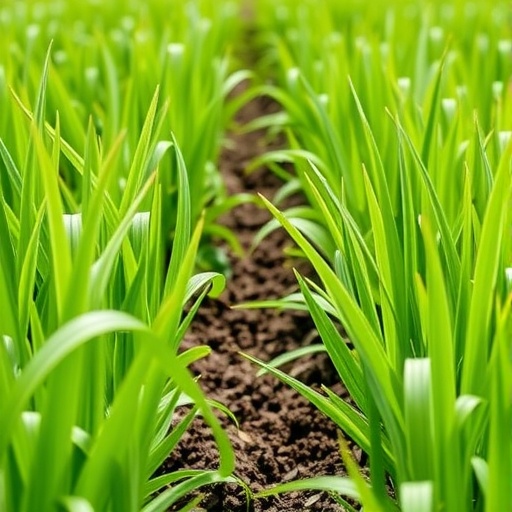
In a groundbreaking advancement poised to reshape sustainable agriculture, recent research has illuminated the profound impact of combining vermicompost with urea on the nutritional composition and biomass yield of forage grasses. This innovative study, conducted by Mekcha, Asmare, Beyero, and colleagues, reveals compelling synergistic effects that could significantly enhance livestock nutrition while promoting environmentally friendly farming practices. As the global demand for high-quality forage intensifies, this research offers promising implications for boosting forage productivity and nutritional value through eco-conscious fertilizer management.
Forage grasses form the backbone of livestock feed systems worldwide, directly influencing animal health and productivity. Traditional fertilization approaches often rely heavily on synthetic nitrogen fertilizers like urea, which, despite their effectiveness in promoting growth, pose environmental challenges including nutrient leaching and greenhouse gas emissions. Vermicompost, derived from the decomposition of organic waste by earthworms, has emerged as a potent biofertilizer rich in nutrients, beneficial microorganisms, and humic substances that enhance soil health. By meticulously evaluating the integration of these two fertilization strategies, the study paves the way for optimized forage grass cultivation with reduced ecological footprint.
The researchers embarked on an extensive experimental protocol analyzing the effects of vermicompost and urea applications, both independently and in combination, on various forage grasses. The results disclosed a remarkable increase in both fresh and dry biomass yields in treatments where vermicompost supplemented urea, compared to singular use of either input. This synergistic combination leverages the slow-release property and microbial enhancement from vermicompost alongside the immediate nitrogen availability from urea, orchestrating a balanced nutrient profile essential for vigorous plant growth.
Beyond just yield, the investigation scrutinized the nutritional composition of the harvested forage, focusing on key parameters such as crude protein content, fiber fractions, digestibility, and mineral concentration. Enhancing these nutritional qualities is critical for improving feed efficiency and livestock productivity. The findings demonstrated that vermicompost-urea treated grasses exhibited substantially elevated crude protein levels, indicative of superior nitrogen assimilation facilitated by microbial activity stimulated by vermicompost.
In addition, fiber components, including neutral detergent fiber and acid detergent fiber, which dictate forage digestibility, were favorably modified under combined treatments. These alterations promote enhanced ruminal fermentation, translating to better feed conversion rates in ruminants. The mineral analysis further underscored increased availability of essential macro and micronutrients such as calcium, magnesium, and trace elements, which are pivotal for animal metabolic functions and immune competence.
The sophisticated mechanisms underlying these improvements stem from vermicompost’s ability to enhance soil biophysical properties, including increased porosity, moisture retention, and cation exchange capacity. These changes not only improve root proliferation and nutrient uptake efficiency but also sustain microbial communities integral for nutrient cycling. Meanwhile, urea provides an immediately accessible nitrogen source crucial during peak vegetative growth phases, ensuring optimal forage development.
Importantly, this dual-application strategy addresses some of the limitations encountered with exclusive reliance on chemical fertilizers. Vermicompost mitigates the potential for nitrogen losses through volatilization and leaching by stabilizing nitrogen compounds within the soil matrix. This minimizes environmental hazards such as water eutrophication and atmospheric pollution, aligning forage production practices with global sustainability goals and climate-smart agriculture initiatives.
The relevance of this research is underscored by the pressing needs in global livestock systems, particularly in regions where resource constraints limit input availability but livestock production demands continue to escalate. By adopting integrated fertilization regimes incorporating vermicompost, farmers can harness local organic waste streams for biofertilizer production, reducing dependency on industrial nitrogen sources and lowering production costs while improving forage quality.
Additionally, enhancing forage nutritive value directly impacts animal performance metrics, including weight gain, milk yield, and reproductive efficiency. Improved feed quality reduces the need for supplemental protein concentrates, which are often expensive and ecologically taxing. Thus, this approach offers a multifaceted benefit spanning economic viability, animal welfare, and environmental stewardship.
The study’s methodology involved rigorous field trials under controlled agronomic conditions, enabling precise assessments of yields and compositional attributes across different growth stages. Advanced analytical techniques such as near-infrared spectroscopy and atomic absorption spectrometry were employed to quantify biochemical constituents and mineral profiles, ensuring robust data accuracy and reproducibility. Such methodological rigor enhances confidence in extrapolating these findings to diverse agroecological contexts.
As the worldwide community grapples with the twin challenges of feeding a growing population and mitigating environmental degradation, the integration of organic and inorganic nutrient sources emerges as a promising conduit towards resilient agricultural practices. This pioneering work exemplifies strategic innovation in nutrient management by coupling traditional organic amendments with contemporary synthetic fertilizers, creating a harmonious balance that supports both productivity and sustainability.
Looking forward, scaling these findings into practical farming systems necessitates extension efforts, farmer education, and supportive policy frameworks that incentivize sustainable fertilization practices. Further research exploring the long-term soil health impacts, economic analyses, and feasibility under varying climatic conditions will augment the applicability and impact of these interventions. Moreover, expansion into diverse forage species and cropping systems will provide a comprehensive understanding of vermicompost and urea synergism.
In conclusion, the research by Mekcha et al. decisively highlights how blending vermicompost with urea unlocks unprecedented improvements in forage grass yield and nutritional quality, marking a significant stride in sustainable forage production. This integrated fertilization paradigm not only bolsters forage supply but also champions ecological balance, laying a viable foundation for future innovations in agroecology and livestock nutrition. It is an inspiring testament to how science-driven solutions can chart pathways toward food security and environmental resilience.
Subject of Research: Nutritional composition and yield enhancement of forage grasses through vermicompost and urea treatment
Article Title: Nutritional composition and yield of forage grasses treated with vermicompost and urea
Article References:
Mekcha, E., Asmare, B., Beyero, N. et al. Nutritional composition and yield of forage grasses treated with vermicompost and urea. Sci Rep (2026). https://doi.org/10.1038/s41598-026-43372-4
Image Credits: AI Generated
Tags: biomass yield improvement in forage grasseseco-friendly fertilizer managementhumic substances in soil healthintegrated nutrient management for foragelivestock feed quality enhancementmicrobial activity in vermicompostnitrogen leaching reduction strategiesorganic waste biofertilizer benefitsreducing nitrogen fertilizer environmental impactsustainable forage grass nutritionsustainable livestock nutrition systemsvermicompost and urea fertilizer synergy