In a breakthrough that could revolutionize treatments for swallowing disorders, a collaborative research team from Kyoto University in Japan and McGill University in Canada has developed an innovative approach to stem cell therapy, utilizing biodegradable nanogels integrated into three-dimensional stem cell spheroids. The technique addresses a critical hurdle in regenerative medicine for muscle repair — the limited survival and functionality of transplanted stem cells in damaged tissues. By embedding nanogel microfibers within the cell clusters, the team has significantly enhanced oxygen diffusion, cell viability, and muscle regeneration after injury, demonstrating promising results in a rat model afflicted with swallowing muscle damage.
Swallowing is a vital physiological process essential for nutrition and communication, yet muscle injuries in this region can severely impair quality of life. Such injuries commonly occur following treatments for head and neck cancers or due to age-related muscular degeneration. Existing therapeutic options for swallowing difficulties remain limited, as muscle tissue has a poor capacity to regenerate naturally, especially in aging populations. Stem cell therapy holds considerable promise for overcoming these limitations, but its efficacy has been hampered by the rapid death of transplanted cells in the harsh microenvironment of injured muscle, which is often characterized by low oxygen tension and inflammatory stress.
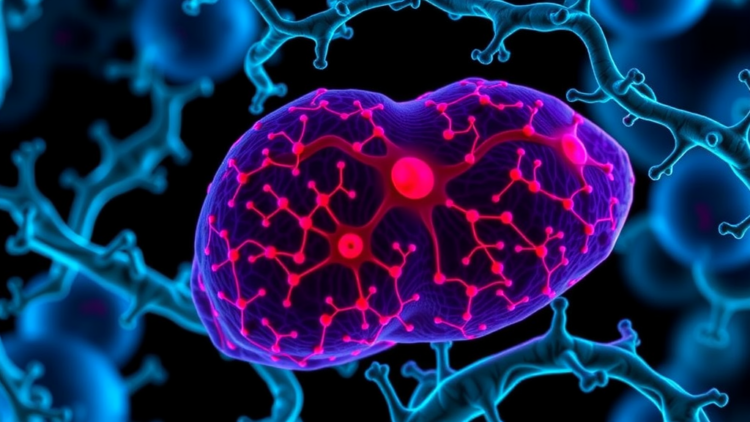
The potential of stem cells can be maximized by employing spheroids—dense, three-dimensional aggregates of cells that better mimic physiological conditions compared to traditional two-dimensional cultures. However, while spheroids enhance certain cellular functions, their size often leads to the formation of a necrotic core where cells are starved of oxygen and nutrients. This phenomenon significantly reduces the therapeutic potential of stem cell spheroids in tissue regeneration. Seeking to overcome this challenge, the Kyoto-McGill team innovated by incorporating biodegradable nanogels into the spheroids, creating a hybrid structure designed to physically support the cells and improve their microenvironment.
These nanogels are fabricated from cholesterol-modified pullulan, a carbohydrate polymer known for its biocompatibility and biodegradability. The researchers employed a chemical process known as “click” chemistry to crosslink the polymer chains, yielding microfiber-like fragments that are soft yet structurally supportive. When combined with connective tissue-derived stem cells, these nanogel microfibers formed hybrid spheroids that not only sustained cell viability but also facilitated the diffusion of oxygen throughout the cluster. This biomaterial design effectively prevented the cell death that typically occurs in densely packed cell spheroids.
Extensive computational simulations of oxygen diffusion within these hybrid spheroids revealed a marked improvement in oxygen availability at the core, aligning with experimental data showing a significant increase in cell survival—over five times higher compared to spheroids without nanogels. Moreover, the hybrid spheroids secreted greater amounts of regenerative paracrine factors, proteins known to stimulate tissue repair and modulate inflammation. Mechanical testing further confirmed that the inclusion of nanogels enhanced the spheroids’ physical resilience, a property that can aid cellular engraftment in the dynamic environment of injured muscle.
To translate these findings into practical therapy, the research team transplanted the hybrid spheroids into a rat model of swallowing muscle injury. Histological analyses demonstrated markedly improved muscle tissue regeneration, with increased deposition of new muscle fibers and a reduction of fibrotic scarring. Importantly, cell retention rates within the injured muscle more than doubled, and electrophysiological assessments showed approximately a 10% improvement in muscle contraction-related electrical signals. These functional recoveries underscore the efficacy of the hybrid spheroid approach in restoring muscle integrity and performance.
This work exemplifies the synergistic integration of bioengineering and stem cell biology to surmount longstanding obstacles in regenerative medicine. By intimately combining cells with a custom-designed material scaffold, the team surmounted the critical issue of post-transplantation cell death that has historically limited the impact of cell therapies. The soft, biodegradable nanogel microfibers act as an internal support matrix facilitating nutrient and oxygen transport, ultimately unlocking the therapeutic potential of stem cells in damaged muscle tissue.
Beyond the specific application to swallowing muscles, this hybrid spheroid strategy has broader implications for the field of muscle regeneration and regenerative medicine at large. The novel biomaterial platform can potentially be adapted to treat a range of muscle injuries stemming from trauma, degenerative diseases, or aging-associated sarcopenia. Future investigations, including long-term functional studies and trials in larger animal models, will be critical next steps to establish the safety and efficacy profile required for clinical translation.
The multidisciplinary approach melded expertise in polymer chemistry, computational modeling, cellular biology, and in vivo physiology, demonstrating the power of cross-institutional collaborations in tackling complex biomedical challenges. The researchers emphasize the importance of “smart” material design that works in concert with cellular therapies, moving beyond traditional approaches to develop regenerative strategies that truly restore structure and function in damaged tissues.
Looking forward, the team plans to refine the nanogel synthesis to optimize biodegradation rates and mechanical properties, tailoring them for different tissue types and injury contexts. Expanded applications targeting skeletal and smooth muscle regeneration, as well as other soft tissues, are under consideration. This innovative intersection of materials science and biotechnology sets a promising trajectory towards effective, cell-based regenerative treatments for patients suffering from debilitating muscle injuries, including those impairing critical functions such as swallowing.
The research, described in the paper titled “Click-crosslinked nanogels integrated into 3D stem cell spheroids enhance regenerative function for swallowing muscle repair,” was published on February 3rd, 2026, in the journal Biomaterials. The study represents a significant step forward in overcoming one of the most profound limitations in stem cell therapy—achieving sustained cell survival and functional integration after transplantation. With no known financial conflicts of interest, the team’s results offer an exciting look at how engineered biomaterials can drive the future of precision regenerative medicine.
Kyoto University, a renowned hub for scientific innovation since its founding in 1897, continues to lead transformative research projects that bridge fundamental science and clinical application. The collaboration with McGill University highlights the global nature of cutting-edge biomedical research and the shared vision of improving human health through interdisciplinary innovation. As the field advances, such bioengineering breakthroughs promise to restore profound aspects of human physiology previously considered irreparable, renewing hope for countless patients worldwide.
Subject of Research: Cells
Article Title: Click-crosslinked nanogels integrated into 3D stem cell spheroids enhance regenerative function for swallowing muscle repair
News Publication Date: February 3, 2026
Web References: http://dx.doi.org/10.1016/j.biomaterials.2026.124044
Image Credits: KyotoU / Hideaki Okuyama
Keywords: Stem cells; Stem cell therapy; Muscle damage; Cell viability; Regenerative medicine; Biomaterials; Nanogels; Swallowing muscle; 3D spheroids; Oxygen diffusion
Tags: 3D stem cell spheroids for muscle regenerationaddressing age-related muscular degeneration with stem cellsadvancements in therapy for head and neck cancer muscle damagebiodegradable nanogels in regenerative medicineimproving oxygen diffusion in stem cell treatmentsinnovative biomaterials for enhancingmuscle regeneration after injury using nanogel microfibersovercoming low oxygen tension in stem cell transplantsregenerative approaches for swallowing disordersstem cell survival in damaged muscle tissuestem cell therapy for muscle repairtreatment for swallowing muscle injuries