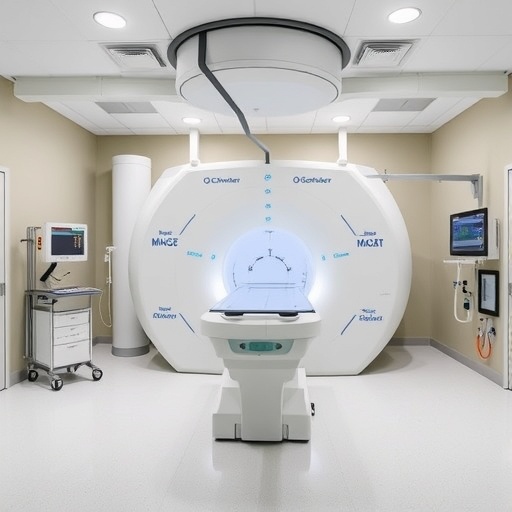
In a groundbreaking advancement for cancer treatment, the Ochsner MD Anderson Cancer Center in New Orleans has announced the introduction of biology-guided radiotherapy (BgRT), a highly innovative radiotherapy approach that integrates biological signals from tumors to enhance treatment precision. Remarkably, this facility will become one of only eight centers worldwide—and the first in the Southern United States—to offer this cutting-edge therapy, which has recently received FDA approval for patients with primary or metastatic lung and bone tumors. BgRT represents a transformative leap in oncology, leveraging the unique biological characteristics of cancer cells to guide radiation delivery in real time, even accounting for tumor movement during treatment.
Traditional radiation therapy often faces challenges due to the dynamic nature of tumors, which can shift during breathing or other bodily motions, potentially leading to irradiation of healthy tissues and limiting the dose that can be safely administered. Biology-guided radiotherapy overcomes this limitation by using the tumor’s own biological activity as a real-time beacon. This novel technique harnesses positron emission tomography (PET) imaging fused directly with a linear accelerator (LINAC) on a single platform, allowing continuous tracking and modulation of radiation beams that precisely follow the tumor’s motion. The convergence of PET and LINAC technologies thereby promises not only enhanced targeting but also considerable sparing of adjacent healthy tissue.
The operational principle of BgRT is rooted in the administration of a radiopharmaceutical shortly before treatment, which preferentially accumulates in cancer cells. As the radiopharmaceutical emits signals detectable by the PET system, these emissions serve as immediate indicators of tumor location and biological activity. The BgRT apparatus dynamically interprets these signals, continuously guiding the radiation dose to the exact coordinates of the tumor. This method facilitates second-by-second adjustments during radiation delivery, transforming the tumor’s biology into an active participant in its own destruction—a paradigm shift from conventional anatomical targeting approaches.
One of the most compelling features of this technology is its capacity to manage tumor motion, a critical factor in many cancers, especially those located in the lungs or bones—organs subject to physiological movement. As the tumor shifts, the BgRT system adapts in real time, effectively “following” the cancer to maintain targeting accuracy. This precise tracking greatly reduces the radiation exposure to surrounding normal tissues, potentially decreasing side effects and improving patients’ quality of life during and after treatment. Furthermore, this accurate dose modulation can allow oncologists to escalate radiation doses safely, thereby increasing the likelihood of tumor control.
In addition to its precise targeting capabilities, biology-guided radiotherapy is engineered to treat multiple tumor sites simultaneously within a single treatment plan. This becomes particularly important in cases of metastatic disease, where patients present with several tumors scattered throughout the body. By integrating biological signals from diverse lesions, the BgRT platform can administer radiation to all involved sites concurrently without compromising the protection of healthy tissues. This reflects a significant evolution in cancer management, shifting radiotherapy’s scope to encompass complex metastatic presentations where traditional approaches often fall short.
Ochsner MD Anderson’s adoption of biology-guided radiotherapy signifies a pivotal moment in the ongoing evolution of cancer care. As an institution renowned for pioneering treatments and employing multidisciplinary teams that craft personalized therapeutic regimens, Ochsner reinforces its commitment to harnessing state-of-the-art technology to improve oncologic outcomes. The addition of BgRT amplifies their ability to deliver precision oncology—targeted, personalized, and adaptive treatment designed to exploit each tumor’s biological vulnerabilities.
The integration of PET imaging within the radiotherapy framework is a key technological advancement underpinning BgRT’s efficacy. PET has long been regarded as the gold standard for cancer detection, staging, and surveillance due to its ability to reveal metabolic and molecular information about tumors. By embedding this imaging modality directly within the radiation delivery device, BgRT bypasses the need for separate diagnostic scans and transfers, enabling uninterrupted, real-time feedback during radiation administration. This fusion of diagnostic and treatment functions heralds a new era in which imaging not only informs initial treatment planning but actively guides therapy execution.
Another notable aspect of biology-guided radiotherapy is its potential to broaden the indications for radiotherapy. Historically, radiation treatment was principally indicated for early-stage localized tumors, with limited utility in widespread metastatic disease due to concerns about toxicity and efficacy. BgRT’s precision targeting and real-time adaptive capabilities open the door to treating more advanced cancers with multiple sites, an approach that could significantly augment the therapeutic arsenal against metastasis. This may lead to better systemic disease control and improve survival rates for patients with complex cancer burdens.
The development and implementation of BgRT underscore the transformative power of multidisciplinary collaboration, combining expertise in nuclear medicine, radiation oncology, imaging physics, and oncology. At Ochsner MD Anderson, teams of specialists coordinate to leverage advanced platforms and personalized data sets, crafting individualized treatment schemas that optimize therapeutic impact. The center’s patient-centric model ensures that the use of groundbreaking therapies like BgRT translates into tangible clinical benefits, aligning technological innovation with compassionate, comprehensive cancer care.
As biology-guided radiotherapy becomes available to eligible patients throughout the Southeastern region, it represents hope for those facing some of the most challenging oncologic diagnoses. The ability to offer treatments that minimize collateral damage to normal tissues while aggressively targeting cancer cells embodies the future of oncology—a future predicated on precision, personalization, and harnessing biological insights in real time. Centers like Ochsner MD Anderson are at the forefront, setting new standards for what radiation treatment can accomplish and redefining the possibilities for cancer patients worldwide.
Beyond the clinical and technological triumphs, the introduction of BgRT also illustrates the evolving landscape of cancer treatment, where multidisciplinary cancer institutes blend innovation, research, and compassionate care. The acknowledgment of real-time tumor biology as a driver for intervention encapsulates a broader shift toward integrated precision medicine. This progress not only enhances patient outcomes but fosters hope and renewed optimism in the fight against cancer’s complex heterogeneity.
In conclusion, biology-guided radiotherapy marks a revolutionary advancement in the radiation oncology field. Ochsner MD Anderson Cancer Center’s pioneering role in deploying this technology within the southern United States signifies a notable milestone in oncology’s global landscape. By dynamically integrating tumor biology into the radiation delivery process, BgRT offers unparalleled precision, improved safety profiles, and the potential to extend radiotherapy’s benefits to more advanced cancers. As research and clinical application continue to advance, this novel treatment modality promises to fundamentally transform cancer care and improve the lives of countless patients confronting the disease.
Subject of Research: Biology-guided radiotherapy (BgRT) for primary and metastatic lung and bone tumors
Article Title: Ochsner MD Anderson Cancer Center Launches Breakthrough Biology-Guided Radiotherapy
News Publication Date: Not specified in the source
Web References:
– https://www.ochsner.org/services/cancer-care/cancer-services/
– https://www.ochsner.org/doctors/troy-scroggins-jr/
– https://www.ochsner.org/locations/ochsner-baptist/
– https://www.ochsner.org/services/cancer-care/
– https://www.mdanderson.org/
– https://www.ochsner.org/
References: Not provided
Image Credits: Not provided
Keywords: biology-guided radiotherapy, BgRT, Ochsner MD Anderson, cancer treatment, radiation oncology, PET imaging, LINAC, metastatic cancer, tumor motion tracking, precision oncology
Tags: advanced radiotherapy for lung tumorsbiology-guided radiotherapy for cancer treatmentcutting-edge cancer treatment technologiesFDA approved cancer treatments 2024integrating biological signals in radiotherapymetastatic bone tumor radiation therapyOchsner MD Anderson Cancer Center innovationsovercoming tumor motion in radiation therapyPET imaging combined with LINAC technologyprecision radiation therapy in oncologyreal-time tumor tracking during radiotherapySouthern US cancer treatment advancements