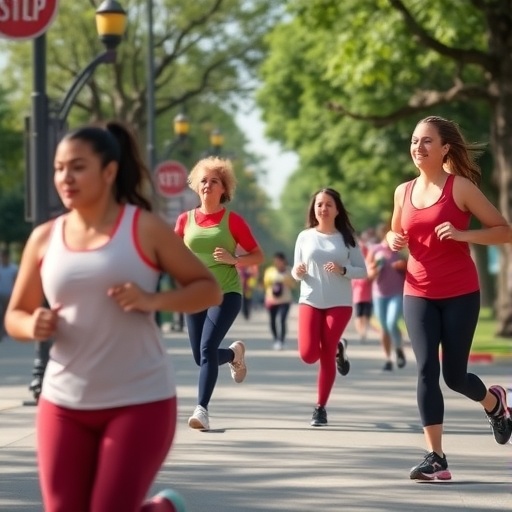
Despite broadly increased policy efforts across the globe, physical activity levels among the world’s population have stagnated over the past twenty years, revealing a striking disconnect between policy development and real-world impact. A groundbreaking study led by Dr. Andrea Ramirez Varela, an assistant professor in the Department of Epidemiology at UTHealth Houston School of Public Health, published today in Nature Health, underscores this persistent public health challenge. Her findings indicate that although nearly all countries have implemented at least one policy addressing physical activity, global adherence to recommended activity guidelines remains disappointingly low, with one-third of adults failing to meet the World Health Organization’s (WHO) targets.
Ramirez Varela points out that the apparent paradox between policy presence and behavioral outcomes reveals a critical gap in the translation of governmental strategies into effective public action. “Physical activity as a behavior that promotes health has not measurably increased since 2012,” she notes, cautioning that this should not be misconstrued as a lack of policy development. In fact, 92% of countries now report having policy documents that reference physical activity, and 35% have dedicated policies entirely focused on improving activity levels. This represents a meaningful expansion from just over a decade ago when fewer nations prioritized this issue.
The paucity of actual gains in physical activity, despite comprehensive policy frameworks, prompts a reevaluation of how the issue is conceptualized and addressed on both national and global scales. The research, which draws on an exhaustive synthesis of interviews, peer-reviewed literature, and policy analysis from 218 countries spanning 2004 to projections in 2025, argues that physical activity must be reframed not just as a health goal, but as a multi-sectoral societal imperative. This involves shifting away from siloed health-centric conversations toward embedding physical activity within urban planning, education systems, and community design.
One of the study’s central theses is the ambiguity surrounding the primary objective of physical activity promotion. Ramirez Varela highlights a fundamental conceptual tension: should physical activity be elevated as an end in itself, or should it be viewed primarily as a vehicle to alleviate other health problems, such as cardiovascular diseases, diabetes, and mental health disorders? Clarifying this distinction is vital because it influences how policies are structured, communicated, and implemented across sectors.
Furthermore, the public health community has historically prioritized other modifiable risk factors such as tobacco use, alcohol consumption, and nutritional behaviors, creating robust regulatory ecosystems for these issues. This prioritization has yielded concrete behavioral shifts and reduced disease burdens. By contrast, physical activity has struggled to attain equivalent focus and resource allocation, which partly explains why policy proliferation has not yet yielded proportional changes in activity levels worldwide.
The interdisciplinary nature of the challenge is evident in the call for integrated leadership and cross-sectoral partnerships that foster environments conducive to movement. Cities, for example, must transition from car-centric infrastructures to walkable, bike-friendly spaces that naturally encourage daily activity. Schools should incorporate more comprehensive physical education curricula that not only teach movement skills but also emphasize lifelong activity habits. Health systems need to prioritize physical activity counseling and community engagement programs designed to overcome barriers like sedentary work environments and socioeconomic disparities.
Ramirez Varela draws a provocative parallel to tobacco control initiatives over the past three decades. Smoking regulations today are among the most comprehensive public health policies worldwide; indoor smoking bans, advertising restrictions, and taxation policies transformed smoking from a socially ubiquitous behavior into one that is markedly diminished in prevalence. She argues that physical activity promotion demands a similar level of policy commitment and societal prioritization.
Despite the scale of this challenge, the growing body of evidence affirms that actionable pathways exist. The research contends that success relies on redefining physical activity as a population-level health determinant with both immediate and long-term benefits. This would galvanize multisectoral stakeholders—from urban developers and educators to policymakers and healthcare professionals—to co-create environments and social norms that endorse active lifestyles.
The study is informed by decades of incremental advances in the scientific understanding of physical activity’s role in health. It builds on seminal work published in The Lancet starting in 2012, followed by important updates in 2016 and 2021, charting an evolving evidence base. This latest analysis benefits from novel methodological approaches, integrating qualitative interviews and comprehensive policy reviews to better grasp why established policy frameworks have not yet translated into widespread behavioral change.
Ramirez Varela’s research team includes a constellation of international experts from institutions such as The University of Sydney, University of Limerick, Johns Hopkins University, University of Illinois Urbana-Champaign, and Harvard Medical School. Their collective expertise spans epidemiology, public health policy, urban planning, and behavioral science, reflecting the multifaceted nature of the physical activity challenge.
With global non-communicable disease burdens rising sharply, the urgency of addressing sedentary lifestyles cannot be overstated. The findings presented by Ramirez Varela and collaborators signal a critical juncture: policy commitments are necessary but not sufficient. To meaningfully increase physical activity worldwide, strategic innovation is required to align policy frameworks with lived realities, enhancing accessibility, motivation, and support systems that embed movement into daily life across all demographics.
This study thus serves as a clarion call for renewed global efforts to translate policy into practice—redefining physical activity promotion as an urgent, shared responsibility spanning urban design, education, healthcare, and governance. The road ahead is challenging, but as Ramirez Varela observes, the immense strides made in other areas of public health demonstrate that with collective will and focused leadership, transformative change is achievable.
Subject of Research: Global physical activity trends and the effectiveness of policy interventions in increasing population-level physical activity.
Article Title: Low global physical activity despite two decades of policy progress
News Publication Date: 9-Mar-2026
Web References:
Study link: https://www.nature.com/articles/s44360-026-00078-1
Previous Lancet series on physical activity:
2012 – https://www.thelancet.com/series-do/physical-activity-2012
2016 – https://www.thelancet.com/series-do/physical-activity-2016
2021 – https://www.thelancet.com/series-do/physical-activity-series-2021
Image Credits: Photo by UTHealth Houston
Keywords: Physical activity, global health, public health policy, non-communicable diseases, urban planning, behavioral science, epidemiology, World Health Organization, health promotion
Tags: challenges in physical activity promotionepidemiology of physical activityglobal health behavior changeglobal physical activity trendshealth promotion through policylong-term physical activity outcomesphysical activity levels stagnationphysical activity policy effectivenesspolicy implementation gap in healthpublic health physical inactivityUTHealth Houston research on exerciseWHO physical activity guidelines adherence