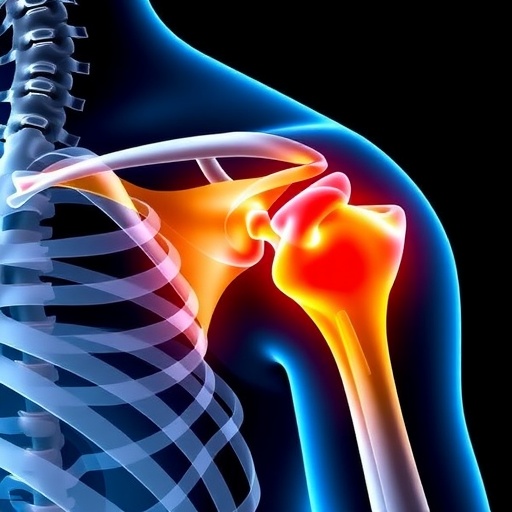
Rotator cuff injuries represent a significant clinical challenge, often resulting in chronic pain, diminished shoulder function, and a high likelihood of re-injury following surgical intervention. Despite advances in surgical repair techniques that reattach torn tendons to bone, patient outcomes remain unpredictable and frequently suboptimal. A key obstacle in tendon recovery is the formation of fibrotic scar tissue rather than true tendon regeneration. Unlike fetal tendons capable of scarless healing, adult human tendons characteristically respond to injury with excessive extracellular matrix deposition, leading to structurally disorganized and mechanically inferior scar tissue. This distinct healing phenotype culminates in compromised tensile strength, reduced flexibility, and impaired functional restoration. Until now, the cellular and molecular drivers underpinning this persistent fibrotic process have eluded comprehensive characterization.
To address this knowledge gap, scientists employed an integrative approach combining high-resolution histological imaging with single-cell RNA sequencing to dissect the cellular landscape of human rotator cuff tendon samples spanning acute, subacute, and chronic injury stages. This exhaustive analysis profiled nearly 90,000 individual cells, uncovering a detailed atlas of tendon cell populations and their transcriptional dynamics in the context of injury and scarring. The comparative evaluation across disease time points revealed profound architectural disarray within the injured tendons. Disrupted collagen fiber alignment, an aberrant shift in the ratio of collagen types I to III, and reduced collagen fibril thickness were identified as hallmark structural abnormalities persisting well beyond initial trauma. These microstructural alterations correlate with the enduring mechanical and functional deficits frequently documented in rotator cuff pathology.
At the core of these results lies a complex and self-perpetuating fibrotic milieu. The investigation demonstrated that tendon stem cells and progenitor populations, normally pivotal in effective tissue repair, fail to progress into fully differentiated tenocytes within the injured microenvironment. Instead, these progenitors adopt a sustained activated phenotype, continuously synthesizing and secreting extracellular matrix components that contribute to progressive scar formation. Simultaneously, a significant subset of resident tenocytes exhibit features of cellular senescence, characterized by loss of regenerative capacity yet maintained metabolic activity, which paradoxically exacerbates fibrosis through secretion of pro-fibrotic signals. This senescent cell accumulation illustrates a maladaptive cellular state that undermines tissue remodeling and fosters persistent scar deposition.
Immune modulation plays a central role in orchestrating this fibrotic progression. While the influx of inflammatory cells commonly diminishes as healing proceeds, the study reveals that macrophages persist within the tendon milieu, undergoing a transformative shift in phenotype. These scar-associated macrophages are uniquely reprogrammed through the activity of the transcription factor SOX9, enabling them to assume a matrix-producing role typically reserved for fibroblasts. This direct contribution to collagen and fibrotic protein deposition converts macrophages from passive responders into active architects of the fibrotic niche, sustaining a deleterious feedback loop that resists resolution and favors chronic scarring.
The implications of these findings extend beyond a mere descriptive framework, pointing toward tangible therapeutic avenues. Immediate clinical strategies could involve adjunctive targeting of critical fibrogenic pathways such as those involving osteopontin (OPN) and transforming growth factor-beta (TGF-β) in conjunction with surgical repair. These molecular targets represent strategic nodes capable of dampening aberrant matrix production, mitigating scar tissue development, and potentially improving biomechanical integrity post-repair. Such interventions could ultimately reduce rates of surgical failure and enhance functional recovery.
Looking further ahead, the detailed cellular roadmap elucidated by this research offers a foundational template to guide regenerative medicine approaches aimed at redirecting tendon healing trajectories. By precisely understanding the individual cell states and signaling networks at play, future therapies might aim to reprogram or replace dysfunctional cell populations, restore normal extracellular matrix composition, and achieve true tissue regeneration rather than scar formation. This paradigm shift holds promise not only for orthopedic applications but also for combating fibrotic diseases affecting other organ systems, including the heart, lungs, and liver, where analogous pathophysiological mechanisms are operative.
The investigation spearheaded by Prof. Jianzhong Hu and Prof. Hongbin Lu at Xiangya Hospital exemplifies a sophisticated blend of advanced experimental techniques and translational ambition. The deployment of single-cell RNA sequencing technology provided unprecedented granularity, revealing heterogeneity and temporal dynamics among tendon cells in unprecedented detail. This study highlights the power of integrative molecular profiling in decoding complex tissue pathologies and underscores the potential to uncover novel cellular targets for intervention in chronic fibrotic conditions.
Furthermore, the observed persistence of fibrotic remodeling months after the initial injury underscores the chronic nature of rotator cuff tendon scarring. The disproportionate accumulation of collagen types and abnormal fibril architecture spotlight critical structural determinants of biomechanical weakness. Recognizing these pathological features may inform the development of diagnostic biomarkers to monitor healing progression and therapeutic efficacy in clinical settings.
From a mechanistic standpoint, the reprogramming of macrophages by SOX9 into collagen-secreting cells reveals a previously underappreciated facet of immune cell plasticity within the tendon environment. This insight opens new investigative pathways exploring how transcriptional regulators integrate injury signals to modulate immune cell function in fibrosis. Targeting macrophage phenotypic transitions may constitute a novel strategy for interrupting the fibrotic cascade at an early stage.
The interplay between tenocyte senescence and progenitor cell dysfunction delineates a dual cellular failure mode driving fibrosis. Therapeutic approaches aiming to rejuvenate senescent cells or enhance progenitor differentiation could recalibrate the repair process toward regeneration. Such advanced cellular therapies leverage insights gained from single-cell molecular phenotyping and represent a frontier in tendon biology and regenerative orthopedics.
Collectively, this landmark study not only deepens our understanding of rotator cuff tendon pathology but also catalyzes a shift from managing symptoms toward correcting fundamental repair mechanisms. By unmasking the complex cellular ecosystems perpetuating scar tissue formation, the research illuminates new horizons for effective therapies that restore both tendon structure and function. These advancements hold profound promise for improving the quality of life for patients suffering from debilitating tendon injuries and for addressing fibrosis across diverse clinical contexts.
Subject of Research: Human tissue samples
Article Title: Single cell atlas decodes the molecular dynamics of scar repair after human rotator cuff tear
News Publication Date: 5-Feb-2026
References: DOI: 10.1038/s41413-025-00501-5
Image Credits: Prof. Jianzhong Hu and Prof. Hongbin Lu from Central South University, China
Keywords: Regenerative medicine, Orthopedics, Stem cells, Cell biology, Genomics, Inflammation, Immune system, Surgery, Fibrosis, Life sciences
Tags: chronic rotator cuff injury pathologyextracellular matrix deposition tendonfetal scarless tendon healingfibrotic scar tissue rotator cuffmolecular drivers of tendon fibrosisrotator cuff injury healingsingle-cell RNA sequencing tendonsurgical repair rotator cuff outcomestendon cell population atlastendon regeneration vs scarringtendon tensile strength reductiontranscriptional dynamics in tendon injury