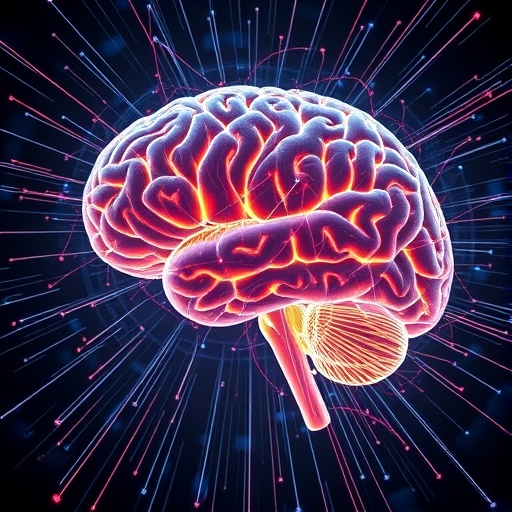
A groundbreaking study led by researchers at the University of Iowa unveils striking evidence that a single session of physical exercise triggers remarkable neural dynamics in the human brain, specifically enhancing brain waves known as ripples. These ripples, originating from the hippocampus and extending to cortical areas, are strongly implicated in learning and memory processes. This pioneering research offers unprecedented direct observation of how exercise modulates neural activity, illuminating a potential neural substrate underlying cognitive benefits previously noted through behavioral and noninvasive imaging studies.
For decades, neuroscientists have recognized the cognitive benefits of physical exercise, linking it to improved memory and brain health primarily via indirect methods such as functional magnetic resonance imaging (fMRI) and blood oxygen level measurements. However, direct electrophysiological recordings of ripple activity in humans remained elusive, largely due to the invasiveness of requisite intracranial electrodes. This new study surmounts that barrier by leveraging rare intracranial electroencephalography (iEEG) data from epilepsy patients, offering a unique window into real-time brain rhythms and their modulation by physical activity.
The research team enlisted 14 patients aged between 17 and 50 years who were undergoing clinical monitoring with implanted electrodes for epilepsy treatment. These participants performed a standardized cycling regimen consisting of a brief warmup followed by 20 minutes at a sustainable pace on a stationary bike. Brain electrical activity was meticulously recorded before and after exercise, allowing for a high-resolution temporal and spatial analysis of ripple generation and propagation within critical memory networks.
Post-exercise iEEG analysis revealed a significant and immediate surge in high-frequency oscillatory brain waves—commonly termed ripples—emanating from the hippocampus. This surge was not isolated; ripples exhibited increased synchrony and interaction with multiple cortical regions known to subserve learning and memory functions. Such hippocampal-cortical ripple coordination is hypothesized to underpin memory consolidation, suggesting that physical exercise may prime the brain’s neural circuits for enhanced information processing and retention.
These findings represent the first direct empirical observation of exercise-induced ripple augmentation in the adult human brain. Until now, ripple phenomena had predominantly been characterized in rodent models, where they are well-established markers of memory replay and consolidation during rest and sleep. By extending these observations to humans, the study bridges a critical translational gap and substantiates the role of exercise as a modulator of electrophysiological substrates essential for cognitive plasticity.
Michelle Voss, professor and corresponding author, highlights the significance of this research within the broader context of exercise neuroscience. She notes that while behavioral evidence has long suggested cognitive enhancements post-exercise, the mechanistic underpinnings remained speculative without direct neural evidence. This study’s intracranial recordings therefore constitute a pivotal advance, demonstrating that even a single bout of moderate exercise precipitates rapid reorganization of neural rhythms linked to learning and memory.
Importantly, the research team emphasizes that these ripple dynamics were observed in a clinical population, but the patterns closely mirror those documented in healthy individuals through noninvasive modalities. This convergence strongly suggests that the electrophysiological effects of exercise are robust and represent a generalized human brain response rather than an artifact confined to epilepsy pathology. Consequently, these findings have broad implications for cognitive health interventions across diverse populations.
The ripple bursts and enhanced network interactions observed may reflect underlying neurophysiological processes such as synaptic plasticity, neural excitability modulation, and improved communication between hippocampal and cortical regions. These processes are foundational for encoding, consolidating, and retrieving memories, potentially elucidating why physical activity consistently correlates with improved cognitive function and resilience against neurodegenerative disorders.
Future research endeavors, as proposed by the authors, aim to directly link these electrophysiological phenomena with behavioral outcomes by administering memory tests in conjunction with iEEG measurements post-exercise. Such studies would establish causal relationships, further delineating how exercise-induced neural adaptations translate into measurable cognitive enhancements and informing optimization strategies for exercise-based cognitive interventions.
Co-lead authors Araceli Cardenas and Juan Ramirez-Villegas, alongside a multidisciplinary team incorporating neurosurgeons, psychologists, and neuroscientists, collaborated to integrate advanced intracranial recording techniques with rigorous exercise paradigms. This interdisciplinary approach underscores the increasing capacity to merge clinical neuroscience with behavioral research, generating insights with profound implications for public health and personalized medicine.
The study was published on March 9, 2026, in the peer-reviewed journal Brain Communications and funded by the University of Iowa. The authors disclose no conflicts of interest, reinforcing the objective nature of their findings and the potential for this work to catalyze novel approaches in both cognitive enhancement and neurological rehabilitation.
By directly linking moderate physical exercise with quantifiable enhancements in human brain ripple activity, this research opens new horizons in understanding how lifestyle factors modulate key neural mechanisms. It paves the way for targeted interventions leveraging physical activity to promote brain health, optimize learning, and mitigate cognitive decline across the lifespan.
Subject of Research: People
Article Title: Exercise enhances hippocampal-cortical ripple interactions in the human brain
News Publication Date: 9-Mar-2026
Image Credits: Tim Schoon, University of Iowa
Keywords: Physical exercise, hippocampus, brain waves, ripples, memory, learning, intracranial electroencephalography, neural rhythms, cognitive function, brain networks
Tags: cognitive benefits of physical activitydirect electrophysiological recordingsepilepsy patients brain monitoringexercise and brain wave modulationexercise-induced hippocampal rippleshippocampus-cortex communicationintracranial EEG in humansmemory-enhancing brain wavesneural dynamics of learningneural substrate of memory improvementphysical exercise and cognitive functionreal-time brain rhythm observation