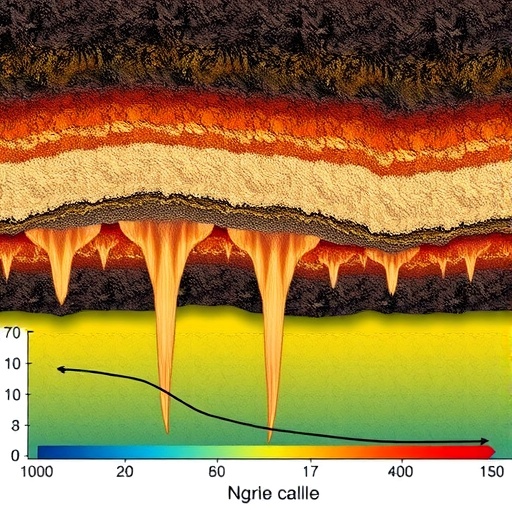
Soil erosion, a process traditionally recognized for its detrimental effects on land degradation and agricultural productivity, has recently emerged as a critical factor influencing global nitrogen cycling. While much of the scientific discourse has emphasized erosion’s impact on carbon dynamics, groundbreaking research now reveals its equally profound and multifaceted role in modulating biogeochemical nitrogen pathways. This expanding field of inquiry is beginning to unravel how the displacement of soil not only redistributes nitrogen across landscapes but also transforms its biochemical fate, with far-reaching consequences for ecosystem functioning and environmental health.
Nitrogen, a fundamental nutrient indispensable for plant growth, operates within the Earth’s largest terrestrial reservoir—soil. The nitrogen in soils is subject to complex chemical and biological transformations that sustain productivity and ecosystem resilience. Soil erosion, driven by rainfall and surface runoff, mobilizes billions of tons of topsoil annually. Because nitrogen is predominantly concentrated in this upper soil layer and bound tightly to mineral particles, erosion effectively transports nitrogen along with the soil, resulting in spatially heterogeneous nutrient distribution. This physical translocation reshapes nitrogen availability across diverse ecological zones, fundamentally altering terrestrial nitrogen cycling.
Recent synthesis research highlighted in the journal Nitrogen Cycling delves into the nuanced ways soil erosion influences nitrogen stocks, pathways, and transformations. By physically relocating nitrogen-rich soil material from erosion-prone uplands to depositional lowlands, erosion fosters localized nutrient depletion and accumulation hotspots. This spatial redistribution is critical for understanding soil fertility patterns and ecosystem nutrient budgets. Moreover, this physical movement interacts intricately with hydrological processes, altering nitrogen transport via surface runoff and subsurface water flows, thereby influencing nitrogen fluxes at watershed scales.
Beyond mere physical displacement, soil erosion impacts physicochemical properties of soils, subsequently affecting microbial communities that drive nitrogen transformations, such as mineralization, nitrification, and denitrification. These microbial-mediated processes regulate nitrogen bioavailability and loss mechanisms, influencing whether nitrogen will support plant growth or be lost as gaseous emissions or waterborne pollutants. Erosion-induced disruptions to soil aggregates and structure disturb microbial habitats, compelling shifts in microbial diversity and function. This biological dimension profoundly influences nitrogen cycling’s efficacy and balance within eroded landscapes.
The interplay between soil erosion and nitrogen cycling incorporates feedback loops with broader environmental systems. For example, disruption in microbial nitrogen transformations can modulate greenhouse gas emissions like nitrous oxide, a potent contributor to climate change. Simultaneously, nitrogen loss to water bodies through erosion-driven runoff exacerbates eutrophication, deteriorating aquatic ecosystems. Hence, the feedback between soil physical processes and nitrogen biogeochemistry is pivotal not only for terrestrial ecology but also for global climate and water quality governance.
Despite these advances, many mechanistic details of nitrogen cycling under erosion remain elusive. Microbial responses to changing soil physical environments and nutrient fluxes remain underexplored, particularly across spatial scales ranging from microhabitats on hillslopes to entire river basins. The complex scaling of processes demands integrative methodologies combining field erosion measurements, remote sensing, ecosystem modeling, and cutting-edge microbiological analyses. Such approaches are essential to accurately predict erosion’s long-term implications under shifting climate regimes and land use practices.
Future research priorities must include elucidating the microbial ecology under erosion stress, quantifying nitrogen fluxes in dynamic landscapes, and integrating these insights into holistic ecosystem models. Understanding these elements will inform strategies to mitigate erosion-induced nutrient loss while enhancing nitrogen use efficiency in agricultural and natural systems. This knowledge is especially urgent as climate change intensifies weather extremes that drive soil erosion, with cascading effects on nutrient cycling and ecosystem sustainability.
Recognizing soil erosion as a biogeochemical force rather than merely a geomorphological process marks a paradigm shift. It expands the conceptual framework linking physical landscape changes with nutrient cycling, emphasizing interdisciplinary inquiry bridging soil science, microbiology, hydrology, and biogeochemistry. This holistic perspective is critical for developing resilient land management policies that safeguard soil fertility, reduce pollution, and combat climate change simultaneously.
The implications for sustainable land management are profound. Strategies informed by an advanced understanding of erosion-driven nitrogen dynamics can improve soil conservation practices, optimize fertilizer application, and reduce nutrient runoff. This integrated approach not only enhances agricultural productivity but also mitigates environmental risks such as hypoxia in water bodies and greenhouse gas emissions. Ultimately, it fosters more resilient food systems and healthier ecosystems, underscoring the urgent need to incorporate biogeochemical insights into soil erosion mitigation efforts.
In conclusion, soil erosion transcends its traditional characterization as a destructive agent, revealing itself as a pivotal driver in terrestrial nitrogen cycles. Its influence shapes nitrogen transport, transformation, and storage in ways that reverberate through ecosystems and climate systems alike. As research progresses, bridging knowledge gaps about microbial mechanisms and spatial scaling will be vital. This evolving understanding heralds a new era where soil erosion is integral to addressing global environmental challenges, guiding informed stewardship of the planet’s vital soil and nutrient resources.
Subject of Research: Not applicable
Article Title: Role of soil erosion in biogeochemical nitrogen cycles: a mini review
News Publication Date: 28-Jan-2026
Web References:
https://doi.org/10.48130/nc-0025-0024
References:
Zhang B, Zhou M. 2026. Role of soil erosion in biogeochemical nitrogen cycles: a mini review. Nitrogen Cycling 2: e012. https://doi.org/10.48130/nc-0025-0024
Image Credits: Baojun Zhang, Minghua Zhou
Keywords: Soil erosion, Nitrogen, Biogeochemical cycles
Tags: biogeochemical nitrogen pathways erosionenvironmental consequences of soil erosionerosion-driven nutrient spatial heterogeneityglobal nitrogen cycling and soil lossnitrogen availability and soil degradationnitrogen cycling in terrestrial ecosystemsnitrogen redistribution by soil erosionrainfall runoff and soil nitrogen displacementsoil erosion and agricultural productivitysoil erosion effects on ecosystem functioningsoil erosion impact on nitrogen cycletopsoil nitrogen transport