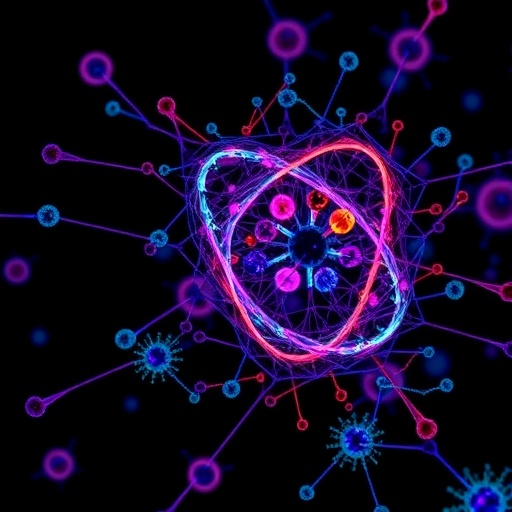
In a remarkable leap forward for cellular biology and disease research, scientists at the Korea Advanced Institute of Science and Technology (KAIST), in collaboration with Duke University, have unveiled a revolutionary technology enabling simultaneous decoding of a cell’s genetic blueprint in three dimensions. This pioneering advancement opens new vistas in understanding the molecular intricacies at the single-cell level, transforming the landscape of research into complex human diseases such as cancer, neurodegenerative disorders, and muscle degenerative conditions.
The cellular origin of many ailments is often concealed within subtle molecular shifts that were previously impossible to observe with high precision. Traditional approaches relied heavily on bulk analysis—averaging data across thousands of cells—thereby masking critical early disease signals. The new technology, scHiCAR (single-cell Hi-C with assay for transposase-accessible chromatin and RNA sequencing), overcomes this key limitation by concurrently profiling three distinct but interrelated genetic modalities within individual cells: the transcriptome, the epigenome, and the spatial configuration of the genome.
This trimodal single-cell profiling marks a paradigm shift because gene function is not a simple binary on/off phenomenon. Rather, the physiological state of a cell hinges on which genes are active, the regulatory mechanisms modulating that activity, and the three-dimensional arrangement of these genetic elements inside the nucleus. Previous methods required piecing together datasets from separate cells to infer these relationships, risking inaccuracies and incomplete insights. scHiCAR integrates all this information from the same cell, offering unprecedented accuracy and resolution.
Developed under the leadership of Professor Inkyung Jung at KAIST and Professor Yarui Diao at Duke University, scHiCAR harnesses an elegant blend of molecular biology techniques coupled with deep artificial intelligence analysis. This powerful combination significantly enhances the sensitivity, reproducibility, and scale of single-cell multi-omic profiling, producing a comprehensive molecular map described metaphorically as a ‘single 3D map’ of cellular genetic activity.
A groundbreaking aspect of this research is the drastic reduction in cost—analysis expenses are slashed to approximately four cents per cell. This affordability facilitates extensive profiling at an ultra-high-throughput scale, demonstrated by the team’s creation of a detailed molecular atlas comprising 1.6 million individual cells from mouse brain tissue. This scale allows researchers to pinpoint, with remarkable precision, the temporal, spatial, and structural context of disease-related gene expression patterns at the finest granularity.
The application of scHiCAR extends beyond static analysis; its dynamic profiling capabilities were employed to decode gene regulatory principles across 22 major cell types within complex tissues such as the brain and regenerating muscle. Notably, the method captured how shifting three-dimensional chromatin structures coordinate gene expression changes that dictate cell fate during muscle stem cell regeneration, a process critical to understanding aging and degenerative diseases.
By unveiling the interplay between transcriptomes, epigenomes, and 3D genome architecture in real-time, this technology provides a crucial mechanistic framework for identifying potential therapeutic targets and informing the development of patient-specific treatments. Such precision medicine approaches have so far been hindered by the fragmented understanding of cellular genetic regulation, now poised to be revolutionized by this integrative platform.
Professor Jung highlighted the transformative nature of this breakthrough, stating that it transcends traditional cellular observation by enabling direct reading and potential control of intrinsic genomic blueprints. The implications for unraveling the developmental origins of complex diseases like Parkinson’s disease and various cancers are profound, potentially revolutionizing the drug discovery pipeline.
From a technical standpoint, scHiCAR intricately combines high-throughput Hi-C chromatin conformation capture, chromatin accessibility assays, and RNA sequencing within the same single-cell preparation. This allows synchronous acquisition of topological chromosomal contacts alongside epigenomic markers and transcriptomic data, overcoming the limitations imposed by sequential or separate assays. The resultant multimodal dataset yields an integrated, high-resolution view of gene regulation networks and nuclear architecture.
The AI-driven analytical pipeline further refines this rich dataset, employing advanced machine learning algorithms to accurately decode patterns and relationships within the multilayered genetic information. This computational rigor ensures reproducibility and robustness, addressing common challenges of noise and variability inherent in single-cell assays.
Publishing their full findings in the high-impact journal Nature Biotechnology, the team lays the foundation for a new era of molecular precision in biomedical research. Supported by the Suh Kyungbae Foundation, the Samsung Science and Technology Foundation, and Korea’s National Research Foundation, this breakthrough underscores the power of interdisciplinary collaboration and open scientific innovation in confronting some of humanity’s most challenging health problems.
In sum, scHiCAR represents a transformative breakthrough in cellular genomics—marrying molecular biology, spatial genomics, and computational intelligence—to deliver a holistic and ultra-high-throughput peek into the living cell’s genetic orchestra. Its broad applicability across tissues and diseases poises this technology to catalyze next-generation diagnostics, targeted therapies, and personalized medicine strategies that were previously beyond reach.
Subject of Research: Not applicable
Article Title: Trimodal single-cell profiling of transcriptome, epigenome and 3D genome in complex tissues with scHiCAR
News Publication Date: 19-Feb-2026
Web References: https://doi.org/10.1038/s41587-026-03013-7
References: Published in Nature Biotechnology, DOI: 10.1038/s41587-026-03013-7
Image Credits: KAIST
Keywords: Molecular biology, single-cell genomics, transcriptome, epigenome, 3D genome structure, scHiCAR, high-throughput sequencing, multi-omics, artificial intelligence, muscle regeneration, neurodegenerative diseases, cancer research
Tags: 3D genome mapping in cellsadvanced cellular biology techniquescancer neurodegenerative disease geneticscomplex human disease cellular originsearly disease signal detection in cellsgene regulation 3D genome architecturemuscle degenerative condition molecular studyscHiCAR method for disease researchsimultaneous decoding of genetic mapssingle-cell genetic profiling technologytranscriptome epigenome spatial genome analysistrimodal single-cell genome analysis