• HOME
  • NEWS
  • EXPLORE
    • CAREER
      • Companies
      • Jobs
    • EVENTS
    • iGEM
      • News
      • Team
    • PHOTOS
    • VIDEO
    • WIKI
  • BLOG
  • COMMUNITY
    • FACEBOOK
    • INSTAGRAM
    • TWITTER
Monday, May 11, 2026
BIOENGINEER.ORG
No Result
View All Result
  • Login
  • HOME
  • NEWS
  • EXPLORE
    • CAREER
      • Companies
      • Jobs
        • Lecturer
        • PhD Studentship
        • Postdoc
        • Research Assistant
    • EVENTS
    • iGEM
      • News
      • Team
    • PHOTOS
    • VIDEO
    • WIKI
  • BLOG
  • COMMUNITY
    • FACEBOOK
    • INSTAGRAM
    • TWITTER
  • HOME
  • NEWS
  • EXPLORE
    • CAREER
      • Companies
      • Jobs
        • Lecturer
        • PhD Studentship
        • Postdoc
        • Research Assistant
    • EVENTS
    • iGEM
      • News
      • Team
    • PHOTOS
    • VIDEO
    • WIKI
  • BLOG
  • COMMUNITY
    • FACEBOOK
    • INSTAGRAM
    • TWITTER
No Result
View All Result
Bioengineer.org
No Result
View All Result
Home NEWS Science News Neuroscience

Motion-Sensing Cells in the Eye Let the Brain ‘Know’ About Directional Changes

Bioengineer by Bioengineer
March 5, 2014
in Neuroscience
Reading Time: 2 mins read
1
Share on FacebookShare on TwitterShare on LinkedinShare on RedditShare on Telegram

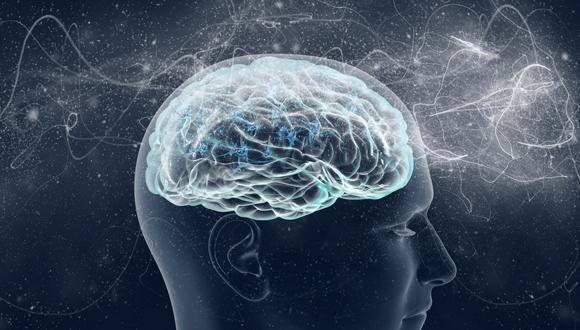
How do we “know” from the movements of speeding car in our field of view if it’s coming straight toward us or more likely to move to the right or left?

Motion-Sensing Cells in the Eye Let the Brain ‘Know’ About Directional Changes

Credit: Andrew Huberman, UC San Diego

Scientists have long known that our perceptions of the outside world are processed in our cortex, the six-layered structure in the outer part of our brains. But how much of that processing actually happens in cortex? Do the eyes tell the brain a lot or a little about the content of the outside world and the objects moving within it?

In a detailed study of the neurons linking the eyes and brains of mice, biologists at UC San Diego discovered that the ability of our brains and those of other mammals to figure out and process in our brains directional movements is a result of the activation in the cortex of signals that originate from the direction-sensing cells in the retina of our eyes.

“Even though direction-sensing cells in the retina have been known about for half a century, what they actually do has been a mystery- mostly because no one knew how to follow their connections deep into the brain,” said Andrew Huberman, an assistant professor of neurobiology, neurosciences and ophthalmology at UC San Diego, who headed the research team, which also involved biologists at the Salk Institute for Biological Sciences. “Our study provides the first direct link between direction-sensing cells in the retina and the cortex and thereby raises the new idea that we ‘know’ which direction things are moving specifically because of the activation of these direction-selective retinal neurons.” The study, recently published online, will appear in the March 20 print issue of Nature.

The discovery of the link between direction-sensing cells in the retina and the cortex has a number of practical implications for neuroscientists who treat disabilities in motion processing, such as dysgraphia, a condition sometimes associated with dyslexia that affects direction-oriented skills.

“Understanding the cells and neural circuits involved in sensing directional motion may someday help us understand defects in motion processing, such as those involved dyslexia, and it may inform strategies to treat or even re-wire these circuits in response to injury or common neurodegenerative diseases, such as glaucoma or Alzheimer’s,” said Huberman.

He and his team discovered the link in mice by using new types of modified rabies viruses that were pioneered by Ed Callaway, a professor at the Salk Institute, and by imaging the activity of neurons deep in the brain during visual experience.

The collaboration involved Anirvan Ghosh, a former professor of neurobiology at UC San Diego now at F. Hoffmann La Roche in Basel, Switzerland; UC San Diego biologists Alberto Cruz-Martın, Rana El Danaf, Balaji Sriram, Onkar Dhande and Phong Nguyen; and Salk biologists Fumitaka Osakada and Edward M. Callaway. In addition to his roles at UC San Diego, Huberman is also an assistant adjunct professor at the Salk Institute.

Story Source:

The above story is based on materials provided by UC San Diego, Andrew Huberman.
Share12Tweet8Share2ShareShareShare2

Related Posts

Redox biomarker could predict progression of epilepsy

October 5, 2016

Neural membrane’s structural instability may trigger multiple sclerosis

October 5, 2016

Scientists find new path in brain to ease depression

October 5, 2016

Key players responsible for learning and memory formation uncovered

October 3, 2016
Please login to join discussion

POPULAR NEWS

  • Research Indicates Potential Connection Between Prenatal Medication Exposure and Elevated Autism Risk

    840 shares
    Share 336 Tweet 210
  • New Study Reveals Plants Can Detect the Sound of Rain

    727 shares
    Share 290 Tweet 181
  • Salmonella Haem Blocks Macrophages, Boosts Infection

    61 shares
    Share 24 Tweet 15
  • Breastmilk Balances E. coli and Beneficial Bacteria in Infant Gut Microbiomes

    57 shares
    Share 23 Tweet 14

About

We bring you the latest biotechnology news from best research centers and universities around the world. Check our website.

Follow us

Recent News

New Post-Hoc Analysis Explores Daily Oral Orforglipron Use in Adults Over 65 with Obesity, Regardless of Diabetes Status

Evaluating Digoxin Use in Patients with Symptomatic Rheumatic Heart Disease

Evaluating the Effectiveness and Safety of Digitalis Glycosides in Treating Heart Failure

Subscribe to Blog via Email

Enter your email address to subscribe to this blog and receive notifications of new posts by email.

Join 82 other subscribers
  • Contact Us

Bioengineer.org © Copyright 2023 All Rights Reserved.

Welcome Back!

Login to your account below

Forgotten Password?

Retrieve your password

Please enter your username or email address to reset your password.

Log In
No Result
View All Result
  • Homepages
    • Home Page 1
    • Home Page 2
  • News
  • National
  • Business
  • Health
  • Lifestyle
  • Science

Bioengineer.org © Copyright 2023 All Rights Reserved.