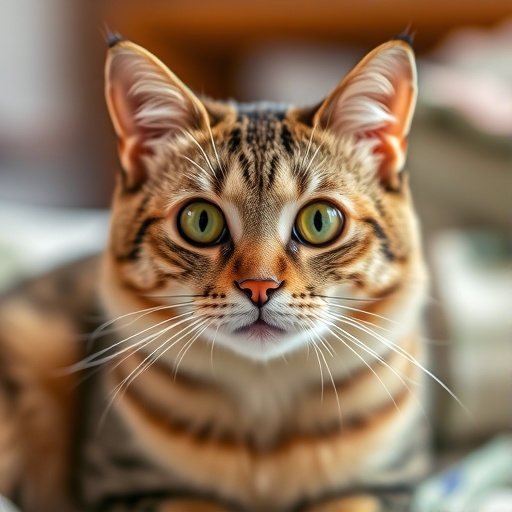
In a groundbreaking study that bridges veterinary and human medicine, researchers have unveiled an expansive map of cancer-associated genes within the domestic cat, shedding light on the feline oncogenome with implications that transcend species boundaries. Despite cancer being a leading cause of mortality among domestic cats, the genetic underpinnings that drive these malignancies have remained largely uncharted territory until now. The research team, led by Bailey Francis and colleagues, undertook a comprehensive genomic sequencing project, analyzing 493 tumor samples spanning 13 distinct feline cancer types in parallel with matched healthy tissues. This ambitious effort provides an unprecedented window into the mutational landscape of feline cancers and establishes a foundation for comparative oncogenomics that could revolutionize veterinary oncology and inform human cancer treatments.
A meticulous cross-species comparison was conducted between nearly a thousand well-characterized human cancer genes and their feline orthologs. This comparative framework unveiled a remarkable degree of genetic overlap, highlighting that certain pivotal oncogenes, notably TP53 — a critical tumor suppressor mutation frequently implicated in human cancers — are also prevalently mutated in feline cancers. This cross-species resonance underscores the biological similarity of feline and human malignancies at the molecular level, lending support to the “One Medicine” paradigm. By integrating findings from veterinary oncology into human medical research, there exists a potent opportunity to decipher conserved oncogenic mechanisms and accelerate the development of targeted therapies beneficial to both humans and cats.
The research delves into the intricate catalog of cancer-driving genes in cats, identifying not only well-recognized oncogenes but also tumor-predisposing genes unique to or enriched within the feline genome. These discoveries lay the groundwork for a new era of precision veterinary medicine, enabling actionable genetic insights to be translated into tailored clinical interventions. Moreover, the identification of viral sequences embedded within the feline tumor genome introduces compelling evidence that viral oncogenesis, a phenomenon well-documented in human cancer biology, might similarly play a role in feline cancers. Understanding these viral elements could inform both diagnostic and therapeutic strategies, potentially unveiling novel antiviral or immunotherapeutic targets.
Importantly, domestic cats share intimate environments with their human counterparts, frequently cohabiting household spaces and being exposed to a similar milieu of environmental risk factors, such as toxins, dietary influences, and infectious agents. This shared exposure, coupled with common non-cancer comorbidities like diabetes, positions domestic cats as an invaluable, yet under-exploited, model system for studying the complex interplay between environment, genetics, and cancer development. The feline oncogenome thus not only provides a map of mutation hotspots but serves as a mirror reflecting the biological consequences of real-world exposures that humans and cats encounter alike.
The sequencing efforts deployed by Francis et al. leveraged cutting-edge high-throughput genomic technologies, enabling deep coverage of both tumor genomes and paired normal tissues. This approach ensured precise identification of somatic mutations, minimizing confounding artifacts and revealing mutational signatures characteristic of specific cancer types. Through comprehensive bioinformatic analyses, the team reconstructed oncogenic pathways frequently disrupted in feline tumors, drawing direct parallels to analogous human cancer pathways. These comparative analyses revealed both conserved and species-specific elements in the oncogenic process, sparking intriguing questions about evolutionary divergence in cancer biology.
Among the feline tumors profiled, several cancer types exhibited mutation patterns mirroring those observed in their human counterparts, further corroborating functional conservation. However, certain feline-specific oncogenic signatures surfaced, suggesting unique vulnerabilities that may be exploited therapeutically within veterinary medicine. These unique patterns could arise from species-specific biology or environmental factors, inviting future mechanistic studies to dissect their origins and clinical relevance. With the foundation of the feline oncogenome now established, follow-up studies can focus on elucidating how these mutational landscapes inform tumor behavior and patient outcomes in cats.
Intriguingly, the detection of viral sequences integrated into the feline genome within tumor tissues suggests a potential oncogenic role of viruses in domestic cat cancers analogous to that of human papillomaviruses in cervical and other cancers in people. The study highlights the presence of endogenous retroviral elements and potential exogenous viral infections contributing to genomic instability. The elucidation of viral oncogenesis in cats could pave the way for vaccine development or antiviral therapies within veterinary oncology, similarly to successful strategies employed in human medicine, thereby expanding the therapeutic armamentarium against feline cancers.
The work presented by Francis and colleagues exemplifies the power of translational research operating at the nexus of human and animal health. By charting the genetic terrain of feline cancers in such exhaustive detail, this research not only advances veterinary oncology but also enriches the collective understanding of cancer biology. As tumor genomes from diverse species accumulate, comparative oncogenomics promises to illuminate conserved drivers of malignancy and reveal novel therapeutic targets that might have been overlooked when studying any single species in isolation.
The “One Medicine” approach embraced by the study advocates for integrative research frameworks that capitalize on the similarities between humans and companion animals in disease etiology and progression. Domestic cats, with their unique biology and shared living environments, emerge as a powerful natural model organism complementing traditional laboratory models. This approach could expedite drug discovery processes by enabling veterinary clinical trials that also generate data relevant for human medicine, creating a bidirectional flow of insights that benefits all species involved.
Looking to the future, the comprehensive feline oncogenome offers fertile ground for multiple research avenues. Efforts can focus on functional validation of newly identified driver mutations, exploration of tumor microenvironment interactions in feline cancers, and development of feline-specific targeted therapies. Additionally, longitudinal studies could investigate how these genetic alterations influence treatment response and survival, ultimately optimizing clinical protocols. The intersection of immunogenetics and the newly identified viral oncogenes also beckons rigorous inquiry, potentially opening the door to immunotherapeutic strategies previously unexplored in veterinary oncology.
Furthermore, the establishment of publicly accessible databases housing comprehensive genomic and clinical data for feline cancers will be instrumental in fostering collaborative research networks. Such archives enable meta-analyses, cross-study comparisons, and machine learning applications that can uncover latent patterns within the complex data. Integrating this feline oncogenomic information with human cancer datasets will enhance comparative analyses, providing a richer context to understand tumor biology and resistance mechanisms.
In summary, this seminal work not only fills a critical knowledge gap within feline cancer genetics but also catalyzes a paradigm shift toward integrative oncology that leverages companion animals as vital partners in medical research. As the scientific community embraces the nuanced similarities and differences between species, the insights gleaned from the feline oncogenome hold immense promise for accelerating the discovery of novel diagnostic, preventive, and therapeutic approaches that will transform cancer care for cats and humans alike.
Subject of Research: Comparative oncogenomics of domestic cats and humans
Article Title: The oncogenome of the domestic cat
News Publication Date: 19-Feb-2026
Web References: 10.1126/science.ady6651
Keywords: feline cancer, oncogenome, TP53, comparative oncology, One Medicine, viral oncogenesis, tumor genomics, precision veterinary medicine, somatic mutations, cancer genetics
Tags: comparative cancer genomics cats and humanscross-species cancer gene analysisdomestic cat cancer genomefeline cancer types genetic studyfeline oncogenomics researchfeline tumor genomic sequencinggenetic basis of feline malignanciesmutational landscape of cat cancersone medicine approach veterinary oncologyTP53 mutation in feline cancerstranslational cancer research cats and humansveterinary and human cancer genetics