In a groundbreaking alliance set to redefine the future of energy, Idaho National Laboratory (INL) has partnered with NVIDIA to spearhead a revolutionary initiative aimed at accelerating the deployment of advanced nuclear reactors through cutting-edge artificial intelligence technologies. This consortium, operating under the auspices of the Genesis Mission, promises to transform how nuclear energy is designed, licensed, manufactured, constructed, and operated. With AI at its core, this collaboration is not merely an incremental improvement in nuclear technology but a paradigm shift poised to slash operational costs and drastically shorten deployment timelines, potentially compressing what traditionally takes decades into mere years.
The Genesis Mission, a national thrust orchestrated by the U.S. Department of Energy (DOE), is ambitiously committed to constructing the world’s most powerful scientific platform. Its purpose is multifaceted—to expedite discovery across scientific domains, fortify national security, and drive transformative energy innovations. Among its 26 identified national science and technology challenges, the Prometheus Grand Challenge stands out for its focus on delivering nuclear energy solutions that are faster, safer, and more cost-effective. This challenge encapsulates the strategic collaboration between INL and NVIDIA, targeting the fundamental barriers slowing nuclear energy deployment.
At the heart of this alliance lies the promise of AI-powered efficiency. By integrating sophisticated machine learning algorithms, generative AI models, digital twins, and autonomous agentic workflows, Prometheus seeks to unravel the complexities involved in nuclear reactor lifecycle management. Digital twins, virtual replicas of physical nuclear systems, will allow researchers and engineers to simulate and optimize reactor behaviors under a myriad of conditions without physical risks. This real-time, human-in-the-loop interaction model directly influences risk mitigation and safety assurance, pushing unrivaled precision in every stage from design to decommissioning.
The expected outcomes of this AI integration are profound. By harnessing the predictive and adaptive capacities of advanced computing, the initiative anticipates at least a twofold acceleration in project timelines, coupled with more than a 50% reduction in operational expenditures. Such efficiency gains are crucial given the increasing global demand for clean energy to support digital economies powered by AI infrastructures themselves. Nuclear power, recognized for its reliable baseload capacity, stands as a natural ally to sustain these energy-intensive technologies, fostering a sustainable synergy between energy supply and the computational appetite of the future.
Technical expertise from INL’s decades-spanning nuclear research complements NVIDIA’s leadership in artificial intelligence hardware and software. The collaboration aims to repurpose and accelerate key nuclear simulation codes—including MOOSE, BISON, Griffin, and Pronghorn—on GPU-accelerated computing architectures. These codes, traditionally used for multiphysics modeling of nuclear systems, will see unprecedented simulation fidelity and speed, enabling researchers to explore reactor physics, materials performance, and thermal-hydraulics with new depth and agility. GPU acceleration is pivotal, transforming complex simulations that previously took days into tasks completed in hours or even minutes, thereby facilitating rapid iterative design cycles.
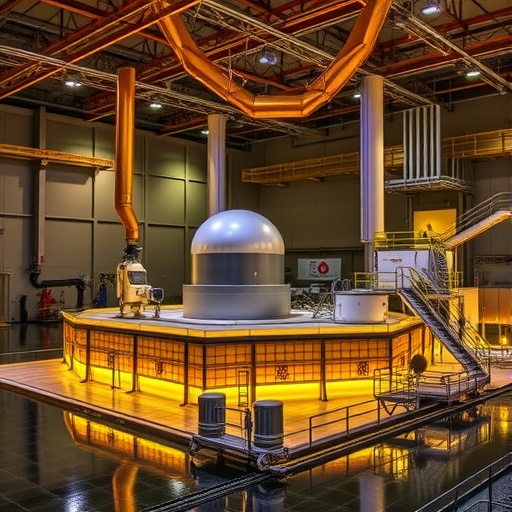
Underpinning these advancements is the strategic deployment of DOE’s leadership-class supercomputers, which provide the massive computational power necessary to train extensive AI models and execute high-fidelity simulations at scale. Simultaneously, real-time reactor operations are envisioned to be enhanced by on-site NVIDIA AI systems, allowing immediate data processing and decision-making capabilities essential for operational safety and efficiency. Integrating legacy data from INL’s operational reactors, experimental setups such as the Neutron Radiography Reactor (NRAD), and emerging facilities like the Microreactor Applications Research Validation and Evaluation Laboratory (MARVEL) ensures that AI systems are rigorously validated against empirical performance benchmarks.
The partnership’s ambition extends beyond technological achievements. It seeks to set a precedent for the nuclear industry by institutionalizing AI and accelerated computing methodologies as standard practice, facilitating broader adoption across utilities, reactor developers, regulators, and investors. This holistic approach envisages a future where regulatory frameworks adapt to accommodate autonomous and digital nuclear operations, effectively streamlining licensing processes and fostering innovation without compromising safety or compliance.
Prometheus aligns closely with national priorities embracing both the industrial and scientific revolutions driven by artificial intelligence. By embedding AI in the nuclear sector, the mission resonates with an overarching vision of energy dominance for the United States—securing affordable, reliable, and clean power essential for economic resilience and technological leadership. DOE officials emphasize that this fusion of nuclear expertise and AI infrastructure not only promises substantial cost savings but also propels energy systems to new heights of reliability and safety, paving the way for an unprecedented era of American energy sovereignty.
Central to the initiative is the human-in-the-loop workflow approach that balances machine efficiency with expert oversight. This careful integration models safety-critical decision-making where AI augments rather than replaces human judgment. Such frameworks allay concerns about automation risks while enhancing operational responsiveness. The iterative learning process inherent in AI-driven workflows ensures continuous system improvements, capturing insights from operational data to refine performance dynamically.
The Genesis Mission’s collaborative framework includes other national laboratories such as Oak Ridge and Argonne, alongside potential engagement with academic institutions and industry stakeholders. This inclusive ecosystem fosters cross-disciplinary innovation and knowledge sharing, catalyzing the widespread transformation necessary to meet urgent national energy demands. The combined expertise across national labs accelerates progress, harmonizing nuclear science with next-generation computing capabilities to create synergistic breakthroughs.
In the context of global climate imperatives and escalating energy needs, this project exemplifies how leveraging AI in nuclear energy can substantially contribute to emission reductions and sustainable energy expansion. Advanced nuclear reactors, designed and operated through AI enhancements, could provide consistent low-carbon power while mitigating traditional deployment challenges like high upfront costs and protracted regulatory timelines. This presents a compelling strategy for integrating nuclear power seamlessly into the clean energy portfolios of the future.
In summary, the Idaho National Laboratory and NVIDIA partnership embodies a trailblazing union of nuclear science and artificial intelligence that promises to overhaul the nuclear energy landscape. The application of AI-powered digital twins, accelerated simulations, and autonomous workflows will expedite the deployment of safer, cheaper, and faster nuclear reactors. This endeavor positions nuclear energy as a cornerstone of America’s energy future, supporting the burgeoning AI-driven economy and reinforcing national security through technological leadership and energy independence.
Subject of Research: Artificial Intelligence-Accelerated Deployment of Advanced Nuclear Reactors
Article Title: Idaho National Laboratory and NVIDIA Forge AI-Powered Pathway for Rapid, Affordable Nuclear Energy Deployment
News Publication Date: Not specified in source content
Web References:
U.S. Department of Energy Genesis Mission Challenges: https://www.energy.gov/articles/energy-department-announces-26-genesis-mission-science-and-technology-challenges
Image Credits: Idaho National Laboratory
Keywords
Artificial intelligence, National laboratories, Advanced nuclear reactors, Digital twins, AI in energy, DOE Genesis Mission, Nuclear energy deployment, High-performance computing, GPU acceleration, Nuclear simulation codes, Energy innovation, AI-driven energy systems
Tags: accelerating nuclear energy timelinesadvanced nuclear reactor deploymentAI in nuclear reactor designAI-driven nuclear technology transformationAI-enhanced nuclear manufacturingDOE scientific platform developmentGenesis Mission DOE initiativeIdaho National Laboratory nuclear energynational security energy solutionsnuclear energy operational cost reductionNVIDIA artificial intelligence nuclear reactorsPrometheus Grand Challenge nuclear innovation