In a groundbreaking interdisciplinary study, bioengineers from the University of Texas at Dallas (UT Dallas) have uncovered a previously unrecognized biomechanical hallmark in tissues of younger patients afflicted with colorectal cancer—a disease predominantly associated with advanced age. The study meticulously demonstrates that both malignant and adjacent non-malignant colon tissues in patients under 50 exhibit significantly higher mechanical stiffness than those from older individuals diagnosed with the disease. These novel findings illuminate the critical role of tissue stiffness in the pathogenesis of early-onset colorectal cancer (EOCRC), thereby opening avenues for innovative approaches in detection, treatment, and possibly prevention of this rising medical challenge.
Colorectal cancer incidence typically surges with age, however, the past three decades have witnessed a perplexing and alarming increase in cases among younger adults. This epidemiological shift has galvanized researchers to revisit and expand their understanding of the disease’s biological underpinnings. The current investigation, published in the prestigious journal Advanced Science, pivots away from the traditional molecular-genetic paradigms and instead scrutinizes the physical and biomechanical microenvironment of colon tissues from both older and younger patients.
The team employed precise biomechanical assays, including microindentation testing, which involves deploying finely calibrated probes to palpate tissue samples and quantify their resistance to deformation. Remarkably, tissues derived from younger patients displayed enhanced rigidity not only within tumor masses but also in the histologically normal colon segments adjacent to tumors. This pervasive stiffness was further corroborated through compressive force evaluations, confirming that early-onset cancerous and noncancerous tissues share a biomechanically fibrotic phenotype marked by elevated collagen content and remodeling.
This rigidity within the extracellular matrix (ECM)—a complex, load-bearing network primarily composed of collagen fibers—suggests an altered physical milieu that may predispose to tumorigenesis. The colon’s natural compliance is essential for its peristaltic propulsion of fecal matter; aberrant stiffening disrupts normal tissue mechanics and potentially facilitates oncogenic processes by promoting a microenvironment conducive to cancer cell survival and proliferation.
“Our findings challenge the assumption that colorectal cancer tissue stiffness correlates simply with tumor presence. In younger patients, the entire tissue architecture appears primed by fibrosis-like remodeling, creating a biomechanical landscape that supports early tumor development,” explains Dr. Jacopo Ferruzzi, assistant professor of bioengineering and co-corresponding author. This insight underscores the importance of mechanobiology—the study of how physical forces influence cellular and tissue behavior—in deciphering cancer etiology beyond genetic mutations alone.
To translate these biomechanical observations into functional impact, the researchers harnessed biomimetic materials replicating the stiffness spectrum of colon tissues. Culturing colorectal cancer cells on these substrates, they observed that cells adopted more aggressive growth profiles in stiffer environments, directly linking mechanical characteristics to malignant cellular behaviors. This mechanotransductive phenomenon, where cells sense and respond to mechanical cues, suggests stiffness is not merely a consequence but a driver of early-onset colorectal carcinogenesis.
Further experimental validation came from patient-derived organoids, three-dimensional cell culture systems that recapitulate many aspects of the native tumor microenvironment. Across organoids derived from both young and older donors, stiffer culture matrices consistently accelerated cancer cell proliferation, confirming a universal mechanobiological effect irrespective of patient age. These organoid models provide a powerful platform to dissect complex interactions between cellular genetics and biophysical context.
The implications of this work extend beyond mechanistic insights. Recognizing tissue stiffness as a biomarker for cancer susceptibility heralds a new frontier in clinical oncology. It prompts urgent exploration of diagnostic modalities incorporating biomechanical profiling to identify at-risk individuals before clinical manifestation of disease. Therapeutically, it raises prospects of engineering ECM-modulating agents or mechanical environment-targeted therapies to interrupt cancer-promoting stiffness remodeling processes.
Collaboration between bioengineering and surgical oncology proved instrumental, as clinical expertise from UT Southwestern Medical Center enabled access to freshly excised tissue specimens through surgical resections. This joint effort exemplifies the translational synergy achievable when converging engineering principles with clinical practice, fostering holistic investigations into disease mechanisms grounded in human biology.
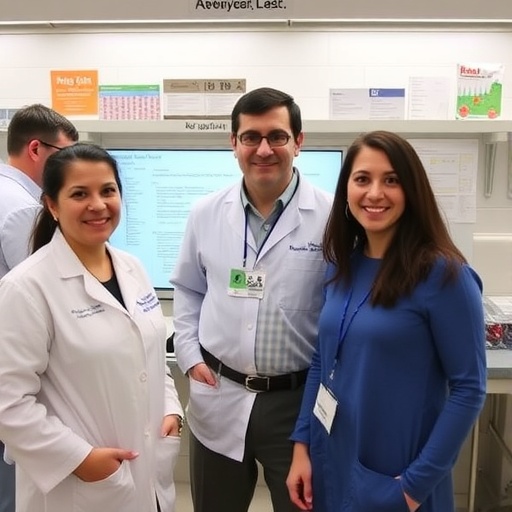
Moreover, the research took place within the Texas Instruments Biomedical Engineering and Sciences Building, a hub uniquely designed to co-locate UT Dallas and UT Southwestern scientists and facilitate cross-disciplinary innovation. This setting allowed continuous dialogue and rapid integration of experimental findings with clinical observations, accelerating the pace and impact of discovery.
Importantly, the study was supported by robust funding from the National Institutes of Health, Burroughs Wellcome Fund, and specialty societies such as the American Society of Colon and Rectal Surgeons, testifying to the significance and translational potential attributed to advancing mechanobiological understanding in cancer. Undergraduate and graduate researchers contributed vigorously, reflecting a vibrant educational environment fostering the next generation of biomedical innovators.
Looking ahead, Dr. Ferruzzi envisions a paradigm shift where early-onset colorectal cancer is approached not solely as a genetic or biochemical affliction but as a disease deeply entwined with physical forces and tissue mechanics. Interventions aiming to restore normal tissue compliance or inhibit fibrotic remodeling could complement conventional molecular therapies, offering hope for halting the troubling trend of rising EOCRC cases.
In summary, this investigative breakthrough underscores tissue biomechanics as a fundamental, yet overlooked, attribute shaping cancer initiation and progression. Beyond colorectal cancer, such mechanobiological perspectives may prove broadly applicable across diverse malignancies, positioning physical science as a critical pillar in the fight against cancer’s evolving landscape.
Subject of Research: Human tissue samples
Article Title: Biomechanical Phenotyping Reveals Unique Mechanobiological Signatures of Early-Onset Colorectal Cancer
News Publication Date: 1-Dec-2025
Web References:
Advanced Science Article DOI: 10.1002/advs.202514693
Image Credits: The University of Texas at Dallas
Keywords: Cancer, Biomedical engineering, Colorectal cancer, Colon cancer, Biomaterials, Medical technology, Biotechnology, Muscle contraction, Diseases and disorders, Gastrointestinal disorders, Biomechanics
Tags: age-related differences in colorectal cancerbiomechanical assays in cancer researchbiomechanical microenvironment of colon tissuecolorectal cancer detection methodscolorectal cancer in young adultsearly-onset colorectal cancer biomechanical tissue stiffnessinnovative colorectal cancer treatment approachesinterdisciplinary cancer research bioengineeringmicroindentation testing for cancer diagnosispathogenesis of early-onset colorectal cancertissue stiffness as cancer biomarkerUniversity of Texas at Dallas cancer study