A groundbreaking study from the University of Oklahoma has unveiled a novel mechanism underlying cancer cachexia and anorexia, conditions that drastically impair the health and quality of life in pancreatic cancer patients. Published in the prestigious journal Cancer Cell, this research spearheaded by Min Li, Ph.D., reveals what the team calls the “triangle regulation theory,” a sophisticated interplay between tumor cells, immune cells, and the nervous system that disturbs energy balance and appetite regulation.
Cancer cachexia is recognized as a complex syndrome characterized by profound muscle wasting and fat loss, primarily afflicting individuals with pancreatic tumors. This syndrome is compounded by anorexia, a gravity-defining loss of appetite that accelerates physical debilitation and diminishes patient resilience. Despite its devastating impact, the biological mechanisms driving cachexia have remained largely elusive, limiting the development of effective therapeutic strategies.
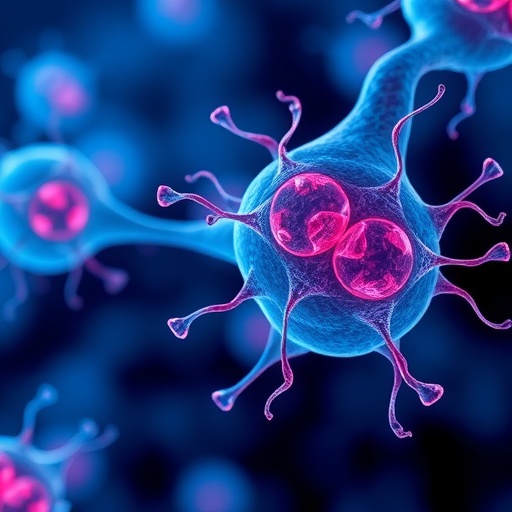
Dr. Min Li’s team has made a pivotal leap by elucidating how pancreatic cancer cells orchestrate a biological cascade involving macrophages—key immune system players—and the central nervous system to fuel disease progression. This newly described triad forms the backbone of the triangle regulation theory, whereby tumor cells recruit macrophages, which subsequently interact with neural circuits in the brainstem to escalate production of growth and differentiation factor 15 (GDF15). Elevated GDF15 levels have been clinically correlated with cachexia severity, proposing this factor as a central mediator of the syndrome.
Importantly, the neurons in the brainstem possess receptors for GDF15, facilitating a direct communication channel that links peripheral immune responses with central appetite and metabolic regulation. The research highlights that this tripartite interaction ignites a vicious cycle perpetuating muscle wasting and appetite suppression, effectively turning the body’s energy balance against itself.
This paradigm shift challenges previous conceptions that viewed cancer cachexia as a mere consequence of tumor burden or nutritional inadequacy. Instead, Dr. Li’s findings paint a dynamic and interactive landscape where immune cells and neural mechanisms conspire under tumoral influence to sabotage metabolic homeostasis. This understanding opens new avenues for more targeted interventions that disrupt the pathological dialogue among the tumor, immune, and nervous systems.
The clinical implications are profound because cachexia severely reduces patients’ ability to endure aggressive therapies such as chemotherapy. Current treatment options for cachexia are limited and often ineffective, making the discovery of GDF15’s central role particularly promising. Neutralizing GDF15 production or its receptor interaction emerges as a strategic therapeutic target that could preserve muscle mass and improve appetite, thereby enhancing treatment tolerance.
In preclinical models, Li’s team demonstrated that an antibody aimed at neutralizing GDF15 effectively mitigated cachexia and anorexia symptoms in affected mice. This preclinical success mirrors ongoing efforts by pharmaceutical companies to develop anti-GDF15 therapies, with some candidates advancing into Phase 3 clinical trials, underscoring the translational potential of this research.
This latest work builds on Dr. Li’s earlier research revealing the crucial “crosstalk” between pancreatic cancer cells and macrophages as the ignition step of cachexia. The current study introduces the central nervous system into the equation, creating a more comprehensive model that accounts for energy homeostasis disruption. It reveals a complex, evolving network where multiple regulatory triangles might operate simultaneously or sequentially to exacerbate wasting.
Moreover, the dynamic nature of this regulatory triangle suggests that therapeutic timing and targeting may need to adapt as cachexia progresses. Understanding which components dominate at various stages could optimize intervention strategies, tailoring treatments to interrupt the pathological circuit precisely and effectively.
Dr. Li and his colleagues are enthusiastic about the trajectory of their research, anticipating further elucidation of the molecular signals and cellular interactions orchestrating cancer cachexia. Their ongoing investigations aim to unravel finer details of the immune-neural circuitry and identify additional molecular players, potentially uncovering new targets for intervention.
Given the staggering statistic that up to 80% of pancreatic cancer patients develop cachexia, the urgency for innovative treatments is clear. This research not only advances scientific understanding but also rekindles hope for improved clinical outcomes through therapies that restore energy balance and appetite, ultimately improving survival rates and quality of life.
The University of Oklahoma’s pioneering study marks a critical step toward demystifying one of cancer’s most debilitating complications. By characterizing the tumor-immune-neural axis, Dr. Li’s work lays a robust foundation for developing next-generation therapeutics that interrupt the deadly feedback loop sustaining cachexia and anorexia.
As investigations continue, the scientific community eagerly awaits further revelations that may revolutionize how we approach cancer-associated metabolic syndromes, promising a future where cachexia is a manageable, if not preventable, complication rather than a near-certain demise for pancreatic cancer patients.
Subject of Research: Animals
Article Title: Tumor-immune-neural circuit disrupts energy homeostasis in cancer cachexia
News Publication Date: 12-Feb-2026
Web References:
https://www.cell.com/cancer-cell/fulltext/S1535-6108(26)00053-X
http://dx.doi.org/10.1016/j.ccell.2026.01.014
Image Credits: University of Oklahoma
Keywords: cancer cachexia, pancreatic cancer, anorexia, GDF15, macrophages, central nervous system, tumor-immune interaction, metabolic homeostasis, cancer therapy, immunology, neural circuits, oncology research
Tags: anorexia in pancreatic cancercancer cachexia mechanismscentral nervous system and cancerenergy balance disruption in cancergrowth differentiation factor 15 roleimmune response in cancer cachexiamuscle wasting syndromepancreatic cancer research breakthroughsQuality of Life in Cancer Patientstherapeutic strategies for cachexiatriangle regulation theorytumor-immune system interaction