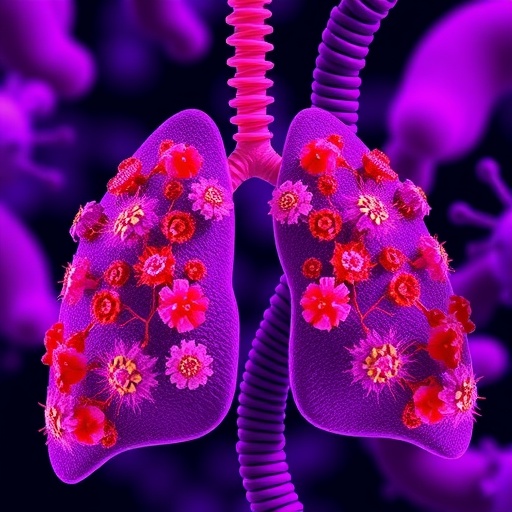
Inhaled pollutants, including the persistent threat of cigarette smoke, present a formidable challenge to the integrity of the respiratory tract over a person’s lifespan. The cells lining the airways undergo continuous exposure to these harmful agents, triggering molecular disturbances that can undermine their normal growth and function. This gradual deterioration sets the stage for the formation of bronchial premalignant lesions, cellular abnormalities that carry the ominous potential to evolve into squamous cell carcinoma, a subtype of non-small cell lung cancer notorious for its aggressive nature and poor prognosis.
Recent groundbreaking research conducted at Boston University’s Chobanian & Avedisian School of Medicine has unveiled a pivotal cellular mechanism that may govern the transition from these early premalignant states to invasive lung cancer. The study identifies a specific microRNA molecule—miR-149-5p—that is significantly upregulated in lesions exhibiting progressive severity. MicroRNAs are short, non-coding RNA strands that modulate gene expression, typically by silencing target messenger RNAs, thereby controlling protein synthesis and cellular behavior.
Through meticulous RNA sequencing and microRNA profiling of bronchial biopsies collected from patients at Roswell Park Comprehensive Cancer Center, the researchers explored gene expression patterns linked with lesion advancement. Among the 167 biopsies analyzed from 30 subjects, miR-149-5p emerged as the dominant microRNA whose overexpression corresponded inversely with the levels of NLRC5, a master regulator responsible for activating immune system genes pivotal for identifying and eliminating abnormal cells.
This inverse relationship implies that high miR-149-5p expression undermines the body’s immune surveillance by repressing NLRC5-mediated pathways. Consequently, transformed airway epithelial cells can evade immune detection, creating an immunosuppressive microenvironment that favors lesion persistence and malignant progression. This immune evasion strategy is corroborated by spatial analyses of biopsy tissues showing a conspicuous scarcity of immune cells proximal to the bronchial cells laden with elevated miR-149-5p and diminished NLRC5.
Notably, lesions demonstrating the greatest degree of severity and propensity to progress were associated with the highest expression of miR-149-5p, underscoring its potential as a biomarker for aggressive disease. These findings illuminate a previously unappreciated axis of immune escape at the premalignant stage, pointing toward the critical role of epithelial microRNA regulation in modulating host-tumor interactions before invasive cancer develops.
Jennifer Beane, PhD, an associate professor of medicine and the study’s corresponding author, emphasized the clinical implications of these insights. She articulated that understanding the molecular events dictating whether lesions regress, remain stable, or deteriorate provides a strategic foothold to intercept lung cancer at its inception. By distinguishing lesions poised for malignant transformation, clinicians could conceivably deploy targeted interventions to halt or reverse disease progression, significantly reducing lung cancer mortality rates.
The investigative team employed cutting-edge spatial transcriptomics to localize both the expression of miR-149-5p and its downstream targets within the intricate tissue microenvironment. This approach enabled quantification of the spatial relationships between transformed epithelial cells and infiltrating immune populations within the same tissue context, revealing the localized impact of miR-149-5p on immune cell exclusion.
Furthermore, the research sheds new light on how chronic inhalational exposure to environmental pollutants perpetuates a cycle of inflammation, cellular injury, and immune disruption. Insights gleaned from this study could pave the way for novel therapeutic avenues that restore immune surveillance capabilities, either by directly antagonizing miR-149-5p or by enhancing NLRC5 expression, thus reactivating the immune system’s natural tumor defense mechanisms at a premalignant stage.
This work also spotlights the need to broaden our understanding of lung carcinogenesis beyond genetic mutations within cancer cells, encompassing the crucial role of non-coding RNAs and the immune landscape of the bronchial epithelium. As inhaled toxicants and environmental challenges continue to rise globally, unraveling these complex molecular crosstalk pathways becomes ever more pressing for public health and cancer prevention strategies.
Importantly, these discoveries highlight a possible molecular target for interception—a therapeutic window during which lung cancer may be prevented rather than treated post-invasion. The prospect of intercepting disease progression at the cellular and molecular level promises to redefine the future of lung cancer care, shifting the paradigm from late-stage interventions to early, precision-based preventive strategies.
The study’s findings appear in the prestigious journal Cancer Immunology Research, underscoring a collaborative, multidisciplinary effort that integrates molecular biology, immunology, computational analysis, and clinical pathology. The research received funding from the National Institutes of Health alongside sponsored support from Johnson and Johnson and prominent cancer research foundations, reflecting the high-impact and translational potential of this work.
As research continues to unravel the subtle mechanisms by which premalignant cellular populations evade immune detection, the scientific community moves closer to harnessing these insights for early diagnostics and immunomodulatory therapies. This could herald a new era in lung cancer prevention, with the promise of intercepting the disease in its most nascent and curable stages, substantially improving patient outcomes worldwide.
Subject of Research: Cells
Article Title: Up-regulation of an epithelial miRNA is associated with immune evasion in progressive bronchial premalignant lesions
News Publication Date: 11-Feb-2026
Web References: 10.1158/2326-6066.
Keywords: Health and medicine
Tags: Boston University lung cancer studybronchial premalignant lesionscellular mechanisms of cancer developmentcigarette smoke lung damagegene expression in lung cancerimmune evasion in lung lesionsmicroRNA miR-149-5p discoverynon-small cell lung cancer progressionrespiratory tract integrity challengesRNA sequencing in cancer researchRoswell Park Comprehensive Cancer Center findingssquamous cell carcinoma research