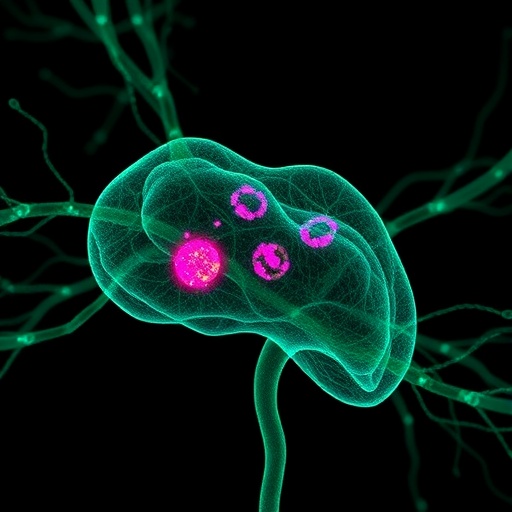
A recently published study in the journal Nature has unveiled a critical molecular pathway that not only drives the aggressive progression of liver cell cancer but also orchestrates an immunosuppressive microenvironment, effectively disabling the body’s capacity to fight the tumor. This groundbreaking work, spearheaded by an international consortium of scientists from the German Cancer Research Center (DKFZ), the University Hospital of Tübingen, and the Sanford Burnham Prebys Medical Discovery Institute, sheds new light on the dualistic role of the stress-response protein ATF6α in hepatocellular carcinoma (HCC). Intriguingly, the researchers also demonstrated that this same molecular mechanism could predict which patients are most likely to respond favorably to immunotherapy, opening promising avenues for more personalized and efficacious liver cancer treatments.
Hepatocellular carcinoma stands as one of the deadliest malignancies globally, largely due to its complex etiology and resistance to conventional therapies. Chronic inflammation and persistent cellular stress, often stemming from metabolic syndromes or viral hepatitis, create a hostile environment that drives oncogenesis in the liver. At the molecular heart of the cellular stress response lies the protein ATF6α, a key regulator activated upon the accumulation of misfolded proteins within the endoplasmic reticulum. Under normal circumstances, transient ATF6α activation initiates protective mechanisms to restore cellular homeostasis. However, the new study reveals that in liver cancer, persistent ATF6α activation paradoxically contributes to tumorigenesis and immune evasion.
The research team conducted an extensive analysis of patient-derived liver tumor samples alongside comprehensive data mining of global cancer databases. Their findings conclusively demonstrated that tumors exhibiting high levels of ATF6α activation not only display enhanced proliferation rates but also portend a significantly worse clinical prognosis. Further mechanistic investigations uncovered that chronic ATF6α activity induces profound metabolic reprogramming within tumor cells, fostering an environment that severely impairs the function of infiltrating cytotoxic T lymphocytes, the immune system’s frontline soldiers against malignant cells.
One of the critical revelations centers on how ATF6α-active tumor cells manipulate glucose metabolism. These cells engage in a hyper-glycolytic state, rapidly consuming glucose and thereby depleting this vital nutrient in the tumor microenvironment. Cytotoxic T cells, essential for effective antitumor immunity, rely heavily on glucose-mediated metabolic pathways for their activation and cytolytic functions. The glucose-starved immune cells become metabolically exhausted, losing their capacity to mount an effective immune attack, a phenomenon exacerbated by the ATF6α-induced suppression of the FBP1 enzyme.
Fructose-1,6-bisphosphatase 1 (FBP1) serves as a pivotal metabolic checkpoint enzyme that normally promotes gluconeogenesis and exerts tumor suppressive functions in hepatic tissues. The study discovered that ATF6α inhibits the expression of the FBP1 gene, which conclusively shifts cellular metabolism toward glycolysis, enhancing tumor cell survival and proliferation. This metabolic shift elevates cellular stress even further, fostering a vicious cycle that promotes both cancer progression and immune escape. Importantly, by dissecting this pathway, the researchers identified a new potential therapeutic target: restoring FBP1 activity could rebalance tumor metabolism and reinvigorate immune responses.
Employing sophisticated genetically engineered mouse models, the investigators confirmed that ATF6α activation alone suffices to trigger sustained liver inflammation, hepatocyte transformation, and subsequent tumorigenesis. Conversely, genetic ablation or pharmacological inhibition of ATF6α markedly diminished tumor formation, underscoring the protein’s causative role. These models provided a powerful platform to test therapeutic interventions, where administration of immune checkpoint inhibitors (ICI) yielded remarkable antitumor effects in ATF6α-high tumors, despite their immunosuppressive milieu.
Interestingly, the paradoxical finding emerged that tumors with hyperactive ATF6α signaling, although intrinsically immunosuppressive, exhibited heightened sensitivity to ICI therapies such as anti-PD-1 or anti-CTLA-4 antibodies. These drugs operate by releasing the brakes on immune checkpoints, enabling exhausted T cells to regain function and attack cancer cells. In mouse experiments, ICI treatment resulted in drastic tumor regression and increased survival rates. Moreover, retrospective analysis of clinical trial data suggested that patients with elevated ATF6α activity in their tumors were more likely to experience durable complete responses to immunotherapy, establishing ATF6α as a powerful predictive biomarker.
This dualistic nature of ATF6α—as both a tumor promoter and an enabler of therapeutic vulnerability—positions it uniquely as both a therapeutic target and a stratification marker in clinical oncology. The research leaders emphasize that targeting ATF6α or its downstream metabolic pathways could potentiate immune-mediated tumor clearance, while patient selection based on ATF6α status might optimize the clinical success rate of immune checkpoint therapies. These insights pave the way for precision medicine approaches in liver cancer, a field historically challenged by limited successful treatment modalities.
Beyond liver cancer, the study’s deep dive into the links between cellular metabolism, endoplasmic reticulum stress, and immune surveillance holds broad implications for oncology and immunology. The intricate interplay elucidated between tumor-intrinsic stress response pathways and the extrinsic immune environment highlights metabolism as a central nexus in cancer progression and therapy resistance. Future research inspired by these findings may focus on combinatorial strategies that simultaneously modulate tumor metabolism and boost antitumor immunity, potentially transforming the therapeutic landscape for a variety of solid tumors.
The significance of these findings is not merely academic but offers tangible hope for patients battling hepatocellular carcinoma. By revealing how chronic ATF6α activation undermines immune function, the study provides a mechanistic rationale for new therapies aimed at reversing this immune exhaustion. As immunotherapies consolidate their role in cancer treatment, companion diagnostics incorporating ATF6α activity assessment may become standard practice to identify optimal candidates for immune checkpoint inhibition. This approach exemplifies the burgeoning era of personalized cancer care, where molecular insights drive tailored and more effective intervention strategies.
In conclusion, the elucidation of ATF6α’s role represents a paradigm shift in understanding liver cancer biology. This multifaceted protein functions as a metabolic regulator, tumor driver, and modulator of immune escape. The study coalesces molecular biology, immunology, and metabolism into a cohesive model that captures the complexity of liver cancer progression and treatment responsiveness. With clinical translation on the horizon, targeting ATF6α and its associated metabolic pathways promises to invigorate immunotherapy responses, offering renewed hope against a historically intractable malignancy.
Subject of Research: Molecular mechanisms of liver cell cancer progression and immunosuppression
Article Title: Chronically activated ATF6α is a hepatic tumor-driver metabolically restricting immunosurveillance
News Publication Date: 2026 (Exact date not provided)
Web References: 10.1038/s41586-025-10036-8
References: Xin Li et al., Nature 2026; DOI: 10.1038/s41586-025-10036-8
Image Credits: Not provided
Tags: ATF6α protein in cancercancer research and immunotherapy predictionchronic cellular stress and liver cancerhepatocellular carcinoma and immunotherapyimmunosuppressive microenvironment in HCCinternational collaboration in cancer researchmetabolic syndromes and liver cancermolecular pathways in oncogenesispersonalized liver cancer treatmentsresistance to conventional cancer therapiesrole of stress-response proteins in cancerviral hepatitis and cancer risk