The aviation sector is responsible for a staggering fraction of global carbon emissions, prompting global initiatives to adopt Sustainable Aviation Fuel (SAF). This innovative fuel, derived from organic waste or biomass, promises to significantly mitigate greenhouse gas emissions relative to traditional fossil-derived jet fuels. Despite its promise, the high expenses associated with SAF production present a considerable challenge, causing some airlines in Europe and Japan to shift these costs onto consumers.
In a landmark breakthrough, a research team led by Dr. Yun-Jo Lee at the Korea Research Institute of Chemical Technology (KRICT), in partnership with EN2CORE Technology Co., Ltd., has unveiled an integrated process that transforms landfill gas generated from organic waste—specifically food waste—into aviation fuel. This design not only addresses the pressing need for cleaner fuel alternatives but also presents new recycling opportunities for waste that would otherwise contribute to environmental degradation.
Traditionally, the SAF refining industry focuses primarily on repurposing used cooking oil, a resource characterized by its limited availability and alternative uses—such as biodiesel—which exacerbates both its cost and procurement difficulties. In contrast, landfill gas produced from food waste and livestock manure is both plentiful and cost-effective. This recent study marks a pioneering domestic demonstration of aviation fuel production utilizing landfill gas as its principal feedstock, potentially revolutionizing the approach to SAF creation.
Converting landfill gas into aviation fuel entails tackling two key challenges: purifying the gas to yield appropriate intermediates and increasing the efficiency of converting those gaseous intermediates into liquid fuel forms. Dr. Lee’s research team has addressed these challenges through an elaborately developed integrated process that encompasses the pretreatment of landfill gas, synthesis gas (syngas) production, and the catalytic conversion of syngas into liquid fuels.
EN2CORE Technology assumed a vital role in managing upstream operations. They collected landfill gas from waste disposal sites, undergoing a meticulous desulfurization process and subsequent membrane-based separation to eliminate excess carbon dioxide. The resultant purified gas is then transformed into synthesis gas, comprising carbon monoxide and hydrogen, via a proprietary plasma reforming reactor before delivery to KRICT for further processing.
At KRICT, the Fischer-Tropsch process is employed to convert this gaseous syngas into liquid fuels. This chemical reaction entails hydrogen and carbon reacting on a catalytic surface, subsequently forming hydrocarbon chains. These hydrocarbons are then assessed for chain length, wherein optimal lengths yield liquid fuels while longer chains produce solid byproducts, including wax. In a significant innovation, KRICT enhanced selectivity toward liquid fuels by utilizing zeolite- and cobalt-based catalysts, minimizing solid waste production.
A groundbreaking facet of this work is the microchannel reactor’s introduction. This reactor design combats excessive heat generation—an element that poses risks to catalysts and reduces the overall process stability. The microchannel reactor, crafted by the team, incorporates alternating layers of catalyst and coolant channels, facilitating efficient heat removal and averting thermal runaway. The reactor’s reduced volume—up to one-tenth of traditional systems—allows for straightforward capacity expansion through the addition of modules.
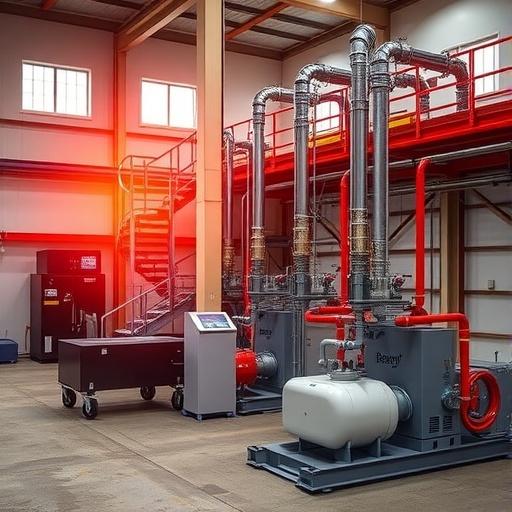
For demonstration purposes, the team has developed an integrated pilot facility located on a landfill site in Dalseong-gun, Daegu. This facility occupies approximately 100 square meters—equivalent to an average two-story detached house—and has successfully produced an impressive 100 kg of sustainable aviation fuel per day, achieving liquid fuel selectivity exceeding 75 percent. Currently, the team is focused on optimizing long-term operational conditions and enhancing both catalyst and reactor performance.
This advancement underscores the potential to convert everyday waste-derived gases from food waste and sewage sludge into valuable aviation fuel. It also highlights the feasibility of producing aviation fuel at local landfills or smaller waste treatment facilities, previously thought to be suitable only for larger centralized plants. Consequently, this innovative technology is poised to contribute significantly to the formation of decentralized SAF production systems, thereby boosting the competitiveness of South Korea’s SAF industry.
The significance of this research leads KRICT President Young-Kuk Lee to emphasize that the acclaimed development is pivotal in establishing integrated processing technology capable of converting organic waste into high-value fuels. The strong potential exhibited in this technology could serve as a cornerstone solution toward achieving both carbon neutrality and the principles of a circular economy.
The work surrounding the development of dual catalysts facilitating selective liquid fuel production has been published as an inside cover piece in ACS Catalysis (November 2025) and in the journal Fuel (January 2026). These meticulous endeavors reflect a seized opportunity to catalyze a greener future, fostering a transition within the aviation industry that prioritizes environmental sustainability and resource efficiency.
As the global context for energy sources shifts dramatically under climate-related pressures, technological advancements such as this integrated process represent an essential facet in the fight against climate change while reshaping the landscape of renewable fuels. By embracing such innovations, the aviation sector may soon reveal itself as a paragon of environmental accountability and sustainability.
In conclusion, integrating environmental responsibility within the aviation industry through the development of innovative processes such as this holds promise not just for fuel production but overall ecological well-being. By transforming waste into valuable fuel, we move toward a future where our energy sources are as sustainable as they are efficient, ensuring a greener planet for generations to come.
Subject of Research: Integrated process for producing sustainable aviation fuel from landfill gas
Article Title: Tailoring Zeolite-Supported Bifunctional Cobalt Catalysts for Direct Conversion of Syngas to Liquid Fuels
News Publication Date: 7-Nov-2025
Web References: http://dx.doi.org/10.1021/acscatal.5c03696
References: [Insert specific references if necessary]
Image Credits: Credit: Korea Research Institute of Chemical Technology(KRICT)
Keywords
Sustainable Aviation Fuel, Landfill Gas, Fischer-Tropsch Process, Renewable Energy, Greenhouse Gas Emissions, Carbon Neutrality, Environmental Innovation, Waste Management, Chemical Engineering, Technology Development.
Tags: aviation fuel alternativesaviation sector environmental impactcarbon emissions reduction in aviationcost-effective SAF solutionsDr. Yun-Jo Lee researchEN2CORE Technology collaborationfood waste recycling for fuelKRICT research achievementslandfill gas conversion technologyorganic waste to fuel innovationrenewable energy from landfill gassustainable aviation fuel production