The John Innes Centre (JIC), a leading force in plant science, together with its industrial and academic collaborators, has secured substantial funding from the UK Government to propel four pioneering projects in the rapidly evolving field of precision breeding. These initiatives are poised to revolutionize sustainable agriculture and horticulture by harnessing cutting-edge gene editing technologies, following the enactment of the Genetic Technology (Precision Breeding) Act 2023. This legislation has paved the way for the use of gene-edited crops in England, facilitating the translation of scientific breakthroughs into tangible agricultural innovations.
Precision breeding encompasses advanced methodologies such as gene editing, which enable precise modifications to plant genomes without introducing foreign DNA from unrelated species. This approach offers a transformative leap from traditional breeding techniques, accelerating the development of crops with enhanced disease resistance, improved nutritional profiles, and increased resilience to climate stressors. The John Innes Centre, renowned for its expertise in genetics and biotechnology, stands at the forefront of exploiting these methodologies to address critical challenges faced by farmers and consumers alike.
Among the most pressing agricultural threats are the diseases afflicting oilseed rape and sugar beet, two cornerstone crops valued for their economic and ecological roles. With the withdrawal of several harmful chemical controls, there is an urgent demand for environmentally sustainable solutions to protect these crops from devastating pests and pathogens. Gene editing offers a promising avenue to develop varieties inherently resistant to pathogens such as virus yellows in sugar beet and light leaf spot disease in oilseed rape, both responsible for significant yield losses and economic damage in recent years.
The sugar beet project, a collaboration involving JIC’s Professor Steven Penfield, British Sugar, and Tropic Biosciences, leverages gene editing to engineer resistance against virus yellows—an ailment that can cause yield reductions up to 25%, translating to losses of approximately £43 million for growers. This initiative exemplifies how precision breeding can safeguard crucial crop rotations integral to sustainable farming systems, while simultaneously supporting the bioeconomy through the provision of raw materials for biofuels and green industrial processes.
Parallelly, the project targeting oilseed rape employs gene editing techniques to tackle a suite of diseases including the economically damaging light leaf spot, which alone cost UK growers around £300 million in 2022. The LLS-Erased consortium merges expertise from JIC, the University of Hertfordshire, and specialized gene editing firm Cibus, which utilizes its Rapid Trait Development System™ for swift and accurate trait incorporation. This collaboration not only promises to enhance crop health but also aims to deliver the first introduction of precision bred oilseed rape directly onto European farms.
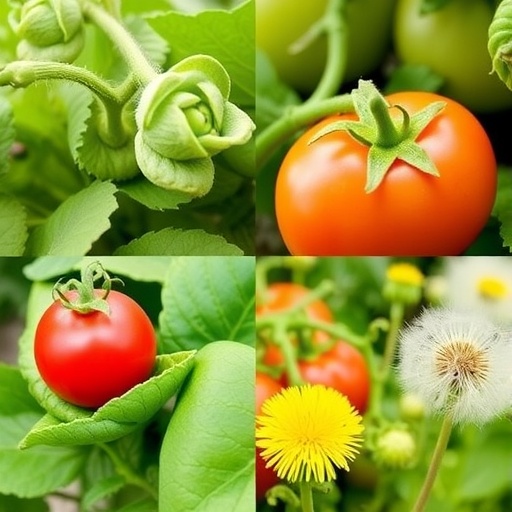
In the horticultural domain, the John Innes Centre is advancing the commercialization of nutritionally enhanced crops through the Sunshine Tomato project. Led by Professor Cathie Martin, this initiative focuses on a gene-edited tomato variant biofortified with vitamin D3, addressing widespread vitamin D deficiency—a major global health concern. Supported by £1.1 million in funding and additional investment from John Innes Enterprises, the project is progressing towards market-ready products including fresh and sun-dried tomatoes as well as plant-derived vitamin D supplements, marking a milestone as likely one of the first precision bred foods sanctioned under the new UK precision breeding framework.
A truly novel venture in this portfolio is the QuBOOSTR project, which aims to domesticate the common dandelion as a sustainable, UK-based source of natural rubber. Traditionally, dandelion latex yields have been insufficient for commercial exploitation, but advanced gene editing combined with aeroponic cultivation within controlled indoor environments offers a pathway to enhance both quantity and quality of rubber production. This project synergizes the expertise of JIC’s Germplasm Resources Unit, startup QuberTech, and indoor farming technology company LettUs Grow, signifying a bold step toward diversifying UK agriculture and establishing resilient supply chains for critical materials amidst global climate and geopolitical instability.
The Germplasm Resources Unit’s involvement is particularly noteworthy, as it concentrates on broadening the diversity of strategic crops, including underutilized species with potential to transform future farming. By assembling a genetically rich dandelion germplasm bank sourced globally, researchers can expedite the domestication process and tailor plants to meet stringent industrial requirements, showcasing the power of gene editing to unlock novel crop value chains.
Emphasizing the translational impact of these research endeavors, project leaders from the respective teams underscore the profound societal and environmental benefits anticipated. These range from reducing reliance on environmentally detrimental agrochemicals to enhancing the nutritional quality of widely consumed foods and securing domestic production of industrially vital commodities such as natural rubber. By confronting disease pressures and supply vulnerabilities head-on, these projects embody the UK’s ambition to foster a resilient, productive, and climate-smart agricultural sector.
The Farming Innovation Programme, under Defra’s aegis and in partnership with Innovate UK, serves as a cornerstone of this innovation ecosystem by channeling over £21.5 million into 15 projects addressing sustainability, emission reduction, and crop resilience. The precision breeding competition spearheaded by JIC’s collaborative efforts is the inaugural initiative dedicated exclusively to exploring gene editing’s potential, setting a precedent for future scientific and commercial ventures in this arena.
Innovate UK’s Managing Director Dr. Stella Peace emphasizes the swift progression from research breakthroughs to practical field applications, highlighting the program’s role in enabling farmers and agribusinesses to capitalize on emerging technologies. This seamless integration of scientific innovation with end-user adoption is fundamental to unlocking new economic opportunities and ensuring the UK remains competitive in the global food and farming landscape.
Together, these projects illustrate a holistic approach to agricultural innovation—bridging molecular biology, crop science, industrial biotechnology, and controlled environment agriculture—to confront multifaceted challenges. As gene editing technologies become increasingly refined and regulatory frameworks evolve, the possibilities for precision breeding to reshape food systems grow exponentially, promising a future where crop improvement aligns with sustainability, nutrition, and economic resilience.
In conclusion, the John Innes Centre’s leadership in precision breeding projects backed by government investment signals a transformative era for UK agriculture and horticulture. By pioneering disease resistance in staple crops, enhancing nutritional profiles of fruits, and introducing novel industrial crops, these efforts stand to redefine agricultural paradigms. The integration of these advanced breeding techniques, underpinned by robust research and innovative cultivation methods, exemplifies the cutting edge of plant science poised to meet the 21st century’s food security and environmental challenges head-on.
Subject of Research: Precision breeding and gene editing in crops including sugar beet, oilseed rape, tomatoes, and dandelions to improve disease resistance, nutritional content, and supply chain resilience.
Article Title: Four Ambitious UK Precision Breeding Projects Set to Revolutionize Sustainable Agriculture and Biotech Industries
News Publication Date: Not explicitly stated; based on context likely 2024
Web References:
John Innes Centre
Innovate UK
Defra Farming Innovation Programme
References: Provided within the article text via project leads and institutional quotations.
Image Credits: John Innes Centre
Keywords:
Applied sciences and engineering, Agriculture, Horticulture, Agronomy, Crop domestication, Agricultural biotechnology, Genetics, Microbiology, Food science, Technology, Genetic methods, Genomics, Genetic engineering, Farming, Pest control, Bioengineering, Genetic technology
Tags: advancements in crop disease resistanceclimate resilience in agriculturedandelion crop developmentfuture of genetic modification in cropsgene editing technologies in farmingGenetic Technology (Precision Breeding) Act 2023horticultural advancements with tomatoesJohn Innes Centre plant scienceoilseed rape and sugar beet researchprecision breeding in agriculturesustainable agriculture innovationsUK government funding for agriculture