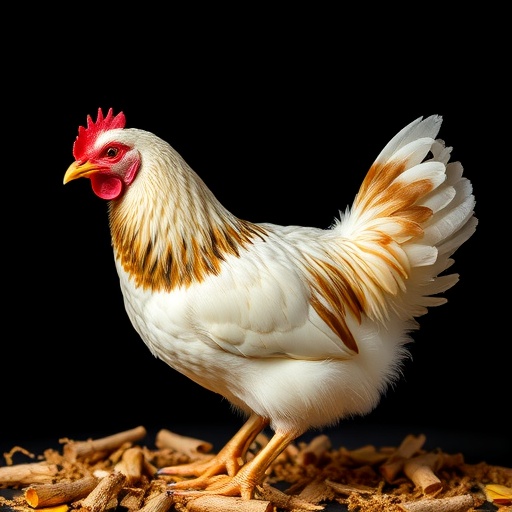
In a groundbreaking study spearheaded by renowned researchers, the evaluation of production potential and reproductive traits of selected improved chicken breeds comes to the forefront, especially within the context of Fafan Research Center in the Somali Region of Ethiopia. This work sheds light on the vital advancements in poultry science that have significant implications not only for local farmers but also for global food security. By exploring the unique attributes of enhanced chicken breeds, the research offers critical insights that could shape poultry production strategies in developing regions.
The impetus behind selecting improved chicken breeds lies in the quest to increase poultry productivity, which has become a focal point for enhancing food security worldwide. Researchers have long understood that an increase in poultry production could alleviate poverty and provide sustainable livelihoods, particularly in regions where poultry farming is a primary income source. The improved breeds analyzed in this study were chosen due to their promising characteristics in terms of growth rates, feed conversion efficiency, and reproductive performance.
Within the scope of this research, the comparative evaluation employed rigorous methodologies that included both field trials and controlled environments. The researchers meticulously monitored the poultry’s growth rates, egg production, and reproductive health metrics. This scientific approach enables the team to derive substantial data that reflects not just the productivity of these improved breeds but also their adaptability to the local climatic and environmental conditions present in the Somali Region.
The findings thus far indicate that these improved breeds exhibit superior growth rates compared to their traditional counterparts. Notably, the ability of these breeds to convert feed into body mass more efficiently is one of the critical factors influencing their overall productivity. This translation of feed into growth is particularly significant in areas where nutritional resources may be limited, ultimately paving the way for enhanced profitability for local farmers who adopt these breeds.
In addition to growth metrics, the study’s focus on reproductive traits is equally crucial. Higher egg production rates were observed in the improved breeds, with researchers documenting a more consistent and viable reproductive cycle. This trait is especially vital in poultry farming, as egg production serves not only as a source of food but also as a revenue stream for farmers. The findings suggest that adopting these improved breeds could lead to a more sustainable poultry operation capable of meeting both local and regional food demands.
Moreover, the implications of these findings extend beyond the scientific community directly into the hands of farmers in Ethiopia and similar regions. Enhanced production potential translates to an increased capacity to feed families and communities, thereby addressing food insecurity—a pressing issue in many developing nations. The results of this study hold the potential to fuel initiatives aimed at economic development through improved agricultural practices and livestock management.
Additionally, the collaboration between researchers and local farmers forms the backbone of this innovative approach. Engaging local communities not only fosters trust but also ensures that the practices adopted are culturally sensitive and tailored to the unique challenges faced in the region. This partnership between science and community underscores the necessity of implementing research in a manner that considers the socio-economic conditions of the end users, thus enhancing the relevance and efficacy of the study’s findings.
The broader impact of this research resonates with the global discourse on sustainable agriculture. As the world grapples with the dual challenges of climate change and a rapidly growing population, the search for sustainable food production systems has never been more urgent. The insights gained from the evaluation of these improved chicken breeds could potentially inform policies and practices aimed at resolving these pressing challenges on a global scale, encouraging other regions to adopt similar innovations in poultry farming.
As urbanization continues to expand, the demand for poultry products is projected to increase exponentially. This study thus highlights the critical need for developing robust poultry systems capable of meeting this demand sustainably. The data gathered will be instrumental in shaping future research directions, policy decisions, and agricultural practices across various regions, ensuring that food security remains at the forefront of discussions among policymakers and agricultural stakeholders alike.
Furthermore, this research also sheds light on the genetic diversity and breeding techniques that could be employed to further refine poultry breeds. By ensuring that poultry resources are not only productive but also genetically diverse, researchers can help mitigate potential risks associated with disease outbreaks that could devastate poultry populations. This diversification strategy is key to enhancing resilience in poultry farming systems, especially in the face of changing climate conditions and emerging health challenges.
Drawing conclusions from this study requires a careful assessment of its methodologies and findings. The detailed approach employed ensures that the results are both reliable and applicable to the contexts from which they arise. Robust data on growth rates, feed conversion, egg production, and reproductive traits lay a foundation for future studies that could explore additional aspects, such as disease resistance and overall survivability of these breeds in challenging environmental conditions.
In conclusion, the comparative evaluation of production potential and reproductive traits of selected improved chicken breeds holds transformative potential for poultry farming, particularly in resource-limited settings such as the Somali Region of Ethiopia. Researchers have provided vital insights that could reshape farming practices, influence food security strategies, and guide the future of poultry production at a local and global scale. The intersection of science, local engagement, and sustainable agriculture exemplifies a promising pathway forward, one that could redefine the role of poultry farming in addressing the world’s growing food needs.
Subject of Research: Comparative evaluation of production potential and reproductive traits of selected improved chicken breeds.
Article Title: Comparative evaluation of production potential and reproductive traits of selected improved chicken breeds at Fafan Research Center, Somali Region, Ethiopia.
Article References:
Abdi, S.M., Ahmed, A.A., Hussein, F. et al. Comparative evaluation of production potential and reproductive traits of selected improved chicken breeds at Fafan Research Center, Somali Region, Ethiopia.
Discov Anim 3, 11 (2026). https://doi.org/10.1007/s44338-026-00168-0
Image Credits: AI Generated
DOI: https://doi.org/10.1007/s44338-026-00168-0
Keywords: poultry farming, improved chicken breeds, food security, reproductive traits, sustainable agriculture.
Tags: chicken breed evaluationdeveloping regions poultry productionFafan Research Center studyfeed conversion efficiencyfood security and poultrygrowth rates in chickensimproved chicken breedslocal farming impactpoultry production strategiespoultry science advancementsreproductive traits in poultrysustainable livelihoods in farming