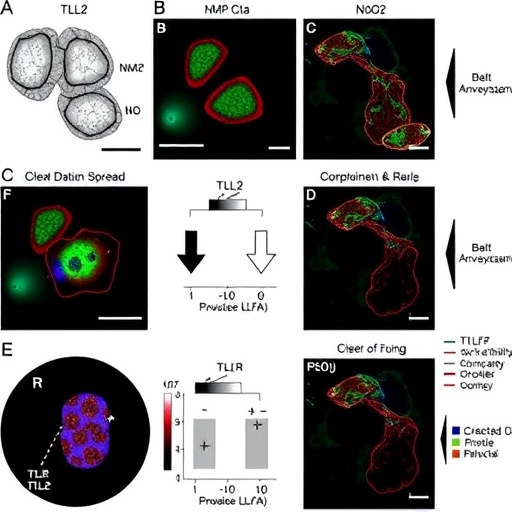
In an exciting development that promises to reshape our understanding of neurodegenerative disease mechanisms, researchers have unveiled a novel immunotherapeutic approach targeting TLR2 (Toll-like receptor 2) to interrupt the pathological spread of α-synuclein between neurons and oligodendrocytes. The groundbreaking study, conducted by Bae, Ham, Jeong, and colleagues, explores the nuances of intercellular α-synuclein propagation in both mouse and human models, revealing new insights that could pave the way for innovative therapies against diseases such as Parkinson’s and multiple system atrophy (MSA).
Central to many neurodegenerative disorders is the misfolding and aggregation of α-synuclein, a presynaptic neuronal protein whose abnormal accumulation precipitates cellular dysfunction and death. While considerable focus has been placed on neuron-to-neuron transmission of α-synuclein aggregates, this study highlights a critical, less-explored pathway: the transfer of pathological α-synuclein species from neurons to oligodendrocytes. Oligodendrocytes, the myelinating cells of the central nervous system, are not traditionally considered direct players in α-synuclein pathology. However, their involvement has profound implications for disease progression, especially in MSA, where α-synuclein inclusions prominently accumulate within oligodendrocytes rather than neurons.
The researchers pinpoint Toll-like receptor 2 as a pivotal molecular mediator orchestrating the propagation of α-synuclein between neurons and oligodendrocytes. TLR2, a component of the innate immune system best known for detecting bacterial lipoproteins, has increasingly been implicated in neuroinflammatory processes relevant to neurodegeneration. By leveraging a sophisticated anti-TLR2 immunotherapy, the team demonstrated the ability to selectively modulate this receptor’s activity, effectively reducing the pathological transmission of α-synuclein aggregates.
Delving into the mechanistic underpinnings, the study employed a combination of in vitro human cellular models and in vivo mouse systems to replicate and observe the complex intercellular trafficking of α-synuclein. Through these models, the researchers could monitor how α-synuclein pathology disseminates, tracing the molecular dialogue that enables aggregates to exit neurons and invade oligodendrocytes. The anti-TLR2 intervention not only attenuated the transfer but also mitigated subsequent cellular damage within recipient oligodendrocytes, underscoring the therapeutic promise of targeting innate immune signaling pathways.
This multi-model approach is particularly significant given the translational gap often encountered in neurodegenerative research. Mouse models allow for controlled genetic and pharmacologic manipulation, while human cell-based systems offer the critical context of human-specific cellular interactions and molecular pathways. The convergence of findings across these models lends robust credibility to the therapeutic strategy and suggests broader applicability across species and potentially across a spectrum of α-synucleinopathies.
Intriguingly, the modulation of TLR2 did not merely halt α-synuclein transfer; it also appeared to recalibrate the inflammatory milieu in the central nervous system environment. Neuroinflammation is a known amplifier of neurodegenerative pathology, often exacerbating cellular stress and promoting aggregate propagation. By tempering TLR2-mediated immune activation, the therapy may exert dual protective effects: directly curbing α-synuclein spread and indirectly shielding neural circuits from inflammatory damage.
Mechanistically, this intervention interacts with the pattern recognition capabilities of TLR2. Normally, TLR2 recognizes pathogen-associated molecular patterns, triggering downstream signaling cascades that culminate in inflammatory responses. However, in pathological conditions, endogenous molecules such as aggregated α-synuclein can aberrantly engage TLR2, mistaking misfolded proteins for pathogenic triggers and contributing to chronic neuroinflammation. Anti-TLR2 immunotherapy appears to disrupt this pathological feedback loop by preventing α-synuclein’s aberrant engagement with the receptor, thereby diminishing the receptor’s pathological activation.
The ramifications of this discovery extend beyond simple mechanistic insight. From a clinical perspective, α-synucleinopathies like Parkinson’s disease and MSA remain to a large extent incurable, with existing treatments primarily managing symptoms rather than halting or reversing disease progression. The identification of a therapeutic target that modulates disease propagation at the molecular and cellular level opens the door to disease-modifying strategies that could transform patient outcomes.
Moreover, the study challenges and expands the prevailing dogma that neurodegeneration is principally a neuronal phenomenon. By spotlighting oligodendrocytes as active participants in α-synuclein pathology and revealing how immune receptors like TLR2 facilitate pathological crosstalk between distinct CNS cell types, the research calls for a more integrative view of neurodegeneration that accounts for complex cellular ecosystems and immune interactions.
Critically, the application of immunotherapy in this context exemplifies a broader trend in neurodegenerative disease research: harnessing the immune system not simply as a bystander or source of harmful inflammation but as a therapeutic partner. Just as immunotherapies have revolutionized cancer treatment by precisely targeting molecular pathways, similar strategies in neurodegeneration hold promise for achieving targeted disruption of pathological processes with minimal off-target effects.
Looking forward, further refinement of anti-TLR2 agents will be essential. This may include enhancing blood-brain barrier permeability, optimizing dosing regimens to balance efficacy and immune modulation, and ensuring long-term safety. Additionally, the interaction of such therapies with established treatment paradigms and their potential synergies warrant comprehensive clinical investigation.
The study also opens intriguing questions about the role of other Toll-like receptors and innate immune components in neurodegenerative cascades. Could other pattern recognition receptors similarly mediate pathological protein propagation or neuroinflammation? Might combination immunotherapies targeting multiple innate immune pathways achieve even greater therapeutic benefits? These questions beckon a new wave of investigation inspired by the present findings.
Beyond therapeutic development, the insights gained enhance our fundamental understanding of central nervous system biology in health and disease. The revelation that oligodendrocytes are active participants in proteinopathy propagation redefines their role from passive myelin producers to dynamic contributors to neurodegenerative pathology. This may drive renewed interest in exploring oligodendrocyte biology and their interactions with other CNS cells in various contexts.
On a technical note, the integration of human cellular models into this research represents a key methodological advance. As animal models often fail to fully recapitulate human disease complexities, the ability to validate findings in human-derived systems strengthens the translational relevance of the work and supports future clinical translation efforts.
In sum, the research by Bae and colleagues heralds a paradigm shift in our approach to α-synucleinopathies. Through targeted modulation of TLR2, they not only illuminate a heretofore underappreciated pathway of pathological protein spread but also unveil a promising therapeutic avenue. With neurodegenerative diseases posing an ever-increasing global burden, such innovations could eventually slow or even halt disease progression, offering renewed hope to millions affected worldwide.
The implications resonate particularly in light of the aging global population and the rising prevalence of synucleinopathies. As our societies grapple with the social and economic costs of these diseases, breakthroughs like TLR2 immunotherapy symbolize a beacon of scientific progress charting a path from bench to bedside.
This study exemplifies the power of multidisciplinary research bridging immunology, neurobiology, and translational science to address complex medical challenges. It underscores how unraveling intricate cellular communication networks and immune processes can unearth novel targets with tangible therapeutic potential—ushering in an era of precision medicine for neurodegenerative disorders.
As clinical trials form the next frontier, it will be crucial to monitor long-term outcomes of anti-TLR2 immunotherapy, refine biomarkers of efficacy, and understand individual patient responses. Personalized approaches, guided by genetic and molecular profiling, may further enhance efficacy and limit potential adverse effects.
In conclusion, this remarkable work represents a quantum leap forward in neurodegeneration research. By unveiling the role of TLR2 in neuron-to-oligodendrocyte α-synuclein propagation and demonstrating the therapeutic potential of anti-TLR2 immunotherapy, Bae et al. offer a compelling new strategy poised to transform the landscape of neurodegenerative disease treatment and improve countless lives in the years to come.
Subject of Research: Modulation of neuron-to-oligodendrocyte propagation of α-synuclein via anti-TLR2 immunotherapy in mouse and human models.
Article Title: Anti-TLR2 immunotherapy modulates neuron-to-oligodendrocyte propagation of α-synuclein in mouse and human models.
Article References:
Bae, EJ., Ham, S., Jeong, Y.W., et al. Anti-TLR2 immunotherapy modulates neuron-to-oligodendrocyte propagation of α-synuclein in mouse and human models. Nat Commun (2026). https://doi.org/10.1038/s41467-026-68870-x
Image Credits: AI Generated
Tags: anti-TLR2 immunotherapyinnovative treatments for multiple system atrophyintercellular protein transmission in MSAmechanisms of α-synuclein misfoldingneurodegenerative disease therapiesnovel approaches to neurodegenerative disordersoligodendrocyte involvement in Parkinson’s diseaserole of immune receptors in neurodegenerationToll-like receptor 2 and neuroinflammationα-synuclein aggregation and cellular dysfunctionα-synuclein propagation in neurodegeneration