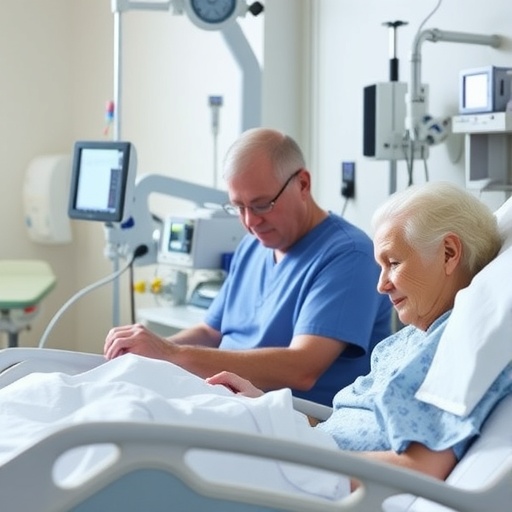
In the landscape of modern medicine, the care of critically ill patients has evolved significantly, particularly for the elderly population. One of the most pressing concerns following intensive care units (ICUs) is the phenomenon known as post-intensive care syndrome (PICS). This condition can drastically affect the quality of life in those who have endured severe illness, often leaving lasting physical, emotional, and cognitive impairments. Against this backdrop, a groundbreaking study titled “A novel ‘Timing it Right’-based intervention for post-intensive care syndrome in critically ill elderly patients” emerges, aiming to tackle the complexities of PICS head-on.
The research was conducted by Jian Xing, Xuan Guo, Lin Gai, and collaborators within the frameworks of intensive care settings. Their work offers a fresh perspective on PICS, primarily targeting the elderly demographic that constitutes a significant portion of ICU admissions. The study’s innovative approach revolves around the concept of timing—delivering interventions at critical junctures to maximize patient recovery and minimize long-term detriment. The strategic timing of care and rehabilitation is believed to be pivotal in addressing the psychophysiological challenges faced by elderly ICU survivors.
Utilizing a randomized controlled trial design, the study methodically delineates a unique intervention protocol aimed at mitigating the effects of PICS. This involves tailored rehabilitation efforts, psychological support, and a focus on redefining the care standards for elderly patients. By placing significant emphasis on aligning treatment with patients’ recovery phases, the researchers aspire to enhance overall outcomes while fostering resilience from the trauma of critical illness.
To further illustrate the necessity of this intervention, the researchers delve into the multifaceted nature of PICS. It encompasses various dimensions of health, including anxiety, depressive symptoms, cognitive dysfunction, and physical disabilities. The combination of these factors can lead to a debilitating cascade, ultimately compromising the ability of survivors to reintegrate into their normal lives post-hospitalization. Thus, the quest for effective interventions is not only essential; it is a clinical imperative.
The preliminary findings from the initial phase of the trial have accentuated the feasibility of implementing the proposed intervention in real-world settings. There has been an enthusiastic response from healthcare professionals and caregivers alike, recognizing the pressing need for targeted approaches to treat this vulnerable population. The study has highlighted the importance of collaborative efforts among nurses, physicians, physical therapists, and mental health specialists in managing PICS.
Moreover, the emotional undertones associated with recovery from extremity in critical care cannot be underestimated. Elderly patients often grapple with feelings of isolation and despair post-discharge. The study emphasizes the integration of emotional support mechanisms, ensuring these individuals are not merely surviving but are empowered to reclaim their lives. This holistic care model represents a paradigm shift in the treatment and rehabilitation of seniors who have undergone intensive medical interventions.
The ramifications of these findings extend beyond the clinical realm and into policy considerations as well. With an aging population globally, the healthcare system must adapt to address the burgeoning needs of older adults who face complex recovery trajectories. The insights gleaned from this study are poised to inform best practices and potentially shape new guidelines that could revolutionize care standards in ICUs across the board.
Furthermore, the researchers underscore the significance of longitudinal studies to provide deeper insight into the long-term impacts of their intervention. An emphasis on continuous follow-up will lend credibility to their approach and inform ongoing refinements to the intervention model. As they gather more data, the goal is to establish a sustainable, evidence-based protocol that can bridge the gap between critical care and post-hospitalization recovery.
In conclusion, the ongoing exploration into the ‘Timing it Right’ intervention marks a critical advancement in the fight against post-intensive care syndrome in elderly patients. With its innovative timing-based approach and multifaceted care model, researchers are not just focusing on survival but are actively working towards enhancing the quality of life for a profoundly affected demographic. As the current study progresses and additional findings are revealed, there is strong potential to set a new standard in geriatric critical care, offering hope and a renewed sense of dignity to elderly patients facing the daunting aftermath of severe illness.
This pioneering research not only lays the groundwork for future inquiry but also serves as a clarion call to the medical community to pay closer attention to the collateral damage inflicted by ICU stays on elderly patients. As the mechanisms of their intervention are refined and validated, we may soon witness a paradigm shift in the expectations and realities of recovery for those who navigate the often-turbulent waters of critical care.
Subject of Research: Post-intensive care syndrome in critically ill elderly patients
Article Title: A novel ‘Timing it Right’-based intervention for post-intensive care syndrome in critically ill elderly patients: study protocol and preliminary implementation findings of a randomized controlled trial.
Article References:
Xing, J., Guo, X., Gai, L. et al. A novel ‘Timing it Right’-based intervention for post-intensive care syndrome in critically ill elderly patients: study protocol and preliminary implementation findings of a randomized controlled trial.
BMC Geriatr (2026). https://doi.org/10.1186/s12877-026-07028-2
Image Credits: AI Generated
DOI: 10.1186/s12877-026-07028-2
Keywords: post-intensive care syndrome, elderly patients, randomized controlled trial, rehabilitation, critical care
Tags: critical care for older adultselderly ICU patientselderly patient care in intensive settingsenhancing recovery in intensive careinnovative healthcare interventionsintervention protocols for PICSpost-intensive care syndrome recoverypsychophysiological challenges in ICUquality of life after ICUrandomized controlled trial in medicinerehabilitation strategies for elderly patientstiming interventions in healthcare