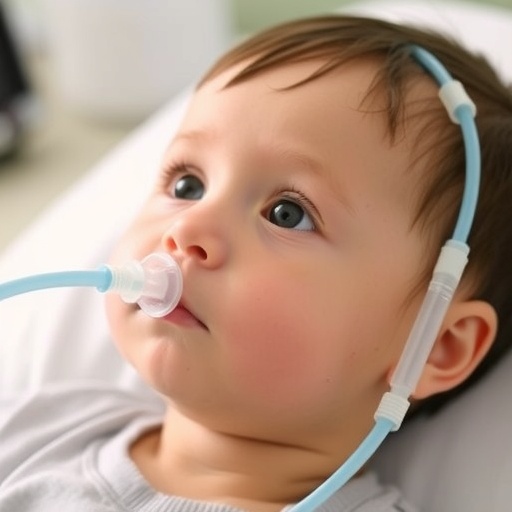
The relentless evolution of medical technology continues to reshape how healthcare providers manage respiratory conditions, particularly in pediatric units. Recently, a significant study published in BMC Pediatrics has presented compelling insights into the management of patients requiring high-flow nasal cannula therapy in a pediatric observation unit. This single-center experience shines a spotlight on the efficacy and adaptability of high-flow nasal therapy, especially in young patients whose respiratory needs are becoming increasingly complex.
Traditionally, respiratory support in pediatrics has been met with various challenges, including the difficulties of accurately assessing the needs of children who present with acute respiratory distress. High-flow nasal cannula (HFNC) therapy has emerged as a crucial tool for managing such conditions. Unlike conventional low-flow oxygen therapy, HFNC provides a higher flow rate of oxygen, which can significantly improve oxygenation while also delivering a degree of positive end-expiratory pressure. This innovative approach can be instrumental for pediatric patients, whose physiological responses to respiratory distress can differ markedly from that of adults.
The study conducted by Zhang et al. draws attention to the important role that HFNC therapy plays in pediatric critical care, particularly in an observation unit designated for these vulnerable patients. The authors meticulously detail their experiences and findings, focusing on how HFNC serves as an effective alternative to invasive ventilation methods. This observation is supported by their collected data, demonstrating improvement in clinical outcomes among children with various respiratory ailments.
One of the notable aspects of HFNC therapy is its non-invasive nature. This not only makes it more comfortable for pediatric patients but also reduces the risks associated with intubation and mechanical ventilation. The study highlights that many children, even those who initially presented with severe respiratory distress, showed remarkable improvement when placed on HFNC, allowing progressive weaning off respiratory support without the complications that invasive options often entail.
Additionally, Zhang and colleagues report on the versatility of HFNC in different clinical scenarios, discussing cases where it was successfully implemented for conditions such as bronchiolitis, pneumonia, and other respiratory syndromes that are prevalent in pediatric populations. Their exploration of patient demographics reveals that HFNC usage is particularly beneficial in treating younger children who often have a more difficult time tolerating standard oxygen delivery systems or mechanical ventilation.
With every conclusion drawn in the study, there lies a wealth of complexity in administering HFNC. The authors carefully evaluate dosing strategies, flow rates, and the specifics of how to properly initiate and manage this therapeutic intervention. By presenting a comprehensive approach to the technical aspects of HFNC application, they provide a valuable resource for health professionals seeking to adopt this method in their practice.
Furthermore, monitoring and assessing patient response on HFNC therapy is crucial, as varying age groups and underlying conditions necessitate individualized care plans. The authors emphasize the importance of continuous reassessment and adjustment of treatment protocols designed around patient-specific needs. This adaptability is vital in providing optimal care to pediatric patients, who often experience rapid changes in respiratory status.
The study also reflects on the multidisciplinary approach that is essential for the success of HFNC in a pediatric unit. It stresses the collaborative efforts of doctors, nurses, and respiratory therapists in creating an environment where young patients can receive the best possible care. Education and training for medical staff on the intricacies of HFNC management are highlighted as key components in ensuring patient safety and positive outcomes.
In the discussion section, the authors compare the findings of their study with existing literature, reinforcing the growing body of evidence supporting the efficacy of HFNC therapy. They correlate their results not only with improved oxygenation but also with reduced hospitalization durations, which can significantly lessen the burden on healthcare resources. As healthcare systems globally face unprecedented pressures, these efficiencies in patient management underscore the importance of preventive and therapeutic innovations such as HFNC.
While the study presents a strong case for HFNC therapy, it also acknowledges potential limitations, including a relatively small sample size, which is a common concern in single-center studies. Nonetheless, the insights gathered provide a foundational understanding that can stir further research and larger-scale studies to validate these findings across diverse populations and settings.
As we delve deeper into the implications of HFNC therapy from this study, one must consider the changes it prompts in healthcare protocols and patient care standards. High-flow nasal cannula therapy is not merely a technical advancement; it signifies a shift toward more nuanced respiratory care in pediatrics, ensuring that younger patients receive effective treatment without enduring unnecessary discomfort.
In conclusion, Zhang et al. have contributed a vital piece to the ever-evolving field of pediatric respiratory care. Their findings reinforce the need for continued exploration and understanding of high-flow nasal cannula therapy as a primary intervention in managing respiratory distress. As this research continues to garner attention, it aims to spark further innovations that can enhance the quality of care for pediatric patients requiring respiratory support.
The study beautifully encapsulates the future of pediatric respiratory management, presenting evidence that not only supports the efficacy of high-flow nasal cannula therapy but also inspires healthcare professionals to embrace new methodologies in treating the youngest and most vulnerable populations among us.
Subject of Research: High-flow nasal cannula therapy in pediatric patients.
Article Title: Management of patients requiring high-flow nasal cannula in a pediatric observation unit: a single-center experience.
Article References:
Zhang, E., Calderon, Y., Lim, C.A. et al. Management of patients requiring high-flow nasal cannula in a pediatric observation unit: a single-center experience.
BMC Pediatr (2026). https://doi.org/10.1186/s12887-026-06525-y
Image Credits: AI Generated
DOI: 10.1186/s12887-026-06525-y
Keywords: High-flow nasal cannula, pediatric respiratory care, non-invasive therapy, bronchiolitis, pneumonia, respiratory distress, patient management.
Tags: advancements in pediatric critical carechallenges in pediatric respiratory carehigh-flow nasal cannula efficacyHigh-flow nasal cannula therapy in pediatricsinnovative respiratory support for childrenmedical technology in pediatric healthcareoxygen therapy for young patientspediatric observation unit practicespediatric respiratory distress managementpositive end-expiratory pressure benefitsrespiratory needs of childrensingle-center pediatric study insights