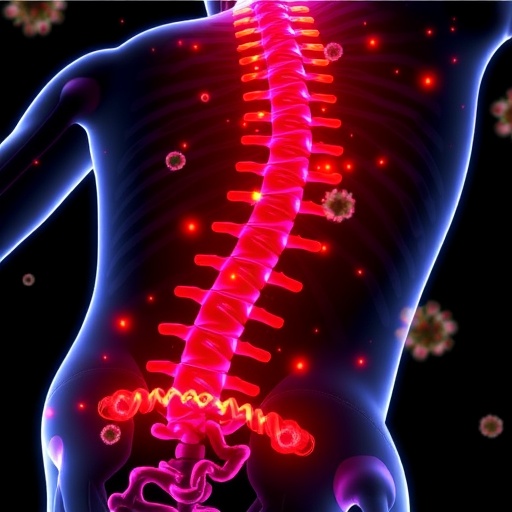
Recent groundbreaking research published in “Experimental & Molecular Medicine” uncovers a crucial aspect of ankylosing spondylitis (AS), a chronic inflammatory disease primarily affecting the spine and leading to significant morbidity. In the study, titled “Single-immunocyte transcriptomics reveal the role of natural killer cell-dependent exogenous antigen presentation in ankylosing spondylitis severity,” researchers delve into the intricate interactions between immune cells and the disease, highlighting how natural killer (NK) cells influence the presentation of exogenous antigens, which in turn can exacerbate the severity of AS.
In a field that has seen considerable advances in understanding autoimmune diseases, this research takes a novel approach by utilizing single-cell transcriptomics—an advanced technology that allows scientists to examine the gene expression profiles of individual immune cells within the context of a whole organism. By focusing on NK cells, the study reveals new insights into their role beyond traditional cytotoxic functions, emphasizing their potential impact on antigen presentation and subsequent disease outcomes.
While the specific mechanisms by which NK cells interact with other immune entities have remained relatively obscured in the past, this study breaks new ground by showing that these cells can facilitate the presentation of exogenous antigens. This process appears to aggravate the chronic inflammation characteristic of AS. The findings suggest that the interplay between NK cells and T cells is pivotal; when NK cells present these antigens effectively, the outcome can significantly contribute to the severity of clinical manifestations, urging the need for deeper investigations into their functional dynamics.
The researchers meticulously collected and analyzed samples from patients diagnosed with ankylosing spondylitis, employing cutting-edge transcriptomic techniques to capture the cellular landscape of the immune system. This approach allowed them to differentiate between various immune cell populations, particularly focusing on the signaling pathways activated in NK cells. Through this analysis, they identified unique gene expression patterns associated with enhanced pro-inflammatory cytokine production, revealing how NK cells might intensify the immune response that characterizes AS.
Moreover, the implications of these findings extend beyond the immediate context of ankylosing spondylitis. The role of NK cells in mediating inflammation through exogenous antigen presentation represents a significant paradigm shift in our understanding of immune system functionality. It prompts a reevaluation of therapeutic targets that could mitigate unnecessary inflammatory responses in chronic diseases. Researchers are now called to explore whether modulating NK cell activity could potentially lead to new treatment strategies dedicated to reducing the severity of AS and similar inflammatory conditions.
The study’s conclusions emphasize the importance of interdisciplinary approaches to biomedical research. Bridging fields such as immunology, molecular biology, and clinical medicine is vital for developing innovative therapies. By employing single-cell transcriptomics, researchers have not only characterized the immune landscape associated with AS but have also provided a roadmap for future exploration of other chronic inflammatory states. The findings invite additional research into the therapeutic potential of targeting NK cell functions and refine the current understanding of how environmental factors might influence autoimmune disease trajectories.
Furthermore, the research demonstrated a marked need for healthcare systems to integrate these scientific advancements within clinical practice. Early identification of patients with heightened NK cell activity could facilitate more tailored treatment regimens, potentially improving patient outcomes. As chronic diseases like ankylosing spondylitis continue to strain healthcare resources, leveraging such insights stands to transform approaches to managing inflammatory diseases on a global scale.
In light of such significant developments, discussions surrounding the ethical implications of genetic engineering and therapeutic interventions also arise. As researchers delve deeper into the genome of immune cells, there is an accompanying responsibility to ensure safety and efficacy in any treatments developed from these findings. The dialogue surrounding the use of bioengineering to manipulate innate immune responses is essential, particularly in understanding long-term consequences in patients battling chronic illnesses.
This study not only advances our knowledge of ankylosing spondylitis but also reinforces the notion that immune responses are orchestrated by complex networks of cells and signaling pathways. Given the study’s pioneering emphasis on NK cells, it sets a precedent for additional investigations examining their multifaceted roles in other autoimmune and inflammatory diseases. Looking forward, researchers must capitalize on these insights to enhance our understanding of immune system intricacies and ultimately develop next-generation therapies aimed at mitigating the burden of autoimmune disorders.
The journey from bench to bedside in translating these research findings into clinical practice will require rigorous validation and collaboration among various scientific domains. The research community is left with invigorating challenges ahead—to explore therapeutics targeting misdirected immune responses, to study intercellular communications further, and to innovate strategies that offer hope to millions suffering from diseases like ankylosing spondylitis.
Collectively, this work marks a significant step toward unraveling the complexities of chronic inflammatory diseases. By providing a detailed look into the role of NK cells and their impact on antigen presentation, researchers have opened new avenues for exploring therapies that empower the immune system while minimizing the deleterious effects associated with aberrant immune responses. As the scientific community processes these findings, anticipation builds for novel clinical interventions that could fundamentally alter the landscape of ankylosing spondylitis treatment.
Ultimately, the study of NK cell-dependent antigen presentation adds an exciting layer to our comprehension of immunological diseases, encouraging ongoing research and innovation. The potential impact of this work suggests a realm of possibilities for improved diagnostics, interventions, and patient care strategies, all aiming to enhance the quality of life for those afflicted by AS and other related conditions.
Subject of Research: The role of natural killer cell-dependent exogenous antigen presentation in ankylosing spondylitis severity.
Article Title: Single-immunocyte transcriptomics reveal the role of natural killer cell-dependent exogenous antigen presentation in ankylosing spondylitis severity.
Article References:
Ke, D., Dai, H., Su, Y. et al. Single-immunocyte transcriptomics reveal the role of natural killer cell-dependent exogenous antigen presentation in ankylosing spondylitis severity.
Exp Mol Med (2026). https://doi.org/10.1038/s12276-025-01619-6
Image Credits: AI Generated
DOI: 10.1038/s12276-025-01619-6
Keywords: ankylosing spondylitis, natural killer cells, antigen presentation, single-cell transcriptomics, immune response.
Tags: advancements in autoimmune disease understandingankylosing spondylitis researchankylosing spondylitis severity factorsantigen presentation mechanisms in ASchronic inflammatory diseasesexogenous antigens and chronic inflammationgene expression in immune cellsimmune cell interactions in ASnatural killer cells in autoimmune diseasesNK cell functions beyond cytotoxicitynovel insights into immune responsessingle-cell transcriptomics applications