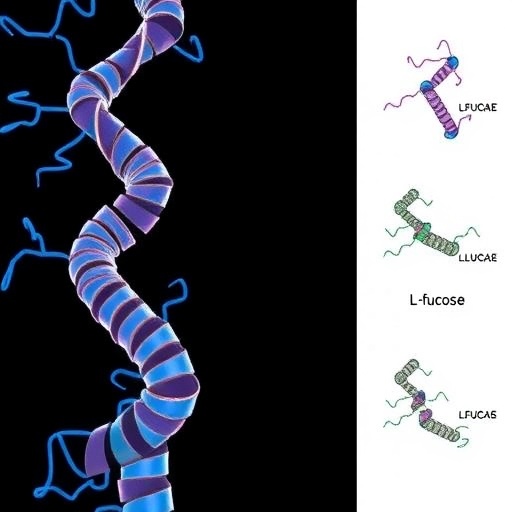
Fucosylation, the process through which fucose, a dietary sugar, attaches to glycoproteins and glycolipids, is increasingly recognized as a vital component in numerous biological and developmental processes. The role of fucosylation spans a wide array of functions, influencing everything from cell signaling to immune responses. As researchers delve deeper into its implications in human health, particularly in the context of cancer, the complexity of fucosylation becomes ever more apparent. Cancer cells often manipulate fucosylation to promote their survival and evade the immune system, demonstrating the dual nature of this biochemical modification as both a facilitator of normal physiology and a potential driver of disease.
The richness of fucosylation in both its physiological and pathological contexts underscores the need for thorough investigations into fucosylated proteins. The specific mechanisms by which altered fucosylation affects cell signaling pathways remain a pivotal area of study. It is believed that these modifications can alter the properties of glycoproteins and glycolipids, changing their interactions with receptors and other cellular partners, thus influencing cellular behaviors such as proliferation, differentiation, and apoptosis. Furthermore, the ongoing research implies that the repertoire of fucosylated proteins is vast and includes potential candidates for therapeutic targeting.
Deregulated fucosylation has been linked to various diseases, especially malignancies. As tumors grow and evolve, their microenvironment becomes increasingly complex, characterized by interactions between cancer cells, immune cells, and other stromal components. Aberrations in fucosylation are thought to play a key role in this dynamic, facilitating communication pathways that may support tumor progression, metastasis, or resistance to treatment. Indeed, studies are revealing that fucosylated molecules can serve as both cancer biomarkers and therapeutic agents, providing avenues for early detection and targeted therapies.
Recent advances in glycobiology have shed light on how fucosylation can mediate the immune response within the tumor microenvironment. Immune cells, such as T cells and dendritic cells, exhibit altered fucosylation patterns under pathological conditions. These changes can affect their functionality and interaction with tumor cells, thereby influencing the overall immune landscape. Understanding these interactions will be fundamental to developing strategies that harness the immune system to combat cancer more effectively.
Among the therapeutic strategies being explored, dietary intervention with l-fucose is emerging as a novel and accessible approach to modulating fucosylation within the body. Animal studies have demonstrated that the oral administration of l-fucose can suppress tumor growth and enhance antitumor immune activity. These findings are promising and suggest that leveraging dietary sugars could represent an innovative method for cancer treatment, potentially complementing existing therapies.
Interestingly, the ability to modulate fucosylation does not only hinge on dietary sources. Inhibiting the enzymes responsible for fucosylation itself has been associated with a decrease in tumor growth in preclinical models. This paradox raises questions about the context-dependent roles of fucosylation, suggesting that it may have dual effects depending on the cellular environment and disease state. Such insights challenge conventional therapeutic paradigms and highlight the need for context-sensitive approaches.
The integration of fucosylation research into cancer therapy could revolutionize how we approach treatment strategies. As our understanding evolves, fucosylated proteins could be positioned as critical biomarkers that not only assist in tumor diagnosis but also guide treatment decisions based on specific fucosylation patterns. This shift towards precision medicine underscores the potential of fucosylation as a focal point in the development of future cancer therapies.
Furthermore, the mechanistic understanding of fucosylation’s role in cancer might also extend to other diseases. Many conditions characterized by abnormal glycosylation processes could exhibit similar fucosylation-related pathologies, suggesting that the principles gleaned from studying cancer may have broader implications for various health issues. These insights could inspire interdisciplinary research that bridges glycobiology with other fields, paving the way for novel therapeutic avenues.
As the scientific community continues to dissect the nuances of fucosylation, the collaboration among biochemists, oncologists, and immunologists will be paramount. Interdisciplinary efforts are likely to yield deeper insights into how this modification can be manipulated not only for therapeutic benefit but also for understanding the fundamental principles of disease progression. Pioneering research in this area can ultimately contribute to more effective strategies for cancer prevention and treatment, embodying a holistic approach to patient care.
Moreover, the strides made in glycomics and fucosylation analysis tools are aiding researchers in monitoring changes in glycosylation dynamics in real time. These advancements will facilitate high-throughput analyses that enhance our understanding of fucosylation profiles associated with different cancers. The ability to rapidly assess these changes will be instrumental in tracking disease progression and therapeutic response, indicating patient outcomes and tailoring individualized treatment protocols.
The intricate relationship between fucosylation and cancer invites us to rethink our approach to disease management. As evidence mounts regarding its significance, funding and support for glycobiology research will be essential. Public and private sectors need to acknowledge the value of investing in this area of science, as it may hold the key to unearthing novel treatment strategies that could change the landscape of cancer therapy.
In conclusion, fucosylation is no longer a mere footnote in the study of glycosylation. Its multifaceted potential is being recognized more than ever, and as the scientific community unpacks the complexities of this sugar’s role in biology and cancer, we may be witnessing the dawn of a new era in cancer therapeutics. The continued exploration of fucosylation in the context of cancer not only promises to enhance our understanding but also offers the realistic prospect of transforming treatment modalities, enriching both cancer biology and patient outcomes in profound ways.
Subject of Research: The role of fucosylation in cancer biology and therapy.
Article Title: l-Fucose: a dietary sugar with multifaceted potential in the biology and therapy of cancer.
Article References:
Bitaraf, A., Jimenez, M.C., Kakirde, C. et al. l-Fucose: a dietary sugar with multifaceted potential in the biology and therapy of cancer.
Nat Rev Cancer (2026). https://doi.org/10.1038/s41568-025-00901-z
Image Credits: AI Generated
DOI: 10.1038/s41568-025-00901-z
Keywords: Fucosylation, cancer therapy, glycoproteins, glycolipids, immune response, biomarkers, l-fucose, glycobiology.
Tags: biochemical modifications in diseasecancer cell survival mechanismscell signaling alterationsderegulated fucosylation and diseasesdietary sugar and healthfucosylation in cancerglycoproteins and glycolipidsimmune response modulationL-Fucose cancer therapy potentialphysiological roles of fucosylationresearch on fucosylated proteinstherapeutic targeting of fucosylated proteins