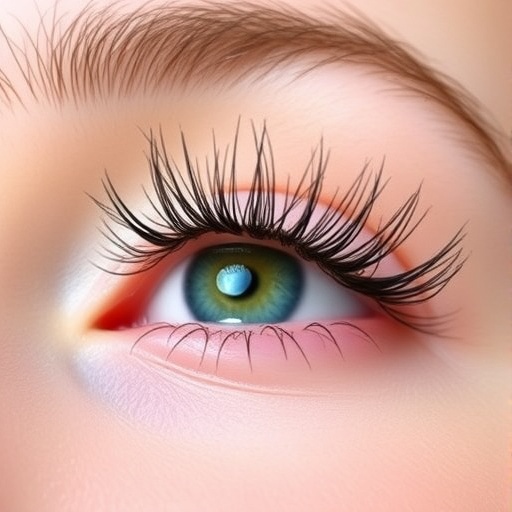
In a groundbreaking study that challenges long-held assumptions about human anatomy and its correlation with health, researchers from various academic institutions have delved into the fascinating world of eyelash morphology. This meticulous research, published in the upcoming issue of “Adaptive Human Behavior and Physiology,” reveals that the intricate details of eyelash structure bear no significant relationship to indicators of immunocompetence and overall health, which have traditionally been viewed as critical signs of an individual’s fitness. Eyelashes serve various practical functions, such as protecting the eyes from debris and regulating airflow, but this investigation dives deeper, aiming to decode the biological significance behind their variations.
The research primarily centers around a central tenet in evolutionary biology: the concept of sexual selection. Historically, it has been posited that physical traits, including features like eyelashes, might convey messages about an individual’s health and genetic quality to potential mates. However, the findings from O’Hagan and colleagues starkly contradict these traditional lines of reasoning, sparking new discussions within the scientific community regarding the evolutionary advantages related to eyelash morphology. This revelation is poised to ignite debates in both anthropological and clinical disciplines.
In conducting this research, the team utilized a comprehensive methodological approach, combining both quantitative and qualitative analyses. By examining eyelash samples from a diverse group of participants, researchers employed advanced imaging technology to assess dimensions such as length, thickness, and curvature. This high-resolution imaging allowed for an unprecedented look at eyelash characteristics, and the results indicate a wide range of morphological types across different populations. Yet, intriguingly, these morphological variations did not correlate with any measurable markers of health, such as immune response indicators or inflammatory markers.
One of the pivotal aspects of this study lies in its implications for how we understand beauty standards and perceptions. For centuries, societal norms have often championed certain aesthetic traits as symbols of health or desirability. Eyelashes are no exception; they have become not just functional features but also focal points for beauty products, enhancements, and aesthetic surgeries. Ironically, the researchers found that the differences in eyelash morphology did not reinforce such myths but rather highlighted a disconnect between perceived beauty and physical health metrics. This revelation may herald a shift in how industries based on beauty and health interpret and market their narratives.
Moreover, the implications of this study may extend beyond human behavior to influence various fields including dermatology, ophthalmology, and even cosmetic science. With eyelash structure not being a reliable indicator of a person’s health, professionals in these sectors may need to reconsider how they approach issues related to ocular health, beauty treatments, and even psychological well-being derived from personal aesthetics. This study urges a reevaluation of the critical attributes that society often places on physical characteristics, especially those that are easily commodified.
In an era where personal health is intricately linked with social media and public image, this research serves as a crucial reminder that not all physical attributes correspond directly with one’s health status. As influencers and celebrities showcase their eyelashes as symbols of beauty and wellness, this groundbreaking study prompts a more nuanced discourse surrounding these attributes. It questions whether current beauty standards might need to evolve in response to scientific findings that emphasize functionality over aesthetics.
Interestingly, the team also pondered the evolutionary rationale behind why such variability exists in eyelash morphology, despite its apparent lack of correlation with health metrics. Is it simply a byproduct of genetic drift rather than selection? Or does it serve a different evolutionary function, one that we are yet to fully understand? Such inquiries open a Pandora’s box of possibilities that could lead to further investigations into human adaptability and aesthetic preferences across cultures.
The study’s methodology, while comprehensive, is not without its limitations. Participants were primarily drawn from specific demographic backgrounds, potentially skewing the results. The authors acknowledge this and propose that further research involving larger and more diverse populations is necessary to validate their findings and understand the nuances of eyelash morphology better. This opens doors to future work that could help refine our understanding of the relationship between anatomy and perceived health.
As the study comes to light, it remains to be seen how it will resonate in popular culture and among healthcare professionals. The tension between societal beauty expectations and scientific evidence highlights the importance of fostering more informed conversations about the intersection of biology, culture, and personal health. This research might serve as a catalyst for change, reminding us that true wellness transcends superficial appearances.
In sum, the revelation that eyelash morphology is not a reliable indicator of immunocompetence and health marks a significant shift in the landscape of biological research. As we look towards the future, we must acknowledge the complex interplay between our physical traits, the narratives we weave around them, and the scientific truths that challenge those narratives. Only time will tell how this study influences both scientific inquiry and societal norms as it disseminates through various academic and popular forums.
With these new insights, the scientific community has a renewed impetus to further explore topics that blur the lines between biology, health, and aesthetic perceptions. The unyielding quest for knowledge can inspire further research that may uncover additional unexpected relationships between human morphology and health indicators, propelling our understanding of human evolution into uncharted territories.
As we await the full publication and peer-reviewed discussion of these findings, one thing is certain: the relationship between our physical selves and our health is more intricate than it appears. The study raises profound questions about what it means to be healthy and how society interprets these meanings through the lenses of beauty and desirability. As the dynamics of health and aesthetics continue to evolve, ongoing discourse will be crucial in shaping our understanding in profound ways.
Strong hands and a strong will drive us forward into a future where our explorations of anatomical features and their significance are informed by both rigorous science and an appreciation of the diverse narratives that humanity continually weaves.
Subject of Research: Eyelash Morphology and Its Relationship to Health
Article Title: Eyelash Morphology is Unrelated to Markers of Immunocompetence and Health
Article References:
O’Hagan, K., MacKinnon, M., Marcellus, A. et al. Eyelash Morphology is Unrelated to Markers of Immunocompetence and Health.
Adaptive Human Behavior and Physiology 11, 17 (2025). https://doi.org/10.1007/s40750-025-00270-9
Image Credits: AI Generated
DOI: 15 October 2025
Keywords: Eyelash Morphology, Immunocompetence, Health Markers, Evolutionary Biology, Aesthetics, Beauty Standards
Tags: biological significance of eyelash variationschallenges to traditional health assumptionsclinical relevance of eyelash researchdebates on physical traits and fitnessevolutionary biology and sexual selectioneyelash morphology and healthgroundbreaking findings in eyelash researchimmunocompetence indicators in humansimplications for anthropological studiesinterdisciplinary study of eyelash structurepractical functions of eyelashesresearch on human anatomy