In a landmark study, a team of researchers led by Dr. M. Knees has unveiled critical insights regarding the elevated risks of diagnostic errors within healthcare settings, particularly focusing on medical patients who have been transferred to intensive care units (ICUs) or those who ultimately succumbed to their conditions. This research adds a vital layer of understanding to the multifaceted challenges faced by modern healthcare systems, particularly in the realm of patient safety. As the complexity of healthcare delivery grows, so does the potential for miscommunication and diagnostic inaccuracies, both of which can have dire consequences for patient outcomes.
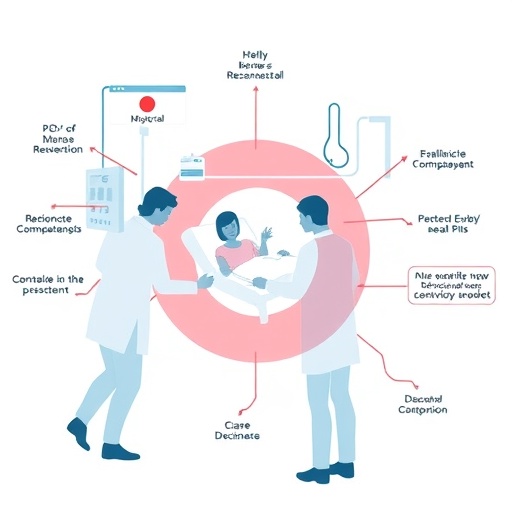
The study meticulously examines how the structure and dynamics of care teams influence the likelihood of diagnostic errors. The researchers emphasize that effective communication among team members is paramount to ensuring that critical information is conveyed accurately and promptly. In high-stakes settings such as ICUs, where the margin for error is extraordinarily thin, any breakdown in communication can lead to significant and potentially life-threatening outcomes. Dr. Knees and his team suggest that fostering a culture of transparency and collaboration among healthcare professionals is crucial to mitigating these risks.
Additionally, the study sheds light on the variations in diagnostic error rates across different medical specialties. According to the findings, some specialties exhibited higher rates of errors compared to others, suggesting that the nature of the medical discipline may influence the complexity of diagnoses and treatments. For instance, specialties dealing with multifactorial illnesses may face greater challenges in reaching an accurate diagnosis than those specializing in more straightforward conditions. This nuance underscores the importance of tailoring strategies that specifically address the unique challenges presented by each specialty.
Moreover, the implications of this research extend beyond immediate patient safety concerns. The incidence of diagnostic errors often leads to a cascade of negative repercussions, including extended hospital stays, increased healthcare costs, and in severe cases, preventable deaths. The economic and social burdens associated with misdiagnoses further complicate the healthcare landscape, necessitating a focused effort from healthcare institutions to develop effective interventions. Addressing these issues is not only essential for improving patient experiences but also for enhancing the overall efficacy of healthcare systems.
The researchers highlight that implementing structured handoff protocols could significantly reduce the likelihood of errors during patient transfers. These protocols would standardize the exchange of information among healthcare providers, ensuring that critical data regarding a patient’s condition and history are consistently shared. By minimizing discrepancies in the data conveyed during transitions of care, healthcare professionals can better accommodate changes in patient status and make more informed decisions.
In light of the study’s findings, there is a clear call to action for healthcare policymakers to prioritize the development of training programs that emphasize teamwork and effective communication. These programs should focus on equipping healthcare professionals with the tools necessary to navigate complex situations and collaborate effectively to reduce the risks associated with diagnostic errors. Additionally, simulation-based training can provide healthcare workers with practical experience in managing high-stress scenarios while reinforcing the importance of teamwork.
The ethical considerations surrounding diagnostic errors cannot be overlooked. The study prompts critical discussions about the expectations placed on healthcare providers and the consequences of systemic failures. It raises the question of how organizations can better support their staff in making difficult decisions under pressure. By fostering an environment where professionals feel empowered to speak up and advocate for their patients, healthcare systems can enhance safety and efficiency.
Patient engagement also plays a pivotal role in the detection and prevention of diagnostic errors. The study underscores the value of involving patients in their care processes, encouraging them to ask questions and voice their concerns. When patients are educated about their conditions and treatment plans, they become active participants in their healthcare journey, reducing the likelihood of missed diagnoses and inappropriate treatments. This patient-centered approach aligns with contemporary trends in medicine that prioritize collaborative care.
Furthermore, the emergence of technology as a tool for improving diagnostic accuracy is another significant focus of the study. Health information technology, including electronic health records (EHRs) and clinical decision support systems, can provide healthcare providers with invaluable resources to enhance their diagnostic capabilities. By leveraging advanced analytics and machine learning, these systems can sift through voluminous data to identify patterns or anomalies that may be overlooked by human practitioners. However, the researchers caution that reliance on technology must be balanced with human judgment to avoid the pitfalls of overdependence.
As the healthcare landscape continues to evolve, the importance of understanding and addressing diagnostic errors will only grow. This study serves as a critical reminder of the need for continuous improvement in patient safety initiatives. By fostering teamwork, enhancing communication, and embracing technological advancements, the medical community can strive to reduce diagnostic errors and ultimately improve patient outcomes.
In conclusion, Dr. Knees and his team have made significant strides in illuminating the risks associated with diagnostic errors in medical patients transferred to ICUs or those who died. Their findings serve as a springboard for further research aimed at refining care team models and diagnostic practices within healthcare settings. The recommendations provided call for systemic changes that emphasize communication and collaboration, setting the stage for innovative solutions to one of the most persistent challenges in medicine. By heeding these insights, the healthcare industry can work towards a future where diagnostic errors are minimized, and patient safety is maximized.
Subject of Research: Diagnostic errors in medical patients who transferred to the ICU or died.
Article Title: Care Team Model and Diagnostic Error Risk in Medical Patients Who Transferred to the ICU or Died.
Article References:
Knees, M., Hubbard, C., Burden, M. et al. Care Team Model and Diagnostic Error Risk in Medical Patients Who Transferred to the ICU or Died.
J GEN INTERN MED (2026). https://doi.org/10.1007/s11606-026-10224-w
Image Credits: AI Generated
DOI: https://doi.org/10.1007/s11606-026-10224-w
Keywords: Diagnostic errors, patient safety, ICU transfers, healthcare communication, care team dynamics.
Tags: challenges in healthcare deliverycollaboration among healthcare professionalscommunication in medical teamsdiagnostic errors in healthcarehealthcare team dynamicsICU patient transfersmedical patient outcomesmitigating diagnostic inaccuraciespatient safety in intensive carerisks of miscommunication in ICUsstudy on diagnostic errors in medical settingstransparency in healthcare communication