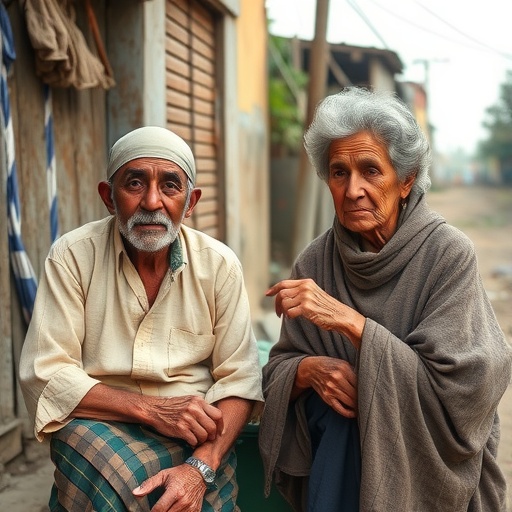
In an era where humanity grapples with the implications of aging populations, a pioneering study is shedding light on a pressing issue in urban India. Conducted in Tamil Nadu, this research focuses on the intersection of social frailty, functional ability, and social capital among older adults residing in urban slums. The work stands as a crucial inquiry into the multifaceted challenges faced by this demographic, providing significant insights that could inform policy and intervention strategies aimed at improving their quality of life.
Urban slum environments are often characterized by a blend of socio-economic challenges that magnify the realities of aging. The complex interplay of poverty, health disparities, and inadequate social support systems renders older adults particularly vulnerable. This study reveals that social frailty—defined as the diminished ability to engage in social activities due to social isolation or absence of social ties—can dramatically impact the overall well-being of older individuals in urban slums.
Furthermore, the researchers have meticulously explored how functional ability, or the capability to perform basic life activities, is intertwined with social frailty. It appears that as the social networks of older adults weaken, their functional abilities can also decline, leading to a spiraling effect on their health and wellness. The findings underscore the urgent need to address social capital, which encompasses the networks and social interactions that provide individuals with support and resources. In this context, the value of community engagement and social ties cannot be overstated.
The methodological approach of this study employs a convergent parallel mixed method, combining quantitative and qualitative data to provide a comprehensive understanding of the subject. By using this dual framework, the researchers were able to capture the rich, lived experiences of older adults while also quantifying aspects of their social frailty and functional abilities. This intricate approach yields a nuanced view, enabling insights that purely quantitative or qualitative studies might overlook.
In their analysis, the authors found significant correlations between low levels of social capital and heightened levels of social frailty among the participants. This correlation signifies that lack of social support and weak community ties may lead to diminished trust and vulnerability in facing the challenges of aging. The impact of social isolation on mental health further complicates the picture; without robust social networks, older adults may experience increased feelings of loneliness and despair.
Moreover, the research sheds light on the role of community-based interventions in mitigating these issues. Initiatives aimed at bolstering social capital—such as community engagement programs, peer support networks, and activities promoting socialization—are critical. Such interventions can empower older adults, allowing them to regain agency over their lives. As the global population ages, these insights are vital not only for India but for worldwide practices addressing the needs of aging populations in slum and impoverished areas.
The implications of this study extend beyond academic discourse. Policymakers and social work practitioners should take heed of the findings, as they present actionable items for enhancing the welfare of older adults in marginalized communities. Investment in social infrastructure that enhances connectivity and fosters relationships among older constituents can lead to profound improvements in their quality of life.
One particularly illuminating theme of the research highlights the resilience of older adults in urban slums. Despite facing socio-economic adversities, many show remarkable adaptability. The authors document stories of individuals who have carved out support systems for one another, demonstrating that even in dire circumstances, social bonds can flourish. This resilience serves as a foundation upon which future community health initiatives can be built, recognizing the inherent strengths present within these populations.
As we delve deeper into the challenges illuminated by this study, it is imperative to remain mindful of the diverse experiences of older adults. Not all individuals will navigate the challenges of aging in the same manner, and interventions must be tailored to meet the varied needs of this population. Continuous engagement with these communities is necessary to ensure that strategies are relevant and effective.
In concluding this expansive exploration of social frailty and its implications, the authors call for a paradigm shift in how we view aging in urban contexts. Rather than viewing elderly individuals as mere beneficiaries of social services, it is crucial to regard them as active participants in their communities, capable of contributing to societal well-being. This shift in perspective could drive innovative approaches that not only support older adults but also enhance the fabric of urban life as a whole.
This study stands as a clarion call to stakeholders at all levels—governmental, non-governmental, and community-based organizations. By prioritizing social capital as a key component in addressing the needs of older adults, we can create healthier, more resilient communities. The insights garnered from this research not only pave the way for future studies but also hold the promise of improving the lives of countless individuals navigating the complexities of aging.
As the world continues to grapple with demographic shifts and societal challenges, the ongoing discourse generated by studies like this one will remain pivotal. As we advance into an increasingly uncertain future, the commitment to understanding and improving the conditions for older adults in urban slum settings must remain at the forefront of public health initiatives and social policy debates.
In sum, the findings outlined in this transformative research contribute significantly to our understanding of how social variables impact the aging experience in urban slums. By fostering stronger social ties and community networks, we can work collaboratively to create a supportive environment where older adults can thrive. The future relies on the integration of this knowledge into compassionate policies that honor and uplift the lives of the aging population.
Subject of Research: Social frailty, functional ability, and social capital among older adults in urban slums in Tamil Nadu, India.
Article Title: Social frailty, functional ability and social capital: a study among urban slum older adults in Tamil Nadu, India—convergent parallel mixed method study.
Article References:
Sivakumar, S.P., Palanisamy, B. & Sree, S. Social frailty, functional ability and social capital: a study among urban slum older adults in Tamil Nadu, India—convergent parallel mixed method study.
BMC Geriatr (2026). https://doi.org/10.1186/s12877-025-06928-z
Image Credits: AI Generated
DOI:
Keywords: Social frailty, functional ability, social capital, older adults, urban slums, Tamil Nadu, mixed methods research, community engagement, resilience, social networks.
Tags: aging populations in Indiachallenges in urban slumsfunctional ability in older adultsimpact of social capital on elderlyintervention strategies for aging populationspoverty and health disparitiesquality of life for older adultssocial frailty in urban seniorssocial isolation among seniorsTamil Nadu elderly researchvulnerability of seniors in slumswell-being of elderly in urban areas