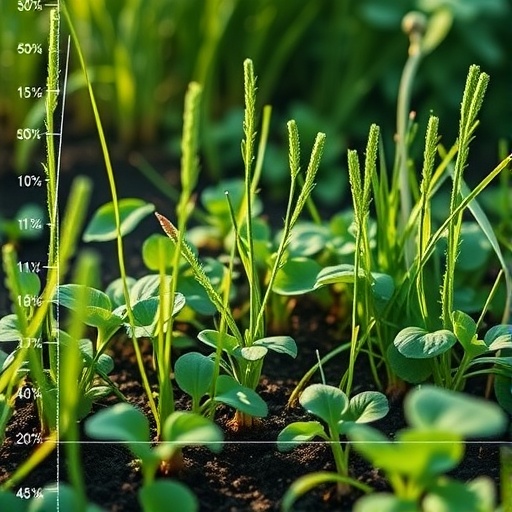
In a groundbreaking study that is poised to transform precision agriculture, researchers V.K. Patel, K. Abhishek, and B.M.A. Shafeeq have unveiled a comprehensive framework integrating U-Net++ and CNN-RNN-BiGRU architectures for automated weed detection. The research explores the intricate interplay between artificial intelligence and agriculture, signaling a new era of enhanced crop management and sustainability. The potential for AI in this domain cannot be overstated, as it addresses one of the most pressing challenges in farming—efficient weed management.
Weeds are notoriously difficult to control, leading to significant financial losses for farmers and a detrimental impact on crop yields. Traditional methods of weed management, which often involve labor-intensive manual weeding or excessive herbicide application, are not sustainable in the long term. This is where the innovative AI framework introduced by the researchers comes into play, promising automated solutions that could revolutionize weed detection processes in agriculture.
At the core of this research lies the U-Net++ architecture, which is specifically designed for semantic segmentation tasks in image analysis. By employing U-Net++, the framework is able to accurately delineate weeds from crops in complex agricultural environments. This architecture enhances the inherent U-Net model by incorporating dense skip pathways, which facilitate better feature propagation and allow for more nuanced image processing—an essential factor in achieving higher accuracy rates in weed detection.
In tandem with U-Net++, the study integrates CNN-RNN-BiGRU architectures, thereby introducing an advanced mechanism to analyze temporal patterns in image data. This component is particularly significant, as agricultural fields are dynamic environments subjected to varying light conditions, shadows, and growth stages of crops and weeds. By processing sequences of images, the CNN-RNN-BiGRU architecture allows for real-time monitoring and more precise identification of weeds as conditions change, ultimately leading to better decision-making.
The researchers conducted extensive experiments using this dual architecture and compared its performance against traditional weed detection systems. The results were notable; the U-Net++ and CNN-RNN-BiGRU combination significantly outperformed existing models in terms of both speed and accuracy. These advancements could lead to early detection of weed infestations, allowing farmers to address potential threats before they escalate into larger issues that compromise crop health.
Moreover, this research emphasizes the importance of using AI as a tool for sustainability in agriculture. By reducing the need for chemical herbicides and minimizing labor costs, automated weed detection systems such as this could foster more sustainable farming practices. This resonates well with the current global call for greener agricultural solutions, as it not only maximizes yield but also protects the environment by reducing reliance on chemical inputs.
The implications of this research go beyond just identification of weeds. As agricultural practices increasingly embrace technology, the integration of automated systems can lead to powerful changes in farm management and productivity. With benefits like optimal resource allocation and targeted treatments, the future of smart farming looks promising. This technology can establish a synergy between human expertise and machine efficiency, creating an intelligent agricultural ecosystem.
Furthermore, the comprehensive framework developed by Patel, Abhishek, and Shafeeq could pave the way for additional research into more complex agricultural tasks. The techniques and methodologies employed in this study could be adapted to address other challenges in agriculture, such as pest detection or crop health monitoring. The adaptability of AI systems in agriculture offers immense potential for further innovations, all aimed at creating smarter, more efficient farming practices.
As AI continues to evolve, the research also raises questions about the readiness of the agricultural sector to fully embrace these technologies. Although interest in AI applications in farming is growing, there is a persistent gap when it comes to implementation. The insights provided in this groundbreaking research not only shed light on theoretical advancements but also provide a practical guideline for farmers and industry stakeholders aiming to adopt AI in their operations.
To successfully incorporate AI-driven solutions, farmers will need access to the right tools and training. It’s essential that stakeholders within the agriculture industry collaborate to provide educational resources that empower farmers to utilize these innovations effectively. As this study shows, the technology is ready, but the path to widespread adoption requires commitment and partnership across various sectors.
In conclusion, the unified framework developed for automated weed detection represents a significant advancement in precision agriculture. The combination of U-Net++ and CNN-RNN-BiGRU architectures offers a glimpse into the future of farming, where artificial intelligence plays a pivotal role in enhancing agricultural productivity and sustainability. As we stand on the cusp of an agricultural revolution driven by technological advancements, the findings from this research will undoubtedly inspire further exploration and innovation in the field of precision farming.
This study not only contributes to the existing body of knowledge on weed detection but also reinforces the importance of integrating advanced technologies into agricultural practices. It serves as a call to action for researchers, farmers, and industry leaders alike to embrace the potential of AI in reimagining the agricultural landscape.
Subject of Research: Automation in weed detection for precision agriculture using AI technologies.
Article Title: A unified framework with U-Net + and CNN-RNN-BiGRU architectures for automated weed detection in precision agriculture using AI.
Article References:
Patel, V.K., Abhishek, K. & Shafeeq, B.M.A. A unified framework with U-Net + and CNN-RNN-BiGRU architectures for automated weed detection in precision agriculture using AI.
Discov Artif Intell (2026). https://doi.org/10.1007/s44163-026-00853-9
Image Credits: AI Generated
DOI: 10.1007/s44163-026-00853-9
Keywords: Automated weed detection, precision agriculture, artificial intelligence, U-Net++, CNN-RNN-BiGRU, sustainability in farming.
Tags: advanced image analysis in agricultureAI-powered agriculture solutionsartificial intelligence in crop managementautomated weed detection technologychallenges in crop yield improvementCNN-RNN-BiGRU for precision agriculturefinancial impacts of weed controlprecision farming innovationsrevolutionary farming technologiessemantic segmentation in agriculturesustainable weed management strategiesU-Net++ architecture in farming