Emerging Frontiers in Parkinson’s Disease Therapy: Evoked Potentials Revolutionize Subthalamic Deep Brain Stimulation Programming
In the relentless battle against Parkinson’s disease, a neurodegenerative disorder characterized by progressive motor dysfunction, the integration of advanced neuroengineering techniques continues to redefine therapeutic approaches. Recent groundbreaking research spearheaded by Hale, Latorre, Rocchi, and their colleagues, as published in the highly anticipated 2026 issue of npj Parkinson’s Disease, unveils a transformative method leveraging evoked potentials to optimize subthalamic deep brain stimulation (STN-DBS) programming. This innovative technique promises to not only enhance clinical outcomes but also pave the way for precision neuromodulation tailored to individual patient neurophysiology.
Deep brain stimulation represents one of the most compelling interventions for Parkinson’s disease, particularly in patients unresponsive to pharmacological treatments. Traditionally, STN-DBS involves the surgical implantation of electrodes targeting the subthalamic nucleus, a pivotal node in the basal ganglia circuitry responsible for motor control. Despite its efficacy, the challenge has persisted in fine-tuning stimulation parameters to balance therapeutic benefits with minimal side effects. Conventional programming has largely relied on clinical observations and trial-and-error adjustments, a process both time-consuming and heavily dependent on clinician expertise.
The study highlights the clinical utility of evoked potentials—bioelectric responses triggered by controlled electrical stimuli—as real-time biomarkers for informing DBS programming. By capturing and analyzing these electrophysiological signatures, clinicians can objectively gauge neuronal responsiveness and connectivity within the subthalamic nucleus and associated networks. This approach transcends subjective symptom evaluation, introducing a quantifiable metric that guides stimulation settings with unprecedented precision.
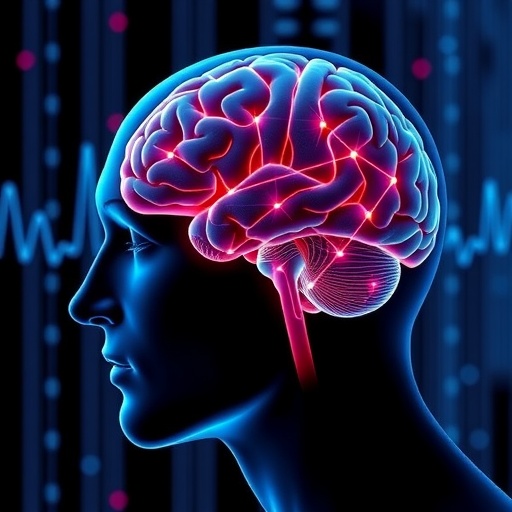
Central to this methodology is the measurement of local field potentials (LFPs) generated in response to finely calibrated electrical pulses delivered through the implanted DBS electrodes. These evoked potentials reflect the integrity and excitability of the neural tissue, enabling the detection of functional pathways relevant to motor control. The research delineates specific evoked potential patterns correlating with improved clinical outcomes, thereby facilitating targeted stimulation paradigms that align with each patient’s unique neurophysiological profile.
A key technical advancement underpinning this approach involves the integration of closed-loop feedback systems within the DBS device architecture. Unlike traditional open-loop stimulators delivering continuous fixed parameters, closed-loop systems dynamically adjust stimulation based on real-time electrophysiological data. The evoked potential signatures serve as critical feedback signals, informing the device when to modulate amplitude, frequency, or pulse width to optimize therapeutic efficacy while mitigating adverse effects such as dyskinesias or speech disturbances.
To validate these findings, the research employed a cohort of Parkinson’s disease patients undergoing STN-DBS surgery, systematically recording evoked potentials intraoperatively and during postoperative programming sessions. Sophisticated signal processing techniques disentangled relevant neural signals from electrical artifacts and noise, ensuring reliable biomarker extraction. This meticulous approach confirmed the reproducibility of evoked potential-guided programming, demonstrating marked improvements in motor symptom scores and patient-reported quality of life metrics compared to conventional programming protocols.
The implications of this study extend beyond immediate clinical benefits. By elucidating the neurophysiological mechanisms underpinning DBS efficacy through evoked potentials, it fosters a deeper understanding of basal ganglia network dynamics in Parkinson’s disease. This mechanistic insight is crucial for developing next-generation neuromodulatory interventions capable of adapting to disease progression and individual variability, heralding an era of truly personalized neurotherapeutics.
Moreover, the potential scalability of evoked potential-based programming enhances the accessibility of DBS treatment, reducing the dependency on highly specialized clinicians and exhaustive trial sessions. Automated algorithms embedded within the stimulation system can interpret evoked potential data to recommend or even autonomously adjust settings, streamlining postoperative management and optimizing resource allocation within healthcare settings.
Technical challenges remain, however, including the standardization of evoked potential acquisition protocols across diverse DBS hardware and patient anatomies. Future research directions prioritize refining signal detection algorithms, expanding patient cohorts for validation, and exploring the applicability of this technique to other neurological disorders amenable to DBS, such as dystonia and essential tremor. The adaptability of evoked potential biomarkers to different brain targets and stimulation modalities represents a fertile ground for ongoing innovation.
In addition to motor symptom control, evoked potential-guided programming holds promise for modulating non-motor symptoms of Parkinson’s disease, such as cognitive and psychiatric manifestations. Since neural circuits implicated in these domains also intersect with stimulated regions, precise tuning informed by electrophysiological feedback could mitigate adverse neuropsychiatric effects and enhance holistic patient well-being. Multidisciplinary collaboration between neurologists, neurosurgeons, bioengineers, and computational neuroscientists will be pivotal in translating these possibilities into clinical realities.
The paradigm shift introduced by this research also prompts reconsideration of regulatory frameworks governing DBS devices. The integration of real-time neurophysiological feedback and autonomous adjustment capabilities necessitates rigorous safety evaluations and dynamic monitoring standards. Ethical considerations related to automated neural modulation, patient autonomy, and data privacy will increasingly intersect with technological advancements, shaping the future landscape of neuromodulatory therapies.
Beyond individual patient care, the aggregation of evoked potential datasets from large cohorts has the potential to fuel machine learning models designed to predict disease trajectories and optimize therapeutic strategies. Such data-driven approaches could uncover latent patterns correlating stimulation parameters with long-term outcomes, enabling preemptive interventions and more effective management of Parkinson’s disease progression.
In conclusion, the pioneering work of Hale, Latorre, Rocchi, and colleagues constitutes a seminal contribution to the field of Parkinson’s disease neuromodulation. By harnessing the clinical utility of evoked potentials for precise STN-DBS programming, this approach offers a robust framework for enhancing treatment responsiveness, individualizing therapy, and expanding the horizons of neuroengineering. As clinical adoption accelerates, the integration of electrophysiological biomarkers promises to transform Parkinson’s disease management from an art into a science—delivering hope and improved quality of life to millions affected worldwide.
Subject of Research: Parkinson’s disease treatment optimization using evoked potentials for subthalamic deep brain stimulation programming.
Article Title: Clinical utility of evoked potentials for programming subthalamic deep brain stimulation in Parkinsons disease.
Article References:
Hale, B., Latorre, A., Rocchi, L. et al. Clinical utility of evoked potentials for programming subthalamic deep brain stimulation in Parkinsons disease. npj Parkinsons Dis. (2026). https://doi.org/10.1038/s41531-026-01274-2
Image Credits: AI Generated
Tags: challenges in Parkinson’s deep brain stimulation programmingenhancing DBS through advanced research techniquesevoked potentials in Parkinson’s therapyimproving clinical outcomes in Parkinson’s treatmentindividualized treatment approaches for Parkinson’s patientsinnovative therapies for neurodegenerative diseasesmotor control and deep brain stimulationneuroengineering techniques in movement disordersoptimizing DBS programming for Parkinson’s diseaseprecision neuromodulation in neurodegenerative disordersreal-time biomarkers in deep brain stimulationsubthalamic deep brain stimulation advancements