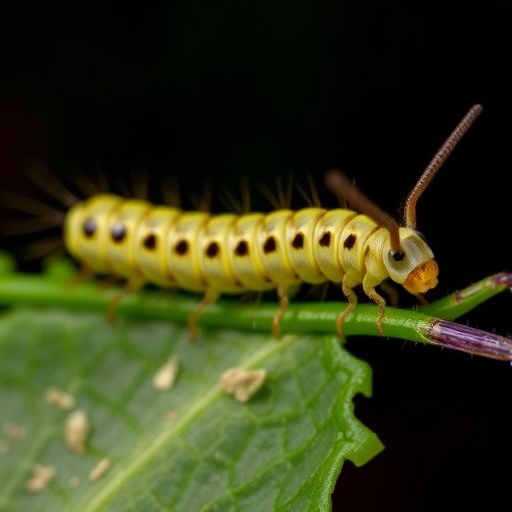
In a significant advancement in the field of genetics and molecular biology, a recent study has unearthed crucial insights into the solute carrier 2 (SLC2) gene family, specifically within the notorious fall armyworm, Spodoptera frugiperda. This species, known for its devastating impact on agricultural crops, particularly in the Americas, serves as a paramount model for understanding the genetic mechanisms that underlie its adaptability and survival strategies. The research team, led by Zoghly, H.M., along with Ghallab, A.M.K., and Emam, M.M., employed a genome-wide approach to meticulously characterize the SLC2 gene family, which plays a pivotal role in transporting various solutes across cellular membranes.
The SLC2 gene family is known for its critical function in glucose transport and other essential nutrients in a wide range of organisms, including humans and insects. The researchers aimed to identify all members of the SLC2 family in the genomic landscape of Spodoptera frugiperda. Their quest begins with a comprehensive genome analysis, which has become increasingly feasible with advancements in high-throughput sequencing technologies. By leveraging these technologies, the team successfully identified multiple SLC2 gene family members, setting the stage for further functional analyses.
Following the identification phase, the researchers delved into the characterization of each identified SLC2 gene. Gene annotation was performed to ascertain the functional domains and evolutionary conservation of these genes compared to other species. Such comparative genomics offers invaluable insights into how these genes have adapted over time, especially in the face of rigorous environmental pressures such as changes in diet and pesticide exposure. It’s anticipated that these findings will illuminate the biological underpinnings that facilitate the pest’s notorious resilience.
A particularly intriguing aspect of this study is the expression analyses of the SLC2 genes under varied conditions. Using quantitative reverse transcription PCR (qRT-PCR) methods, the research team examined the expression levels of these genes in diverse tissues and developmental stages. Their results revealed significant variations in expression, suggesting that certain SLC2 genes may play specialized roles during different life stages of the fall armyworm. Such knowledge is critical for devising targeted pest management strategies, as it may reveal potential vulnerabilities in the pest’s life cycle.
Moreover, the study also assessed the impact of external stressors such as nutrient availability and plant-host interactions on SLC2 gene expression. This component of the research highlights the intricate relationship between the fall armyworm and its environment. It underscores how adaptive mechanisms are not solely reliant on genetic makeup but are also shaped by ecological interactions. With climate change and its ensuing effects on agriculture, understanding these relationships becomes increasingly vital.
As researchers continue to decode the complexities of the SLC2 gene family, the implications extend beyond mere academic curiosity. The agricultural sector stands to benefit immensely from this research. Insights garnered from the SLC2 family in Spodoptera frugiperda can lead to more sustainable pest control methods, which are desperately needed in light of the growing concerns surrounding pesticide resistance. By pinpointing specific gene functions, interventions can be designed that target the fall armyworm’s vulnerabilities without harming beneficial insects or local ecosystems.
To fully appreciate the significance of this research, one must consider the broader picture of pest management in agriculture. The fall armyworm has proven to be a formidable adversary to crops such as corn, rice, and soybeans, exerting colossal economic pressure on farmers. Traditional methods of control have often relied excessively on chemical pesticides, which can lead to harmful environmental consequences and increased resistance among pest populations. This study embodies a progressive shift towards integrated pest management strategies that fuse ecological understanding with genetic insights.
Furthermore, the team led by Zoghly et al. did not stop at merely identifying and characterizing these genes; they also explored the evolutionary dynamics of the SLC2 family across various Lepidopteran species. This comparative approach allows for a broader understanding of gene function and adaptation across related species, potentially uncovering common motifs that could be exploited in pest control tactics. The comparison further underlines how gene families can evolve differently yet exhibit similar functions, providing a template for understanding evolutionary biology more holistically.
Overall, this groundbreaking study on the SLC2 gene family in the fall armyworm fosters a deeper understanding of both pest behavior and genetic adaptation. It serves as a clarion call for researchers and agricultural stakeholders to collaborate in leveraging genetic data for more efficient pest management techniques. As technology advances and our understanding of genomics deepens, it is imperative to harness these insights in practical applications that can safeguard agricultural productivity and biodiversity.
The comprehensive characterization and expression analysis of the SLC2 gene family mark only the beginning of what promises to be a rich vein of inquiry. Further studies can explore gene silencing techniques, CRISPR applications, or other genetic interventions that may prove foundational in altering pest behaviors or development in beneficial directions. This hypothesis-driven approach, grounded in empirical genetic data, can inaugurate a new chapter in ecological and agricultural interaction narratives.
In summation, the extensive efforts put forth by Zoghly and colleagues elucidate a previously nebulous aspect of fall armyworm biology. Through their dedicated research, they have not only contributed significantly to our understanding of the SLC2 gene family but have also opened up new pathways for sustainable agricultural practices. As this research paves the way for future explorations, the agriculture community stands poised for a vital evolution in pest management practices that prioritize ecological balance while safeguarding crop yields.
This study serves as a foundational reference point in the ongoing dialogue surrounding agricultural biosciences, emphasizing that the intertwined fates of pest species and agricultural practice must be navigated with caution and ingenuity. By placing genetic insights at the forefront of pest management strategies, we can work towards a more resilient future for our crops and ecosystems. The bridging of genomics with practical agricultural applications exemplifies the potential for science to yield societal benefits, fostering a deeper appreciation for the underlying biological complexity of the organisms we often view merely as pests.
Subject of Research: The solute carrier 2 (SLC2) gene family in fall armyworm (Spodoptera frugiperda).
Article Title: Genome-wide identification, characterization, and expression analyses of the solute carrier 2 (SLC2) gene family in fall armyworm (Spodoptera frugiperda).
Article References:
Zoghly, H.M., Ghallab, A.M.K., Emam, M.M. et al. Genome-wide identification, characterization, and expression analyses of the solute carrier 2 (SLC2) gene family in fall armyworm (Spodoptera frugiperda).
BMC Genomics 27, 84 (2026). https://doi.org/10.1186/s12864-025-12336-9
Image Credits: AI Generated
DOI: https://doi.org/10.1186/s12864-025-12336-9
Keywords: solute carrier 2 (SLC2) gene family, fall armyworm, Spodoptera frugiperda, genome-wide identification, expression analysis, pest management, genetics, molecular biology.
Tags: agricultural pest adaptabilityfall armyworm geneticsfunctional analysis of SLC2 genesgenetic insights into crop pestsgenome-wide analysis in insectsglucose transport genes in insectshigh-throughput sequencing in geneticsmolecular biology of fall armywormnutrient transport across membranesSLC2 gene familysolute carrier transport mechanismsSpodoptera frugiperda study