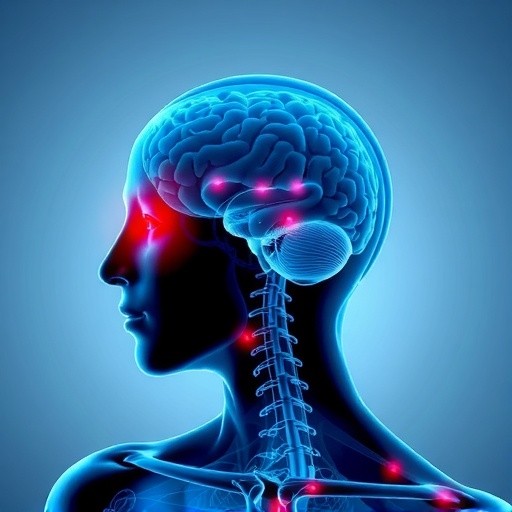
In a groundbreaking development that promises to deepen our understanding of Parkinson’s disease, a collaborative team of neuroscientists has identified a compelling link between pallidal beta power and depression among patients. Parkinson’s disease, a progressive neurodegenerative disorder primarily known for its motor symptoms, has long been associated with a range of non-motor complications, including depression—an aspect that profoundly affects quality of life yet has remained inadequately understood. The recent findings published in the prestigious journal npj Parkinsons Disease illuminate how oscillatory activity within the globus pallidus could serve as a biomarker for depressive states in this patient population, opening avenues for targeted interventions.
The globus pallidus, a key component of the basal ganglia circuitry, plays an integral role in modulating motor function through its influence on cortical and subcortical regions. Beta oscillations, brain rhythms in the frequency range of approximately 13-30 Hz, are well-characterized in Parkinsonian motor dysfunction, often linked to the hallmark symptoms like bradykinesia and rigidity. However, the exploration of beta power beyond motor control territories presents a novel frontier. This study’s meticulous electrophysiological assessments during deep brain stimulation (DBS) surgeries in Parkinson’s patients represent one of the most detailed examinations of non-motor symptom circuitry to date.
The research hinges on the hypothesis that elevated pallidal beta power could correlate with depressive symptoms independent of motor severity. To explore this, investigators recruited a cohort of Parkinson’s patients undergoing pallidal DBS surgery and conducted intraoperative local field potential (LFP) recordings from the globus pallidus internus (GPi). These invasive recordings permitted direct measurement of beta oscillatory activity tied intricately to native brain function, circumventing the limitations of surface EEG in resolving deep brain structures.
Results demonstrated a robust association between heightened beta power in the GPi and clinical assessments of depression severity, as measured by standardized neuropsychiatric scales. Importantly, this relationship persisted even after controlling for motor symptom severity and dopaminergic medication load, suggesting a distinct neurophysiological signature underpinning depressive manifestations rather than a mere byproduct of motor dysfunction. This finding challenges preexisting models that largely compartmentalized Parkinson’s motor and mood symptoms, advocating for an integrated neurobiological framework.
From a mechanistic standpoint, increased beta synchrony within the GPi may disrupt the basal ganglia-thalamocortical loops that regulate affective and cognitive processes. Prior research has hinted at neurotransmitter imbalances, particularly dopaminergic and serotonergic systems intersecting in these circuits, contributing to mood disorders in Parkinson’s. The current study adds quantitative neural dynamic data, implying that aberrant burst firing or oscillatory patterns in pallidal neurons could interfere with the gating of emotional information through crucial cortical regions like the prefrontal cortex and anterior cingulate cortex.
Therapeutically, these insights have remarkable implications. While DBS targeting the subthalamic nucleus is common in treating motor symptoms, pallidal DBS adjustment aimed at modulating beta oscillations could present a novel strategy to ameliorate depression alongside motor alleviation. Future DBS paradigms may incorporate closed-loop stimulation frameworks, which adapt stimulation parameters in real-time based on beta power fluctuations to normalize aberrant rhythms linked to mood disturbances. This represents a significant shift from conventional open-loop paradigms and aligns with the era of personalized neuromodulation.
Notably, the study also underscores the importance of electrophysiological biomarkers in psychiatric symptomatology within neurodegenerative diseases. Traditional diagnostic methods—largely reliant on subjective symptom questionnaires—can benefit from objective measures like pallidal beta power to inform both diagnosis and treatment efficacy. The prospect of integrating neurophysiological markers into clinical protocols could enhance precision medicine approaches, stratify patient subtypes, and predict therapeutic responses with enhanced fidelity.
Beyond Parkinson’s disease, the identification of beta oscillatory abnormalities associated with depression could have implications across a spectrum of mood disorders. Cortico-basal ganglia-thalamic circuitry disruptions are increasingly implicated in depression more broadly, and the methodologies employed here could inspire cross-disease investigations exploring rhythmic biomarkers. Understanding how beta power modulates mood might unravel common pathophysiological substrates, fostering novel drug targets or neuromodulation techniques applicable to major depressive disorder and related conditions.
The research team utilized advanced signal processing techniques to decompose complex LFP recordings, differentiating beta activity from overlapping frequency bands with precision. Sophisticated algorithms ensured artifact rejection and noise minimization, allowing for reliable quantification of beta power dynamics in real-time. These technical advancements underscore the role of cutting-edge computational neuroscience in facilitating high-resolution brain mapping, essential for decoding intricate brain-behavior relationships.
Importantly, the study adopted a longitudinal perspective, correlating electrophysiological metrics with patients’ longitudinal depressive trajectories and medication histories. This enabled a nuanced understanding of how pallidal beta activity evolves alongside mood symptoms and therapeutic interventions, emphasizing the dynamic nature of brain circuit dysfunction in Parkinson’s disease. Continuous monitoring through implantable devices could potentially track beta oscillation fluctuations, offering real-time feedback for clinical management.
While the study offers compelling evidence, the authors acknowledge limitations including sample size constraints and the complexity of isolating pure depressive symptoms amidst multifaceted Parkinsonian pathophysiology. Future research must expand cohort diversity, incorporate multimodal imaging, and explore causal mechanisms via animal models or computational simulations. Nonetheless, the current findings lay a robust foundation for multidisciplinary exploration at the intersection of neurodegeneration, psychiatry, and neuromodulation.
From a societal perspective, depression significantly contributes to disability and decreased quality of life in Parkinson’s patients, often complicating care and increasing caregiver burden. Understanding its neural underpinnings not only aids patients but also informs healthcare policy and resource allocation for comprehensive treatment strategies that address both motor and non-motor dimensions.
These advances align with an emerging paradigm shift in neuroscience emphasizing network-based disease conceptualization rather than isolated lesion models. By characterizing oscillatory biomarkers within key nodes like the globus pallidus, the field moves toward system-level interventions that harness brain plasticity and rhythmic modulation to restore function holistically.
In conclusion, the discovery that pallidal beta power correlates with depression in Parkinson’s disease marks a significant leap forward in unraveling the neurophysiological substrates of mood disorders within neurodegenerative contexts. This research not only enriches scientific understanding but also propels clinical innovation, steering therapeutic development toward precision neuromodulation strategies that target both motor and depressive symptoms. As this field evolves, the prospect of improving patient outcomes and quality of life by decoding and modulating brain rhythms offers a hopeful beacon for those affected by Parkinson’s and related disorders.
Subject of Research:
Parkinson’s disease and the neural correlates of depression; electrophysiological biomarkers in basal ganglia circuits.
Article Title:
Pallidal beta power is associated with depression in Parkinson’s disease.
Article References:
Johnson, K.A., Coutinho, P.B., Kenney, L.E. et al. Pallidal beta power is associated with depression in Parkinson’s disease. npj Parkinsons Dis. (2026). https://doi.org/10.1038/s41531-026-01264-4
Image Credits: AI Generated
Tags: beta oscillations in Parkinson’sdeep brain stimulation and depressionglobus pallidus and depressionmotor and non-motor symptoms of Parkinson’sneurodegenerative disorders and mental healthneuroscience and psychiatric conditionsoscillatory activity in brain researchPallidal beta power and depressionParkinson’s disease biomarkersParkinson’s disease non-motor symptomsParkinson’s disease quality of lifetargeted interventions for Parkinson’s depression