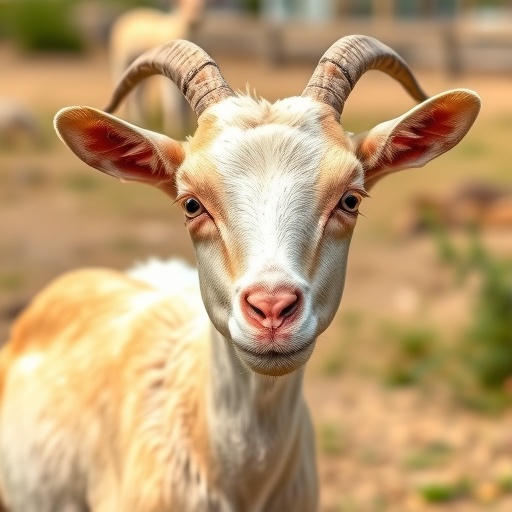
In a remarkable investigation molding the future of genetic research in domestic animals, a comprehensive study uncovers critical insights into the population structure, regions of homozygosity (ROH), and selection signals of two distinct breeds of domestic goats. The research, spearheaded by Han et al., harnesses the power of whole-genome resequencing techniques to provide a detailed panorama of genetic diversity and evolutionary adaptations that these goat populations have undergone. This pivotal study not only enhances our understanding of goat genetics but also sets a precedent for future research in livestock genetics.
Understanding the genetic architecture of domestic goat breeds is imperative, especially in the context of agricultural practices and breeding programs intended to improve livestock. The research team meticulously analyzed genomes from two prominent goat breeds, scrutinizing patterns of genetic variation. By effectively mapping the population structure of these breeds, researchers can assess how various environmental pressures and human interventions have shaped their genomic landscapes over generations. This study serves as a reference point for breeders aiming to select for desirable traits while preserving genetic diversity.
Homozygosity is a critical concept in population genetics, describing regions in the genome where an individual carries identical alleles inherited from both parents. Identifying ROH is vital as it relates to inbreeding and genetic health. The researchers delved into these ROH regions, isolating significant genetic markers that could be indicative of historical breeding practices and adaptation markers. By revealing the extent of homozygosity within these goat breeds, the study shines a light on potential vulnerabilities to diseases stemming from a decreased genetic diversity.
Selection signals play a crucial role in understanding which traits have been favored during the domestication process. Throughout the research, the authors employed sophisticated analytical methods to identify the genomic regions under selection. These markers not only highlight advantageous traits such as increased milk production, resistance to disease, and improved meat quality but also provide a roadmap for selective breeding. Such signals underscore how human preferences have inadvertently influenced goat genetics, a realization that carries implications for future breeding strategies.
Moreover, the findings offer insights into the evolutionary history of these goat breeds. By integrating genomic data with historical records, the research delivers a narrative of adaptation and survival. Understanding the evolutionary pathways of domesticated goats allows scientists and breeders to make informed decisions regarding conservation strategies of genetic resources. The balancing act between selective breeding for productivity and the conservation of genetic diversity is now more critical than ever.
The use of whole-genome resequencing represents a substantial leap forward in genetic research. This cutting-edge technique allows scientists to obtain a complete and detailed view of the genetic information contained within an organism. For the goat breeds studied, this method has rendered a wealth of data that illuminates previously obscure relationships within and among populations. Researchers can now distinguish between subtle variations in genes, providing a more precise understanding of genetic makeup.
The implications of this research extend beyond the realm of domestic goats. The methodologies and findings outlined in this study have far-reaching applications across multiple agricultural sectors. As global challenges regarding food security rise, understanding livestock genetics will be vital for maximizing productivity while ensuring resilience against environmental changes and diseases. The approaches outlined in this research can facilitate similar investigations in other domesticated species, broadening our genetic toolkit for the future.
In an era of rapidly advancing genomic technologies, the role of artificial intelligence and machine learning cannot be overstated. These technologies are revolutionizing the way researchers analyze genetic data, allowing for the discovery of patterns that may go unnoticed through traditional statistical methods. As these tools become more integrated into genetic research, the potential to yield groundbreaking discoveries increases exponentially.
The excitement surrounding the findings of Han et al. is palpable, not just for geneticists but also for breeders, farmers, and conservationists alike. The study provides a clearer understanding of how past selection pressures have influenced the genetic makeup of current goat breeds. Furthermore, it prompts critical discussions about the importance of maintaining genetic diversity in livestock to bolster resilience against future challenges.
As this field continues to evolve, the values gleaned from such cutting-edge research will likely shape the landscape of agricultural practices worldwide. Thus, collaborative efforts between geneticists, breeders, and conservationists will play a pivotal role in harnessing the insights gained from whole-genome resequencing studies. Forward-thinking initiatives could lead to innovative breeding programs that focus not only on production traits but also on enhancing genetic health and sustainability.
In conclusion, the research carried out by Han et al. heralds a new chapter in the understanding of domestic goat genetics. By unraveling the complexities of population structure, homozygosity, and selection signals, the study contributes invaluable information necessary for driving forward livestock genetic research and breeding efforts. As the agricultural landscape continues to evolve, the intersection of genetic research and practical applications will be pivotal in ensuring the health, productivity, and sustainability of livestock species.
This study is a testament to the potential inherent in livestock genomics for addressing critical challenges while highlighting the importance of restoring and maintaining genetic diversity. The research ignites a spark of hope for improved agricultural practices that champion both productivity and biodiversity for future generations.
The momentum built by this research will undoubtedly inspire a new wave of studies aimed at dissecting the genomes of various livestock breeds. By fostering understanding and collaboration, there is immense potential to harness genetic insights effectively, paving the way for sustainable agricultural advancements in today’s rapidly changing world.
Subject of Research: Population structure, regions of homozygosity (ROH), and selection signals in domestic goat breeds.
Article Title: Population structure, regions of homozygosity (ROH) and selection signal of two domestic goat breeds revealed by whole-genome resequencing.
Article References: Han, M., Rong, Y., Wang, X. et al. Population structure, regions of homozygosity (ROH) and selection signal of two domestic goat breeds revealed by whole-genome resequencing. BMC Genomics 27, 65 (2026). https://doi.org/10.1186/s12864-025-12418-8
Image Credits: AI Generated
DOI: https://doi.org/10.1186/s12864-025-12418-8
Keywords: goat genetics, whole-genome resequencing, population structure, homozygosity, selection signals, livestock breeding, genetic diversity, agricultural sustainability.
Tags: agricultural breeding programsdomestic goat breedsevolutionary adaptations in goatsgenetic architecture of livestockgenetic variation patternsgoat genetics researchhomozygosity significancelivestock genetic diversitypopulation structure analysisregions of homozygosityselection signals in goatswhole-genome resequencing