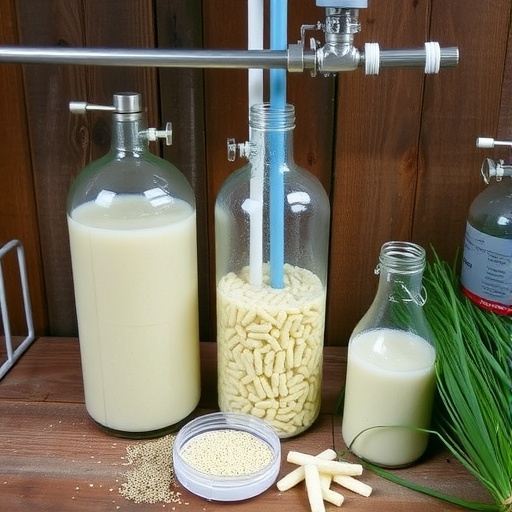
In an exciting development within the field of biotechnology, researchers have unveiled a groundbreaking approach to enzymatic production using a nonsterile open fermentation system. This innovative technique involves harnessing the capabilities of a specific strain of the genus Streptomyces, in combination with untreated agroindustrial substrates, to generate lignocellulolytic enzymes. The impact of such enzymes is vast, particularly in the processes of biomass conversion, where they play a crucial role in breaking down complex plant materials into simpler sugars useful for biofuel production and other applications.
Traditionally, the production of lignocellulolytic enzymes has required sterile conditions and refined substrates, leading to increased costs and limiting scalability. However, the new method espoused by the researchers presents a more sustainable approach. By using untreated agroindustrial residues, such as straw, wood chips, and other plant materials, the research team has effectively turned waste into wealth. These substrates not only reduce production expenses but also promote a circular bioeconomy by valorizing agricultural waste.
The main player in this fermentative process is the Streptomyces species, which is known for its versatility and robustness in enzyme production. Streptomyces are a group of Gram-positive bacteria renowned for their complex life cycle and metabolite production, including various enzymes. The researchers identified specific strains within this genus that exhibit superior lignocellulolytic activity, which is critical for breaking down the lignin and cellulose present in plant biomass.
Scientific experimentation involved optimizing multiple parameters of the fermentation process, such as temperature, pH, and substrate concentration, to enhance enzyme yield. The findings indicated that certain conditions significantly influenced the metabolic pathways of the Streptomyces, allowing them to thrive in a nonsterile environment while efficiently producing the desired enzymes. This optimization plays a pivotal role in scaling up the process for industrial applications.
Moreover, the application of nonsterile fermentation opens new avenues for research and industry collaboration. The ease of accessing agroindustrial substrates coupled with the ability to operate in open systems indicates a shift towards more environmentally friendly practices. Industries that rely on bioconversion processes stand to benefit immensely, as the reduction of necessary infrastructure and sterilization processes translates into lower operational costs.
The significance of lignocellulolytic enzymes cannot be overstated, particularly in the context of renewable energy. Enzymes capable of decomposing plant biomass into fermentable sugars are essential for biofuel production, providing an alternative to fossil fuels and contributing to a reduction in carbon emissions. Thus, the implications of this research extend beyond just enzyme production; it supports environmental sustainability and energy independence.
Furthermore, the research advocates for the exploration of additional microbial strains that may also thrive in similar fermentation conditions. The use of a diverse range of microbial populations can enhance the robustness of the enzyme profile generated during the fermentation process, potentially leading to smarter solutions for biomass conversion challenges. This adaptability not only strengthens the technical aspects of enzyme production but also introduces a more resilient biotechnological approach.
As industries seek to transition towards sustainable practices, this research can catalyze necessary changes in the bioeconomy. By utilizing nonsterile conditions and focusing on waste materials, bioprocessing can evolve into a more resource-efficient model. This is particularly relevant as the global demand for cleaner energy sources and greener production methods continues to rise.
The pathway to commercializing these enzymatic processes will inevitably involve collaboration among various stakeholders, including policymakers, researchers, and industry leaders. Advocating for supportive policies that foster research and collaboration will be critical in bringing these innovative biotechnological advancements to market. Additionally, public awareness and acceptance of bio-based products will play a vital role in their commercial success.
Research in this area also emphasizes the importance of interdisciplinary collaboration. By combining expertise from different fields such as microbiology, chemical engineering, and agricultural sciences, the potential to refine and implement these processes successfully is maximized. This cross-pollination of ideas not only enhances research quality but also accelerates time to market for novel biotechnological solutions.
In conclusion, the development of nonsterile open fermentation systems for producing lignocellulolytic enzymes using Streptomyces and untreated agroindustrial substrates represents a significant advancement in bioprocessing technology. This approach offers a dual benefit of sustainability and cost-effectiveness, making it an appealing option for industrial applications in biomass conversion. As the research progresses, further characterization of the Streptomyces strains and optimization of fermentation conditions will lead to increasingly efficient processes capable of meeting growing global demands for renewable energies and sustainable practices.
This research not only paves the way for innovative enzyme production methods but also contributes to the growing movement toward sustainable agriculture and responsible waste management. The future of biotechnological applications such as these holds great promise, signaling a conscientious shift in how industries approach resource utilization and environmental stewardship.
Subject of Research: Lignocellulolytic enzyme production using Streptomyces and agroindustrial substrates
Article Title: Nonsterile Open Fermentation for Producing Lignocellulolytic Enzymes Using a Streptomyces sp. and Untreated Agroindustrial Substrates
Article References:
Khushk, I., Qureshi, A.S., Ali, C.H. et al. Nonsterile Open Fermentation for Producing Lignocellulolytic Enzymes Using a Streptomyces sp. and Untreated Agroindustrial Substrates.
Waste Biomass Valor (2026). https://doi.org/10.1007/s12649-026-03482-6
Image Credits: AI Generated
DOI: https://doi.org/10.1007/s12649-026-03482-6
Keywords: Lignocellulolytic enzymes, Streptomyces, nonsterile fermentation, agroindustrial substrates, biotechnology, biomass conversion, sustainable practices
Tags: biofuel production advancementsbiomass conversion processescircular bioeconomy practiceseco-friendly enzyme productionlignocellulolytic enzymesnonsterile fermentation systemsopen fermentation techniquesreducing production costs in biotechnologyStreptomyces genus applicationssustainable biotechnology innovationsuntreated agroindustrial substratesvalorizing agricultural waste