In a groundbreaking study that promises to revolutionize the medical field, a team of researchers led by Y. Kumar, along with collaborators N. Modi and A. Koul, have introduced a novel approach for diagnosing eye-hypertensive diseases through advanced imaging techniques. Their work, entitled “Deep Transfer Learning and Contour-Based Morphological Analysis for Detection of Eye-Hypertensive Diseases from Fundus Images,” delves into the rapidly evolving realm of medical artificial intelligence, unearthing the potential for earlier interventions and improved outcomes for patients suffering from hypertension-related ocular conditions.
The motivation behind this significant research arises from the escalating prevalence of hypertension globally, a condition that often manifests in severe and debilitating forms among unsuspecting patients. High blood pressure can lead to a spectrum of eye conditions, such as hypertensive retinopathy and other acute retinal disorders. Unfortunately, many of these patients remain asymptomatic until irreversible damage is done. Thus, the need for innovative, accurate, and timely diagnostic tools has never been more urgent.
To address this pressing issue, Kumar and his team harnessed the power of deep transfer learning, a cutting-edge subset of artificial intelligence that allows models to leverage pre-trained networks for new yet related tasks. This method is particularly enticing within the medical imaging domain, where massive datasets are often comparable across different tasks. By repurposing existing models that have already learned to recognize patterns in large volumes of data, the researchers were able to dramatically enhance the efficiency and effectiveness of their diagnostic solutions.
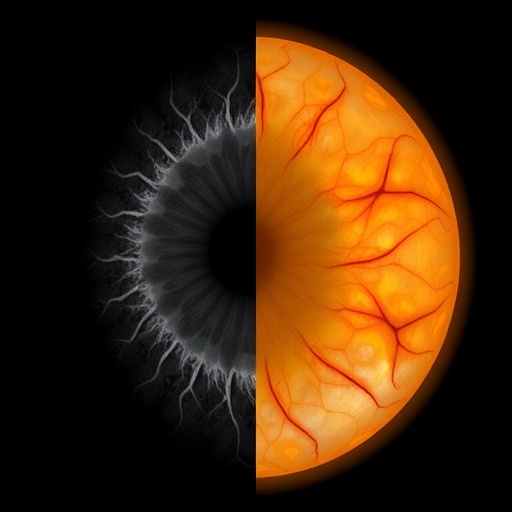
The research mainly focuses on fundus images—photos taken inside the eye that allow clinicians to observe the retina, optic nerve, and surrounding structures. These images provide invaluable insights into a patient’s eye health. The challenge has always been how best to analyze these images to detect subtle signs of hypertensive damage. Kumar’s team developed a unique methodology that combines deep learning algorithms with contour-based morphological analysis to ensure that minute details are not overlooked during examinations.
Morphological analysis plays a crucial role in this research as it examines the shape and structure of the objects within fundus images. Such a technique enables the differentiation of healthy ocular anatomy from pathological changes induced by hypertension. The researchers meticulously designed algorithms capable of identifying, categorizing, and interpreting these morphological patterns, setting a new benchmark for eye disease diagnostics.
One of the standout features of the study is the ability of the proposed system to produce reliable results swiftly, a significant advancement compared to traditional diagnostic methods, which can be labor-intensive and time-consuming. By minimizing the time required for analysis, healthcare professionals are afforded the opportunity to devote more attention to patient care and interventions, potentially preventing further deterioration in conditions that can lead to vision loss.
As the team’s results suggest, deploying deep transfer learning can also result in a higher degree of accuracy in diagnosing various eye conditions. In tests conducted with various datasets, the system demonstrated commendable performance benchmarks, underscoring its potential to fill diagnostic gaps that currently plague traditional methods. The accuracy of this system is supported by rigorous validation to ensure that false positives and negatives are minimized, a common concern in conventional diagnostic practices.
Moreover, this research brings to light the importance of collaborative efforts in health tech development. The combination of experts in artificial intelligence and medical professionals crafts a well-rounded approach that ensures both technical accuracy and clinical relevance. Kumar’s team exemplifies how interdisciplinary collaboration can drive technological breakthroughs that address real-world medical issues.
The implications of this research extend beyond hypertension, as the methodologies developed can potentially be adapted to the diagnosis of other ocular diseases and conditions. This adaptability illustrates the broad applicability of deep transfer learning techniques and supports the notion of continuous innovation in medical technology. As healthcare becomes increasingly reliant on data-driven decisions, the onus remains on researchers to pioneer forward-thinking solutions capable of addressing diverse health challenges.
The findings of this research will undoubtedly spark further discussions within the scientific community regarding the deployment of artificial intelligence in clinical settings. By showcasing the effective integration of deep learning with practical medical applications, Kumar’s study lays a framework that can inspire future research and exploration in other complex areas of health care. The potential for such technologies to save lives while reducing burdens on healthcare systems is not just a possibility; it now seems within reach.
In summary, the groundbreaking work conducted by Kumar, Modi, Koul, and their collaborators illuminates a path toward more effective, timely, and accurate diagnoses of eye-hypertensive diseases. By leveraging sophisticated AI and deep learning techniques, they are pushing the boundaries of conventional diagnostics. As the healthcare landscape continues to evolve, innovations like their approach may very well become standard practices, reshaping the future of retinal healthcare and improving quality of life for countless patients.
The integration of advanced technology within healthcare has opened up new vistas of possibilities and hope. As this research gets closer to clinical implementation, patients can expect not only enhanced diagnostic experiences but also a brighter outlook on managing and treating eye-hypertensive diseases. The journey of Kumar and his team exemplifies the remarkable intersections of technology and medicine, reiterating the immense potential of harnessing data to foster healthier populations.
In a world where knowledge and technology are constantly advancing, the drive for innovation must persist. The study by Kumar et al. stands as a testament to what may be achieved when researchers dare to think outside the box, transforming hypothetical futures into present realities. This pivotal shift in medical diagnostics is not just an advancement; it is a significant movement toward ensuring that everyone retains their vision and the quality of life that comes with it.
As the publication moves through the peer review stage, anticipation surrounding the results grows. There’s a palpable sense of excitement about the forthcoming impact that such a study can have on clinical practices globally. Perhaps, this is the dawn of a new era in ophthalmology, and we find ourselves on the threshold of a revolution in healthcare supported by artificial intelligence.
As healthcare professionals and patients alike hold their breath for the outcomes, it is essential to recognize the hard work and dedication that has gone into this research, a commitment not only to advancing technology but also to improving the overall health landscape. The future is indeed promising, and if deep transfer learning has anything to offer, it is the potential to bring healthcare into a new age of precision and excellence.
Subject of Research: Detection of eye-hypertensive diseases through fundus images using deep transfer learning.
Article Title: Deep transfer learning and contour-based morphological analysis for detection of eye-hypertensive diseases from fundus images.
Article References:
Kumar, Y., Modi, N., Koul, A. et al. Deep transfer learning and contour-based morphological analysis for detection of eye-hypertensive diseases from fundus images.
Discov Artif Intell (2026). https://doi.org/10.1007/s44163-026-00851-x
Image Credits: AI Generated
DOI: 10.1007/s44163-026-00851-x
Keywords: Deep learning, transfer learning, hypertensive diseases, fundus images, morphological analysis, ocular health.
Tags: advanced imaging techniques for eye diseasesartificial intelligence in ophthalmologycontour-based morphological analysisdeep transfer learning in medicineearly intervention for eye diseaseseye hypertension detectionfundus image analysishypertension-related ocular conditionshypertensive retinopathy diagnosisinnovative diagnostic tools in healthcaremedical artificial intelligence applicationsprevalence of hypertension and eye health