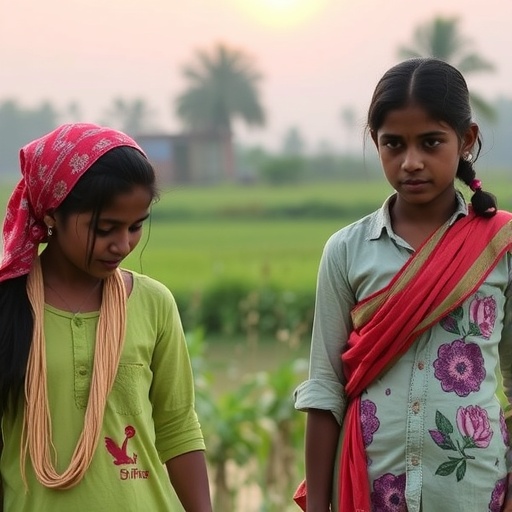
In the evolving landscape of demographic changes, rural India stands out as a nexus of cultural and economic transitions. A new study causes considerable ripples in the field of aging and social dynamics, focusing on left-behind parents in West Bengal. The research, conducted by Dakua and Lhungdim, significantly highlights the intricate tapestry of living arrangements and economic statuses faced by these individuals. This scholarly work adds layers of understanding to the critical issue of household dynamics in one of the poorest regions of India, where traditional familial setups are increasingly being challenged.
Left-behind parents, often those whose children have migrated to urban centers for better employment prospects, showcase distinct vulnerabilities. This study delves into the multifaceted effects of such separations, which are not limited to emotional distress. Instead, they trickle down into practical implications regarding economic stability and social engagement. Rural West Bengal, known for its lush landscapes and rich cultural heritage, also grapples with significant socio-economic challenges. As parents experience the absence of their children, the consequences extend beyond mere familial separation; economic pressures compound the situation, leading to deteriorated living conditions.
One of the most striking revelations of this research is the marked shift in living arrangements for left-behind parents. Historically, rural Indian parents relied heavily on their children for economic support and companionship in old age. However, this traditional expectation is quickly fading as migration patterns shift. Parents living alone or relying on extended family are not merely anecdotal; they represent a growing demographic that is adjusting to a new reality, marked by solitude and financial insecurity.
The economic status of these left-behind parents, as uncovered in the study, reveals an alarming trend. Many live below the poverty line, surviving on meager pensions or dwindling savings. In West Bengal, where agricultural employment might no longer suffice to support a family, this financial instability becomes a stark reality for many. Without children to assist them financially, these parents often resort to borrowing money or engaging in low-paying labor, further entrenching their vulnerability.
Social networks also bear the brunt of these changes. The disconnection from one’s children can lead to significant emotional and psychological consequences, particularly for older adults who thrive on community and familial bonds. The research points out that the absence of children creates a gap in the support systems that previously fortified these households. Friends and neighbors, while supportive to a degree, cannot fully replace the intimacy and security that comes from one’s own family.
Notably, the research indicates that this phenomenon disproportionately affects women, who often carry the dual burden of household responsibilities and societal expectations. As older women are left behind without their children, they face heightened isolation and the pressures of maintaining a household. Many women have had to transition from being caregivers to becoming providers, which greatly impacts their physical health and emotional well-being.
Furthermore, the study brings to light the changing attitudes toward aging and family structures within rural communities. Traditionally, the elderly were revered figures in the family, accorded respect and care. However, as modernity infiltrates rural settings, a shift in perception about the elderly is evident. Younger generations, influenced by urban lifestyles, may prioritize career advancement over familial obligations, inadvertently diminishing the role of parents in their lives. This sociocultural shift alters the landscapes of care and support that were once taken for granted.
In exploring living arrangements, the research highlights a stark contrast between urban and rural experiences of left-behind parents. While city dwellers might have access to social services and community support, their rural counterparts often feel the full weight of economic disadvantage. The lack of infrastructural support compounds their struggles, where basic healthcare and social welfare programs are either underfunded or unattainable due to geographical barriers.
The implications of this study stretch into policy-making realms, where there is a pressing need to address the plight of left-behind parents. As the migratory tide continues to rise, it’s essential for governments and NGOs to reevaluate and re-energize their approaches to elderly care in rural regions. Policies should not only provide financial support but also aim to enhance social connectivity by fostering community networks that help to alleviate the psychological burden of isolation.
Moreover, the study emphasizes the importance of education and awareness campaigns that focus on intergenerational bonding. Initiatives aimed at encouraging younger generations to engage more actively with their parents could bridge the widening generational divide that is manifesting in rural homes. This would not only boost the morale of left-behind parents but also promote cultural continuity and familial cohesion.
Dakua and Lhungdim’s research serves as a clarion call, urging society to confront and address the complex realities of left-behind parents in rural India. Their experiences exemplify the broader societal changes that are reshaping family structures and economic support systems. Only through a concerted effort can we hope to mitigate the vulnerabilities faced by these individuals, celebrating and preserving the integral role of family in our communities. The path ahead is undeniably challenging, yet with thoughtful approaches and dedicated advocacy, it is possible to create a more supportive environment for all parents—left-behind or otherwise.
As this research unfolds within the larger narrative of aging and migration, it stands as a critical reminder of the intertwined fates of families. Understanding and addressing the issues faced by left-behind parents not only enhances our comprehension of rural dynamics but also highlights the necessity for adaptable, compassionate societal frameworks in an ever-evolving world.
Subject of Research: Living Arrangements and Economic Status of Left-behind Parents in Rural West Bengal, India
Article Title: Living Arrangements and Economic Status of Left behind Parents in Rural West Bengal, India: a Study of Household Dynamics
Article References:
Dakua, M., Lhungdim, H. Living Arrangements and Economic Status of Left behind Parents in Rural West Bengal, India: a Study of Household Dynamics. Ageing Int 50, 55 (2025). https://doi.org/10.1007/s12126-025-09622-y
Image Credits: AI Generated
DOI: 10.1007/s12126-025-09622-y
Keywords: left-behind parents, rural India, West Bengal, household dynamics, aging, economic status, migration patterns, social networks, emotional well-being, policy implications.
Tags: cultural transitions in rural Indiademographic changes in West Bengaleconomic stability of aging parentsemotional distress of separated parentshousehold dynamics in poverty-stricken regionsimpact of urban migration on familiesleft-behind parents in rural Indialiving arrangements of elderly in rural areassocial dynamics of rural householdssocio-economic challenges in West Bengalurban migration effects on rural communitiesvulnerabilities of aging populations