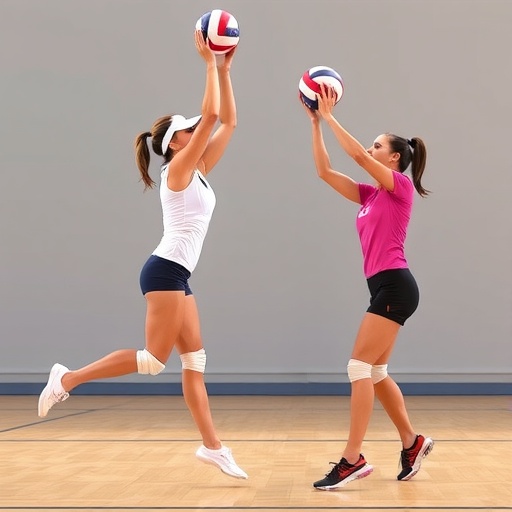
In recent years, sports science has increasingly paid attention to the effects of functional movement on athletic performance, especially in team sports like volleyball. Recent research conducted by Uysal and Baydemir provides significant insights into the relationship between functional movement screening and asymmetries in female volleyball players across various playing positions. As the demand for peak performance grows, understanding these elements can provide coaches, trainers, and athletes with critical strategies for enhancing athletic capabilities and preventing injuries.
Functional movement tests are designed to assess an athlete’s movement patterns, identification of asymmetries, and potential areas of weakness. The study employs the Functional Movement Screen (FMS), a comprehensive tool used to evaluate fundamental movement patterns. The aim is to reveal how well players can coordinate their body mechanics in response to the demands of the sport. Volleyball, a demanding sport characterized by explosive movements, agility, and dynamic positioning, necessitates that players possess high levels of both strength and coordination.
In the study conducted by Uysal and Baydemir, a selection of female volleyball players was analyzed across various playing positions such as outside hitter, setter, and middle blocker. These athletes underwent functional movement assessments using the FMS method to identify any imbalances or limitations that could potentially hinder their performance. One of the key findings indicated that different positions exhibit diverse patterns of movement, which can lead to varying levels of functional performance.
Asymmetry in movement has long been a topic of concern in sports science. In essence, when one side of the body is not operating with equal strength or mobility compared to the other, the risk of injury escalates. For athletes in positions that require lateral movements—such as setters who frequently jump and pivot—excessive asymmetry could lead to overuse injuries or chronic pain conditions. The functional movement assessments unveil these asymmetries, allowing trainers to develop targeted intervention strategies to mitigate injury risk.
Furthermore, the study examines the relationship between functional movement scores and self-reported injuries among players. It appears that athletes with lower functional movement scores are more prone to injuries, particularly when these scores correlate with asymmetrical movement patterns. For example, players demonstrating decreased mobility in their hips or shoulders may experience increased muscle strain, ultimately impacting their performance during matches.
Utilizing FMS scores provides coaches with invaluable insights into the players’ conditioning. The screening results can shape training programs tailored to individual needs, transforming the approach toward skill development. By addressing movement inefficiencies early, strength and conditioning coaches can implement preventive measures, minimizing injury occurrences and improving overall athlete longevity.
Moreover, understanding asymmetries offers a pathway to enhance competitive performance. For instance, if a middle blocker shows a significant decrease in their power generation on one side, targeted strength programs can be designed to enhance this capability. This is crucial in a sport where vertical leaps can significantly determine match outcomes. When players optimize their physical abilities and fix imbalances, they can reach new performance heights.
The research goes beyond individual assessment. By compiling data from various players across positions, the study paints a broader picture of the trends observed in the female volleyball population. It highlights the need for systematic training protocols that incorporate functional movement principles based on positional demands. Coaches need to understand that one-size-fits-all training regimens may not accurately serve athletes across different positions, as their functional needs diverge due to the specific requirements of their roles on the court.
The application of findings from this study can lead to broader discussions around sport science, particularly how data-driven ratings can inform coaching tactics. In a landscape where performance metrics are continually evolving, the evidence from Uysal and Baydemir’s work suggests that focusing on functional movement can not only enhance performance but also cultivate a culture of injury awareness and wellness among athletes.
As the study emphasizes, the relationship between functional movement and player position provides a foundation for future research in sports science. As volleyball continues to evolve, so too does the need for comprehensive assessments that embrace individual differences in physical capabilities. Sports practitioners are encouraged to adopt FMS in their routines to remain at the forefront of athlete care and development.
As we look forward, these insights compel us to consider the critical role that functional movement plays not only in volleyball but across all sports. By fine-tuning training regimens based on scientific observations, we can foster an environment that prioritizes health and performance, ensuring athletes achieve their fullest potential while minimizing the risk of injury. Continued research, like that undertaken by Uysal and Baydemir, is essential for driving this conversation forward and setting new standards in athletic training.
The ongoing pursuit of understanding functional movements will have far-reaching implications for athlete development. With individual assessments serving as the cornerstone of training strategies, a model emerges where athletes can thrive in their sport while safeguarding their physical well-being. In an age where every millisecond counts, developing a holistic view of athletic performance through functional assessment is not just an option; it has become a necessity.
As the insights from Uysal and Baydemir generate conversation among coaches, trainers, and athletes, one can look forward to a more injury-resistant, high-performing generation of female volleyball players, armed with the knowledge and tools to take their game to the next level. By embracing scientific findings within training practices, we advance towards a future where performance peaks can be reached, and the health of athletes preserved in equal measure.
Through collaborative efforts within the sports community, the findings of this research can pave the way for enhanced methodologies aimed at optimizing performance and promoting longevity in athletics. The integral role of functional movement in shaping a player is immense, and as more practitioners recognize and embrace its value, the potential for improvement in both safety and performance becomes boundless.
Subject of Research: The relationship between functional movement screening and asymmetries in female volleyball players across playing positions.
Article Title: Functional movement screen and asymmetries in female volleyball players across playing positions.
Article References:
Uysal, G.E., Baydemir, B. Functional movement screen and asymmetries in female volleyball players across playing positions.
Sci Rep (2026). https://doi.org/10.1038/s41598-026-35725-w
Image Credits: AI Generated
DOI:
Keywords: Functional Movement Screening, Asymmetry, Female Volleyball Players, Injury Prevention, Athletic Performance, Position-Specific Training.
Tags: asymmetries in athletesathlete mobility assessmentcoordination and strength in volleyballdynamic positioning in volleyballexplosive movements in sportsfemale volleyball playersFunctional Movement Screen (FMS)functional movement screeninginjury prevention strategiesplaying position analysis in volleyballsports science researchvolleyball performance enhancement