In a groundbreaking study poised to reshape our understanding of Parkinson’s disease and its neural mechanisms, researchers Olson, Wahid, Irwin, and colleagues have unveiled compelling evidence that the subthalamic nucleus (STN) plays an active and nuanced role in encoding both the changes and magnitude of applied force in patients afflicted with this debilitating disorder. Published in the esteemed journal npj Parkinsons Disease in 2026, this research marks a significant advance in the quest to decode the neural substrates underscoring motor control deficits characteristic of Parkinson’s disease.
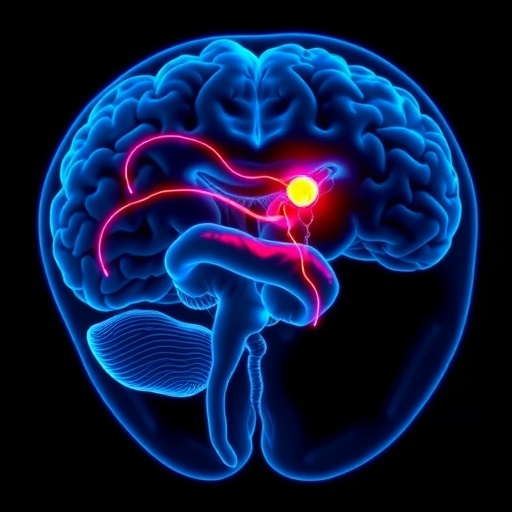
The subthalamic nucleus, a small but critical component of the basal ganglia circuitry, has long been implicated in motor control and the pathological processes that define Parkinson’s disease. Traditionally, much of the focus has centered on its involvement in the aberrant oscillatory activity and its hyperactivity contributing to motor symptoms such as bradykinesia and rigidity. However, this new study ventures beyond established knowledge by demonstrating that the STN’s encoding behavior is not merely a passive reflection of neural dysfunction but an active participant in processing force modulation.
The team employed sophisticated electrophysiological recording techniques capable of capturing real-time neural activity within the STN during controlled motor tasks. Participants, all diagnosed with Parkinson’s disease and undergoing deep brain stimulation (DBS) surgery, were asked to apply varying degrees of mechanical force while their neural responses were meticulously monitored. This setup allowed researchers to map how the STN responded both to incremental force adjustments and the absolute magnitude of force applied by the patients.
What emerged was a finely tuned encoding process within the STN, highlighting that this nucleus dynamically represents not only the intensity but also the subtle fluctuations of force. This finding challenges the simplistic binary models of motor symptom genesis in Parkinson’s, suggesting instead a complex, continuous neural computation that underlies motor output quality. Such encoding capability underscores the STN’s potential role as a crucial hub for sensorimotor integration and force calibration, functions that are critically impaired in Parkinson’s disease.
Furthermore, the study delineated the temporal dynamics of STN signaling in response to force changes. Neural firing patterns exhibited a gradient of modulation that correlated with the rate and magnitude of force shifts. This temporal encoding suggests that the STN could be integral not only to the steady-state maintenance of force but also to rapid adjustments necessary during fluid movement execution. These insights extend our understanding of how motor commands are fine-tuned at the basal ganglia level and offer an explanatory framework for the motor deficits seen in Parkinson’s patients.
One of the most impactful implications of this research lies in the potential refinement of deep brain stimulation strategies. DBS, a well-established therapeutic intervention targeting the STN, has shown remarkable efficacy in ameliorating Parkinsonian symptoms. However, the mechanisms by which DBS modulates STN activity remain incompletely understood. By highlighting how the STN encodes force magnitude and transitions, this study suggests that DBS devices could be optimized to mimic or restore these dynamic encoding properties, thereby improving motor function with greater precision and potentially reducing side effects.
Moreover, the findings provoke questions about the pathophysiological alterations to force encoding in the Parkinsonian brain. It is plausible that the disruption of these finely balanced encoding mechanisms contributes not only to hypokinesia but also to the commonly observed tremor and dyskinesia. Future investigations leveraging this foundational work could explore whether restoring physiological force encoding patterns might mitigate such symptoms, opening vistas for novel therapeutic modalities.
The methodology adopted by Olson and colleagues involved integrating quantitative behavioral assessments with high-resolution electrophysiological data, thereby bridging the gap between clinical motor symptoms and underlying neural activity. This multidimensional approach exemplifies cutting-edge neuroscientific research, leveraging patient-specific data to unravel complex brain-behavior relationships. Additionally, by focusing on human subjects rather than animal models, the study circumvents translational challenges, ensuring that its findings are directly relevant to clinical populations.
The research also touches on fundamental neuroscientific questions regarding how force, a continuous scalar variable, is represented in neural circuits. Previous studies have often approached motor control from a kinematic perspective, ignoring the critical role of force as a primary determinant of movement execution. By rigorously quantifying force encoding in the STN, this study contributes to a more holistic neurophysiological model of movement, integrating both kinematic and kinetic domains.
Intriguingly, the observed encoding mechanisms suggest that the STN could serve as a neural interface for advanced neuroprosthetic devices. Such applications could harness the intrinsic force-coding capacity of the STN to improve the control algorithms of implantable brain-machine interfaces, empowering patients with Parkinson’s disease and other motor impairments to achieve more naturalistic and precise movements through artificial prostheses.
The implications of this study also extend into broader neuroscientific contexts. Understanding force encoding in the STN illuminates general principles of sensorimotor integration and basal ganglia function that are relevant across multiple neurological conditions. This knowledge could inform therapeutic approaches for dystonia, Huntington’s disease, and other movement disorders featuring basal ganglia pathology.
In addition, the authors highlight the potential plasticity of the STN’s encoding capabilities. Whether adaptive changes occur in response to chronic DBS therapy, medication regimes, or disease progression remains an open question with profound clinical consequences. Longitudinal studies building on this work could elucidate whether therapeutic interventions help restore normal encoding patterns or induce maladaptive alterations, thereby guiding treatment personalization.
The comprehensive nature of this research, combining rigorous experimental design, high-impact clinical insights, and theoretical advancements, ensures it will resonate widely within the neuroscience and neurology communities. It exemplifies how targeting precise neural circuits can enhance our conceptual frameworks and inform next-generation treatments, embodying the promise of translational neuroscience to improve patient outcomes.
Ultimately, this study signifies a paradigm shift by revealing the subthalamic nucleus as an active encoder of force parameters rather than a mere relay station hampered in Parkinson’s pathology. It offers hope for refined diagnostic markers, mechanistic biomarkers, and therapeutics that restore normal force encoding dynamics, ushering in a new era of precision medicine for Parkinson’s disease.
As the global burden of Parkinson’s continues to rise, studies like this provide critical blueprints for scientific inquiry and clinical innovation. By deepening our mechanistic understanding of motor dysfunction, they pave the way for transformative interventions that may one day reverse or substantially mitigate the impact of this relentless disease on millions worldwide.
Subject of Research: Parkinson’s disease, subthalamic nucleus, motor control, force encoding, deep brain stimulation, basal ganglia, electrophysiology.
Article Title: Subthalamic nucleus in patients with Parkinson’s disease encodes changes and magnitude of applied force.
Article References: Olson, J., Wahid, S.S., Irwin, Z.T. et al. Subthalamic nucleus in patients with Parkinson’s disease encodes changes and magnitude of applied force. npj Parkinsons Dis. (2026). https://doi.org/10.1038/s41531-025-01237-z
Image Credits: AI Generated
Tags: active encoding in subthalamic nucleusbasal ganglia circuitry and Parkinson’sbradykinesia and rigidity in Parkinson’seffects of deep brain stimulationElectrophysiological recording techniquesforce modulation in Parkinson’simplications for Parkinson’s treatment strategiesmotor control deficits in Parkinson’sneural mechanisms of motor controlParkinson’s disease research advancementssubthalamic nucleus role in Parkinson’s diseaseunderstanding neural substrates of motor symptoms