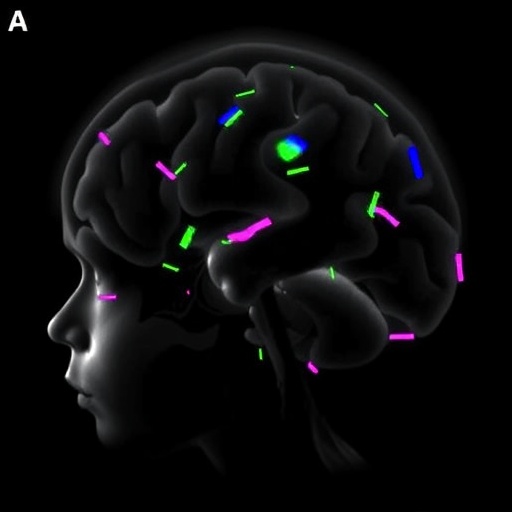
A groundbreaking study published in Nature Communications has unveiled a highly specific mutation in the PQBP1 gene that dramatically alters brain development, leading to microcephaly and significant cognitive impairments. This discovery promises to deepen our understanding of neurodevelopmental diseases and opens up new avenues for therapeutic intervention targeting the intricate balance of protein function within neural cells.
PQBP1, or Polyglutamine Binding Protein 1, is a versatile protein involved in multiple cellular processes including transcription regulation, RNA splicing, and DNA repair. Mutations in this gene have long been linked to overlapping neurological disorders, but the mechanisms by which specific mutations cause such diverse phenotypes remained elusive until now. The recent investigation conducted by Yuan, Cheng, Liu, and colleagues pinpoints the missense mutation Y65C, a single amino acid substitution, as a critical factor that disrupts cognitive function by concurrently compromising and aberrantly enhancing PQBP1’s molecular roles.
The researchers employed sophisticated molecular genetics tools to characterize how the Y65C mutation affects PQBP1’s structural stability and interaction with key nuclear partners. Notably, this substitution impairs the protein’s canonical binding interfaces, causing a partial loss of its normal function. Simultaneously, it induces a novel gain-of-function effect, wherein the mutant PQBP1 protein acquires atypical interactions that interfere with standard cellular processes. This duality in functional disruption starkly illustrates the complex genotype-to-phenotype relationships prevalent in neurogenetic diseases.
From a developmental biology perspective, the mutation’s impact emerges early during brain morphogenesis. Using patient-derived neural progenitor cells and animal models genetically engineered to harbor the Y65C variant, the team observed marked reductions in neural progenitor proliferation alongside altered differentiation pathways. These changes culminate in a smaller cerebral cortex volume, clinically manifesting as microcephaly—a condition characterized by an abnormally reduced head size and cognitive delay. The correlation between the cellular phenotype and clinical presentations underscores the mutation’s pathogenic potency.
Exploring the transcriptomic landscape, the study further revealed widespread dysregulation of neuronal gene expression programs. The Y65C mutation perturbs the splicing machinery, leading to aberrant exon inclusion or skipping in critical neural transcripts. This splicing disruption likely exacerbates the neurological defects by altering the expression and function of synaptic proteins essential for cognitive processes. This level of insight into post-transcriptional regulation defects highlights how single-point mutations can ripple through molecular networks with devastating consequences.
The authors also demonstrated that while PQBP1’s canonical functions are compromised, the gain-of-function properties enable the mutant protein to sequester various RNA-binding proteins abnormally. This hijacking effect results in the formation of nuclear aggregates that perturb nucleic acid metabolism and chromatin organization. Such aggregates bear resemblance to pathological inclusions observed in other neurodegenerative conditions, suggesting that similar mechanisms might underlie both neurodevelopmental and neurodegenerative diseases.
Importantly, the partial loss-of-function combined with gain-of-function does not merely produce additive effects but instead synergistically worsens the phenotype. Through biochemical assays, the team proved that conventional approaches correcting loss of function alone might be inadequate. Therapeutic strategies will need to carefully modulate both aspects of the mutant protein’s activity to achieve meaningful clinical benefits, a challenge that the research community must now confront.
This discovery also provokes reconsideration of how missense mutations are classified in clinical genetics. Typically, they are categorized as either loss-of-function or gain-of-function variants. The Y65C mutant exemplifies a ‘hybrid’ mutation that destabilizes normal protein roles while concurrently acquiring toxic properties, complicating diagnostic and prognostic processes. Genomic sequencing alone may fail to capture such multilayered effects without functional validation, urging the adoption of integrative molecular profiling in personalized medicine.
Notably, the study’s combination of patient cellular models and CRISPR-engineered rodents represents a state-of-the-art pipeline enabling mechanistic dissection of rare neurological genetic variants. The recapitulation of phenotypes in animal models provides a crucial testing ground for preclinical interventions. Initial pharmacological modulation of RNA-binding protein interactions in these models showed promise in alleviating cellular deficits, indicating potential routes for drug development.
Looking ahead, further research is warranted to map out the full spectrum of PQBP1 interaction partners affected by the Y65C mutation. Understanding whether the mutant protein influences epigenetic regulators or cytoplasmic processes may shed light on secondary downstream pathways contributing to the observed neurodevelopmental defects. Moreover, longitudinal studies examining how these molecular disturbances evolve during brain maturation and aging could reveal critical windows for therapeutic intervention.
Also of interest is the mutation’s potential involvement in broader cognitive and psychiatric phenotypes. Given the heterogeneity of symptoms reported in PQBP1-related disorders, delineating the mutation-specific effects can refine clinical classification and facilitate better patient stratification. This could ultimately improve care through precision diagnostics and individualized treatment plans addressing both neuroanatomic and functional deficits.
The impact of the Y65C mutation on RNA metabolism resonates with accumulating evidence implicating RNA-binding proteins in neurological disorders. As the field moves toward unraveling RNA-centric mechanisms underpinning brain disease, PQBP1 serves as an essential node linking transcriptional, splicing, and chromatin regulatory pathways. This confluence highlights the need for interdisciplinary approaches integrating genomics, proteomics, and cellular neurobiology to decode complex brain disorders comprehensively.
Public interest in such discoveries continues to grow as understanding genetic causes of intellectual disability and microcephaly is crucial for families affected by rare diseases. The identification of precise molecular defects provides hope for targeted therapies and genetic counseling. Moreover, the research underscores the critical nature of fundamental studies that translate genetic variants into actionable biological insights.
In conclusion, the elucidation of the Y65C missense mutation in PQBP1 reveals a sophisticated pathological mechanism involving concurrent partial loss-of-function and gain-of-function effects that contribute to microcephaly and cognitive deficits. This work not only advances the scientific community’s grasp of neurodevelopmental genetics but also sets the stage for innovative therapeutic strategies that address the dual nature of pathogenic mutations. As the field progresses, such integrative genetic investigations will be pivotal in transforming diagnosis and treatment paradigms in neurology.
Subject of Research: Molecular and cellular mechanisms by which the Y65C missense mutation in PQBP1 causes microcephaly and cognitive deficits.
Article Title: The missense mutation Y65C in PQBP1 causes microcephaly and cognitive deficits through a combination of partial loss-of-function and gain-of-function effects.
Article References:
Yuan, L., Cheng, S., Liu, X. et al. The missense mutation Y65C in PQBP1 causes microcephaly and cognitive deficits through a combination of partial loss-of-function and gain-of-function effects. Nat Commun (2026). https://doi.org/10.1038/s41467-025-68202-5
Image Credits: AI Generated
Tags: mechanisms of brain development disruptionmicrocephaly and cognitive impairmentsmolecular genetics tools in researchneurodevelopmental diseasesneurological disorders linked to PQBP1Polyglutamine Binding Protein 1PQBP1 gene mutationprotein function in neural cellsprotein interactions and cognitive functionstructural stability of proteinstherapeutic interventions in brain disordersY65C missense mutation effects