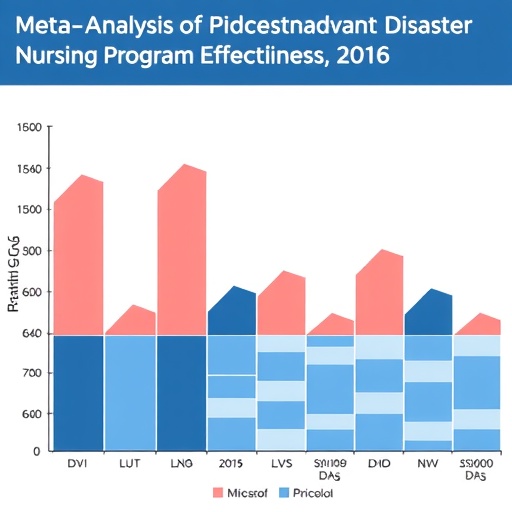
In a world increasingly vulnerable to natural disasters, the role of specialized nursing education has never been more critical. As climate change accelerates the frequency and intensity of disasters, the need for systematic training in disaster nursing is paramount. Recent research by Lee and Kim delves into this pressing issue, evaluating the effectiveness of various disaster nursing programs through the lens of Bloom’s taxonomy—a framework that categorizes cognitive skills important for learning. Their comprehensive meta-analysis sheds light on the connection between educational strategies and the preparedness of nursing professionals to handle disaster scenarios.
The methodology employed by Lee and Kim is robust and thorough, encompassing a meticulous review of existing literature spanning numerous disaster nursing training programs. Their analysis included an array of studies that evaluated different educational interventions, highlighting both qualitative and quantitative outcomes. By synthesizing this wealth of information, the researchers aimed to draw definitive conclusions about the efficacy of current educational practices in enhancing nurses’ competencies in disaster management.
One of the key findings from this analysis reveals that programs structured around Bloom’s taxonomy significantly improved learner outcomes. This taxonomy, which categorizes cognitive learning objectives into levels ranging from knowledge acquisition to higher-order thinking skills like synthesis and evaluation, provides a clear framework for designing educational experiences. Programs that utilized this cognitive framework not only enhanced nurses’ knowledge base but also fostered critical thinking skills essential for effective disaster response.
Interestingly, the research highlights that traditional approaches to nursing education often fall short of preparing nurses for the dynamic nature of disasters. Many programs lack the rigor necessary to cultivate the advanced skills that a disaster scenario demands. By focusing on merely imparting theoretical knowledge, these courses fail to engage learners in the critical thinking processes required during actual disaster events. Lee and Kim’s meta-analysis underscores the importance of shifting educational paradigms to incorporate more interactive and scenario-based learning activities.
Among the various programs examined, those that integrated simulation-based learning experiences yielded remarkable results. Simulations not only engage learners but also promote a safe environment for trial and error, allowing nursing students to practice their skills without the risks associated with real-life situations. The findings suggest that immersive simulations lead to heightened confidence and readiness among nursing professionals, ultimately translating into better patient outcomes during crises. The researchers emphasize that onboarding simulation in education can bridge the gap between theoretical knowledge and practical application.
One aspect of the study that stands out is the emphasis on interdisciplinary collaboration. Effective disaster nursing not only requires technical skills but also the ability to communicate and coordinate with other healthcare professionals. Programs that encouraged teamwork and interdisciplinary learning not only enhanced the knowledge base but also fostered a spirit of collaboration. This is crucial in the field of disaster response, where health outcomes often depend on the ability of various professionals to work as cohesive units under pressure.
As the analysis proceeds, it also touches upon the significance of continuous education in the realm of disaster nursing. The dynamic landscape of healthcare, particularly during emergencies, necessitates that nurses remain updated on best practices and emerging trends. Programs that promote lifelong learning, utilize the latest research findings, and encourage ongoing professional development are more effective in equipping nursing professionals with the skills needed to meet evolving challenges.
Importantly, the study by Lee and Kim calls attention to the need for policy changes that support the integration of comprehensive disaster nursing education into standard nursing curricula. To achieve tangible improvements in disaster readiness, nursing education programs must prioritize disaster preparedness as a core competency. Educators and policymakers are urged to collaborate and develop standardized curricula that align with the recommendations offered by this research, ensuring that nursing professionals are thoroughly prepared for the challenges they will face in the field.
Furthermore, the metanalysis provides critical insights into how assessment and evaluation strategies play a pivotal role in determining program effectiveness. By measuring learning outcomes and skill acquisition against established benchmarks, educators can identify areas for improvement and tailor their teaching methods to better serve student needs. The integration of standardized assessments aligned with Bloom’s taxonomy can provide crucial feedback loops that inform both curriculum development and instructional strategies.
As the study emphasizes the essential nature of disaster nursing education, a wider discussion arises about the societal implications of well-trained nursing staff. An adequately prepared nursing workforce will not only reduce mortality and morbidity during disasters but also contribute to community resilience. By fostering a culture of preparedness through rigorous training, healthcare systems can enhance their capabilities in managing disasters effectively, ultimately leading to swifter recovery and rehabilitation processes.
Lee and Kim’s findings also resonate with the current global discourse on healthcare investments. The burgeoning recognition of disaster preparedness as a vital public health function calls for increased financial and institutional support for nursing education. Investing in higher quality disaster nursing programs is a strategic imperative that can yield substantial returns, both from a humanitarian perspective and in terms of long-term economic benefits.
In conclusion, the research conducted by Lee and Kim reveals an urgent need to reevaluate current disaster nursing education programs through the prism of Bloom’s taxonomy. Their meta-analysis exposes significant gaps in training that must be addressed to enhance nurse competence in disaster scenarios. The educational community is called to action, encouraging the adoption of innovative teaching strategies, interdisciplinary collaboration, and continual professional growth. As the frequency of disasters escalates globally, we must equip our nursing workforce with the skills and knowledge necessary to protect and care for vulnerable populations. This commitment is not just beneficial—it’s essential for the integrity of healthcare in our increasingly unpredictable world.
Subject of Research: Evaluation of disaster nursing programs and their effectiveness based on Bloom’s taxonomy.
Article Title: Evaluating the effectiveness of disaster nursing programs based on Bloom’s taxonomy: a meta-analysis.
Article References:
Lee, S.J., Kim, KJ. Evaluating the effectiveness of disaster nursing programs based on Bloom’s taxonomy: a meta-analysis.
BMC Nurs (2026). https://doi.org/10.1186/s12912-025-04266-4
Image Credits: AI Generated
DOI: 10.1186/s12912-025-04266-4
Keywords: disaster nursing, Bloom’s taxonomy, nursing education, meta-analysis, training effectiveness, simulation-based learning, interdisciplinary collaboration, continuous education.
Tags: Bloom’s taxonomy in nursingclimate change impact on nursingcognitive skills in nursing educationdisaster nursing educationeducational strategies for disaster responseeffectiveness of nursing training programsenhancing nurse preparedness for disastersevaluating disaster nursing program outcomesmeta-analysis of nursing interventionsnursing competencies in disaster managementqualitative and quantitative outcomes in nursingsystematic review of disaster preparedness