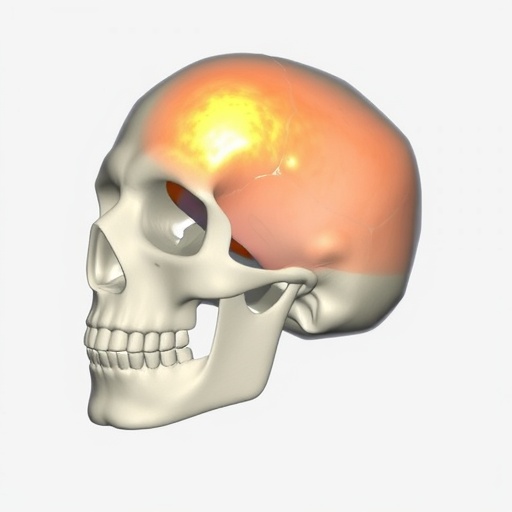
In a transformative leap that may redefine surgical practices, a team of researchers has introduced an integrated approach to online instant surface reconstruction for intraoperative printing, specifically tailored for living cranial defects. The study conducted by Zheng, Wang, Song and their colleagues represents a significant advancement in the realm of biomedical engineering. Utilizing technology that melds real-time imaging and 3D printing, this approach has the potential to enhance patient outcomes in neurosurgery by providing dynamic solutions to cranial reconstruction.
Neurosurgery often presents profound challenges when addressing cranial defects, especially those resulting from trauma or surgical interventions. Traditional methods of reconstruction can be limited by the time constraints of surgery and the complexity of creating bespoke implants in situ. The innovative system devised by the research team tackles these problems head-on by harnessing cutting-edge imaging technologies to assess the cranial defect’s dimensions in real-time, transforming the data into a printable format almost instantaneously.
At the heart of this advancement is an impressive amalgamation of interdisciplinary techniques that fuse medical imaging, computational modeling, and rapid prototyping. The researchers have meticulously fine-tuned this process, allowing them to capture the intricate shapes and contours of the cranium to create personalized implant solutions that fit seamlessly into the physiological needs of each patient. This process offers a highly adaptive strategy that could significantly increase the effectiveness of surgical interventions.
To achieve real-time surface reconstruction, the team employed advanced 3D imaging systems, such as intraoperative CT or MRI. These imaging modalities are crucial for acquiring the detailed geometry of cranial defects, capturing vital data needed to generate an accurate model for the implant. Leveraging algorithms that optimize image processing and surface reconstruction, the researchers were able to translate complex datasets into digital representations, which can be modified and prepared for printing within a matter of minutes.
The process doesn’t end with imaging, as the manufacturing aspect relies on innovative 3D printing technologies. Composite materials have been developed that are biocompatible and can effectively mimic the mechanical properties of natural bone. This important feature not only supports the healing process but also integrates well with existing tissue, reducing the likelihood of complications that can arise from the introduction of foreign materials.
Moreover, the surge in the application of artificial intelligence and machine learning in this research cannot be overstated. These technologies play an instrumental role in refining the reconstruction algorithms. By continuously learning from previous cases, the AI systems enhance the accuracy and effectiveness of both the surface reconstruction and subsequent printing processes. This promises not only to optimize surgical outcomes but also to pave the way for further innovations in personalized medicine.
Furthermore, this integrated approach is designed with a focus on ease of use for surgical teams, ensuring that it can be effectively implemented in operating rooms without disrupting the flow of surgical procedures. By minimizing the time taken from diagnosis to implementation, surgeons can experience a smoother transition between these critical stages, ultimately benefiting the patient’s recovery trajectory.
The implications of this research are profound, potentially altering the course of cranial surgeries. Real-time solutions signify a move towards personalized medicine in surgery, enabling more tailored treatments for patients’ unique anatomical conditions. As the medical community continues to grapple with the complexities of cranial reconstruction, this method provides a promising alternative that holds the potential for widespread adoption across numerous surgical disciplines.
Ethical considerations surrounding the use of 3D printing in live surgical environments have also been made a priority in this study. The team has deliberately engaged with bioethicists to address the challenges and considerations that arise with technology that directly affects human health. The goal is to create a framework that not only enhances surgical precision but also adheres to ethical standards in medical practices.
Looking to the future, the researchers envision this integrated approach being expanded to other areas of medicine beyond cranial repair. The versatility of real-time surface reconstruction and on-demand 3D printing could potentially transform orthopedic surgery, traumatic injury interventions, and even dental applications. The groundwork being laid in this study offers a blueprint for the potential application of similar techniques across a wider range of medical contexts.
In summary, Zheng, Wang, and Song’s innovative approach encapsulates the essence of evolving surgical technology, demonstrating profound implications for neurotrauma treatment. By merging imaging, advanced algorithms, and 3D printing into a singular process, a new horizon has opened up for cranial reconstruction, promising enhanced patient experiences and outcomes. The integrated solutions provided by this research not only highlight the possibilities of current technology but also set the stage for future advancements aimed at redefining the field of biomedical engineering.
As these researchers continue their groundbreaking work, the medical community watches closely, anticipating the potential real-world applications of this technology. If successful, this pioneering approach may soon become the new standard in cranial surgery, representing a significant milestone in not only enhancing surgical precision but also in improving the quality of life for countless patients facing cranial defects.
Over time, continuous collaboration and exploration of new technologies will be vital in refining these techniques and ensuring that they are utilized to their fullest potential. The combined expertise of engineers, medical professionals, and technologists will be crucial in this next phase of surgical innovation, promoting a future where complex cranial defects can be addressed swiftly and effectively, fostering a new era of surgical efficacy.
Subject of Research: Intraoperative printing for cranial defect reconstruction
Article Title: An Integrated Approach of Online Instant Surface Reconstruction for Intraoperative Printing on Living Cranial Defects
Article References:
Zheng, S., Wang, Y., Song, X. et al. An Integrated Approach of Online Instant Surface Reconstruction for Intraoperative Printing on Living Cranial Defects. Ann Biomed Eng (2025). https://doi.org/10.1007/s10439-025-03939-0
Image Credits: AI Generated
DOI: https://doi.org/10.1007/s10439-025-03939-0
Keywords: cranial defects, intraoperative printing, 3D reconstruction, biomedical engineering, personalized medicine, real-time imaging, artificial intelligence
Tags: 3D printing in neurosurgerybiomedical engineering advancementscranial defect reconstructioninterdisciplinary approaches in medicineintraoperative cranial printingmedical imaging and modelingonline surface reconstructionpatient outcomes in neurosurgerypersonalized implant solutionsrapid prototyping techniquesreal-time imaging technologytransformative surgical practices