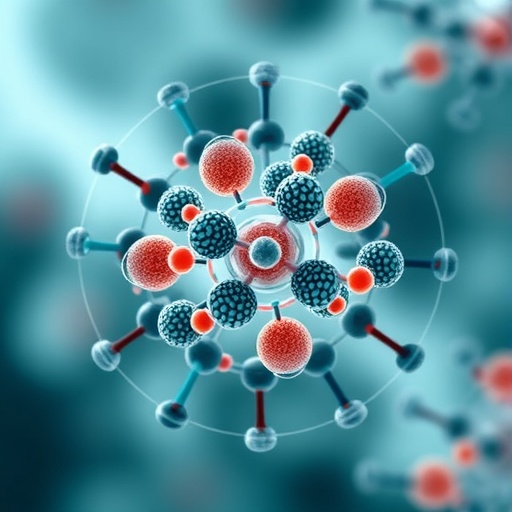
In the ever-evolving landscape of oncology, one of the most promising advancements lies at the intersection of nanotechnology and targeted cancer therapy. Recent groundbreaking research delves deep into the use of engineered nanoparticles specifically designed for targeting endocrine tumors, a subject that has garnered much attention due to the challenges posed by these complex malignancies. The intricate biology of endocrine tumors, which often display heterogeneous behavior and varied clinical manifestations, demands innovative therapeutic strategies. Engineered nanoparticles, with their uniquely tunable physicochemical properties, are emerging as potential game-changers that could revolutionize how these tumors are detected, treated, and managed.
The allure of nanoparticles in cancer treatment lies in their ability to navigate the complex microenvironment of tumors. Endocrine tumors, including those affecting the thyroid, adrenal glands, and pancreas, often evade standard therapies due to their diffuse nature and resistance to conventional chemotherapeutics. Nanoparticles can be engineered at the molecular level to enhance the permeability and retention effect, facilitating precise delivery of therapeutic agents. By modifying nanoparticle surfaces with ligands specific to tumor biomarkers, researchers aim to improve the specificity and uptake of treatments, thereby minimizing off-target effects and toxicity. This precision approach also opens avenues for earlier detection of malignancies through improved imaging techniques.
Delving into the technical specifications, the design of these nanoparticles involves the careful selection of materials such as lipids, polymers, or inorganic substances like gold or silica. Each material offers distinct advantages: lipid-based nanoparticles mimic biological membranes, ensuring biocompatibility; polymeric carriers provide controlled drug release mechanisms; and inorganic nanoparticles offer unique optical and magnetic properties useful for combined diagnostic and therapeutic applications. Functionalization strategies include conjugation with antibodies, peptides, or small molecules to target endocrine tumor-specific receptors such as somatostatin or peptide hormone receptors, massively enhancing cellular uptake in malignant tissues.
The synthesis and fabrication of these engineered nanoparticles involve sophisticated techniques to ensure uniformity in size, shape, and charge — all critical parameters influencing nanoparticle behavior in vivo. Size is particularly significant since nanoparticles between 10 to 100 nanometers often demonstrate optimal tumor penetration and retention. Surface charge modulation further fine-tunes interactions with the tumor microenvironment, influencing biodistribution and clearance rates. Advances in microfluidics and self-assembly methods have also enabled scalable and reproducible production, essential steps toward clinical translation.
Another crucial aspect explored in this research is the multifunctionality of nanoparticles. Beyond mere drug delivery, these engineered particles can be loaded with imaging agents such as contrast dyes or radioactive isotopes, facilitating simultaneous tumor visualization and treatment monitoring—a concept termed theranostics. For endocrine tumors, where early recurrence detection is pivotal, this dual functionality could drastically alter patient outcomes by enabling real-time assessment of therapeutic efficacy and early intervention upon relapse.
The immune system’s interaction with nanoparticles represents both a hurdle and an opportunity. The research addresses the challenges posed by immune clearance mechanisms like opsonization and phagocytosis, which can dramatically reduce nanoparticle circulation times. Engineering stealth properties using polyethylene glycol (PEG) coatings or biomimetic camouflage achieved by cloaking nanoparticles with cell membranes helps avoid premature removal from the bloodstream. This stealth characteristic enhances the accumulation of nanoparticles in tumor sites via passive or active targeting mechanisms, improving therapeutic payload delivery to endocrine tumors.
In preclinical models, the application of these engineered nanoparticles has demonstrated remarkable improvements in therapeutic indices. Targeted nanoparticle delivery systems notably enhance drug accumulation in tumor tissues, reducing systemic toxicity often witnessed with conventional chemotherapy agents. Therapies involving doxorubicin-loaded nanoparticles or siRNA formulations have shown promise by effectively knocking down oncogenic pathways specific to endocrine tumors, leading to significant tumor regression and prolonged survival in animal studies. Such findings underline the imperative to fast-track clinical trials assessing safety and efficacy in human subjects.
Meanwhile, the integration of nanoparticle platforms with personalized medicine is another area of great promise illuminated by this research. Individual tumor profiling allows for the customization of nanoparticle formulations that match the patient’s unique tumor receptor expression patterns. This bespoke approach could maximize therapeutic response and minimize adverse effects, epitomizing the future of precision oncology. Techniques like ligand-receptor binding assays and genomic sequencing serve as pivotal tools guiding the rational design of these nanocarriers.
Despite these encouraging advances, translating nanoparticle-based therapies from bench to bedside is fraught with challenges. Regulatory hurdles, manufacturing consistency, and comprehensive understanding of long-term toxicity remain significant barriers. The research emphasizes the need for interdisciplinary collaboration, integrating oncologists, materials scientists, immunologists, and pharmacologists to navigate the complex translational path. Establishing robust preclinical safety profiles and scalable production methods will be essential in overcoming these barriers to clinical implementation.
The future outlook articulated by this research considers the convergence of emerging technologies such as artificial intelligence and machine learning with nanoparticle engineering. Predictive models optimizing nanoparticle design parameters could accelerate development cycles and improve patient stratification in clinical trials. Additionally, combining nanoparticle therapies with immune checkpoint inhibitors or gene editing tools offers multi-pronged attack strategies against endocrine cancers, potentially overcoming resistance mechanisms and enhancing therapeutic success.
Furthermore, the research accentuates the global implications of utilizing engineered nanoparticles for endocrine tumor therapy, particularly in resource-limited settings. Nanotechnology-based treatments, offering less invasive administration routes and potentially lower costs due to targeted delivery, could democratize access to specialized cancer care. The adaptability of nanoparticle platforms to carry diverse therapeutic agents makes them versatile tools against a range of endocrine tumors beyond the common thyroid carcinoma, including rare pancreatic neuroendocrine tumors and adrenal malignancies.
Environmental and safety considerations of nanoparticles are also scrutinized meticulously. The research underscores the importance of biodegradability and clearance pathways, as persistent nanoparticles might pose unforeseen toxicities. Innovations in designing biodegradable polymeric nanoparticles or excretable inorganic nanoparticles aim to mitigate long-term risks, supporting the sustainable integration of nanomedicine into routine clinical practice.
Ultimately, the integration of engineered nanoparticles into endocrine tumor management holds transformative potential. This extensive body of work offers a comprehensive insight into the current technological status, identifies prevailing limitations, and sets a visionary roadmap for future research endeavours. Advancements in nanotechnology promise to enhance the precision, efficacy, and safety of treatments, offering renewed hope to patients grappling with challenging endocrine malignancies. As clinical translation progresses, vigilant multidisciplinary efforts are essential to harness fully and realize the benefits of these pioneering nanomedical strategies.
In sum, engineered nanoparticles represent a beacon of innovation in the fight against endocrine tumors, breathing new life into targeted oncology. The fusion of molecular engineering, material science, and clinical oncology nurtures the ideal conditions for next-generation therapies that are not only effective but also tailored to the biological intricacies of each patient’s disease. The reverberations of these scientific strides will undoubtedly influence the future landscape of cancer treatment and inspire continuous exploration at the interface of biology and nanotechnology.
Subject of Research: Engineered nanoparticles for targeted therapy of endocrine tumors.
Article Title: Engineered nanoparticles for endocrine tumor targeting, current progress and future outlook.
Article References:
Aftab, M., Ahmed, Z., Ullah, M. et al. Engineered nanoparticles for endocrine tumor targeting, current progress and future outlook. Med Oncol 43, 68 (2026). https://doi.org/10.1007/s12032-025-03151-z
Image Credits: AI Generated
DOI: https://doi.org/10.1007/s12032-025-03151-z
Tags: advancements in nanomedicinecancer detection innovationsendocrine tumor biologyengineered nanoparticles for cancer treatmentenhancing drug delivery with nanoparticlesligands for tumor biomarkersnanotechnology in oncologyovercoming chemotherapy resistanceprecision medicine in cancerreducing off-target effects in therapytargeted therapy for endocrine tumorstumor microenvironment navigation